
 2 hours ago
1
2 hours ago
1 
I’ve long believed that there’s a folklore to every photo. Like different versions of “Little Red Riding Hood”—sometimes she’s eaten, sometimes she’s freed by the huntsman, and sometimes she tricks the wolf and saves herself—every photo contains multiple stories and conceals variant truths within it. Maybe this is why pictures were my first love. Framed fairy-tale illustrations throughout the house. Bedtime tales of hungry caterpillars and faraway wild things. Trips to museums and galleries. As fragments of facts, pictures must be viewed from many angles and there are always new details to discover, which means the story can always change.
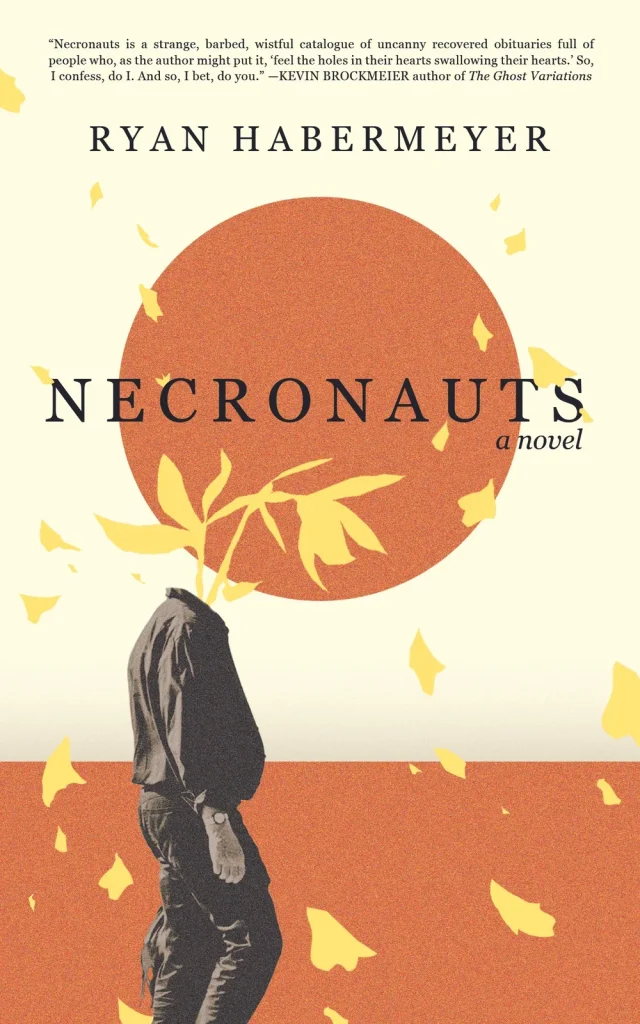
My book, Necronauts, is a novel-in-flash (photo) fictions. Written in the form of ninety-five obituaries interspersed with vintage found photographs, it tells the story of a boy with a cosmonaut helmet grafted to his head. After watching too many campy 1950s sci-fi films, he believes he is an alien and builds a catapult in the Utah desert, hoping to launch himself into outer space and reunite with the mothership. The photos both compliment and undermine narrative, creating pockets of resonance and dissonance that at times seem like factual proof of the textual details and other times call into question the veracity of the story. By juxtaposing nonfiction forms alongside speculative aesthetics, the novel becomes a paranormal satire of small-town tradition and a meditation on faith, folklore, and found family.
Somewhere between childhood picture books and the literary world of grown-up fiction, images tend to disappear and leave in their wake a black sea of type. While I love words and their contortionist ability to stretch and twist and turn to create strangely enchanting story images in my head, I also love books that, like Necronauts, are unafraid to echo the nostalgic wonder of childhood picture books. The nine books below do exactly that, only instead of illustrations, they juxtapose photographs alongside the text, creating a bewildering tension between word and image, and dazzling with weird, wondrous, photo-embedded narratives.
The Collected Works of Billy the Kid by Michael Ondaatje
While it would be wrong to say that Ondaatje’s book is the godfather of contemporary photo narrative, it was the first one I discovered as an impressionable young writer. A hard book to define—is it a novel? a fragmented epic poem? a speculative lyric essay? a novel in stories? a doctored poetic scrapbook?—it is ostensibly a collection of poetic works by the Billy the Kid, offering fragmented poetic snapshots and anecdotes of his life away from the sensationalistic exploits. But it is also a pseudo-historical, biofictional reimagining of an American outlaw that both reconstructs and deconstructs the mythology surrounding his life. Ondaatje tries—and succeeds—at showing us the flawed, fragile human behind the legend.
Blackouts by Justin Torres
This National Book Award winner is a novel that wears many disguises. It is at once a deathbed dialogue between two friends and a spiraling, phantasmagoric collage of stories-within-stories, vintage photographs, archival documents, and biofictions all orbiting questions of queer history, sexual pathology, gothic psychiatrics, and the fable of identity. Existing somewhere at the borders of history, facts, and imagination, the novel reads like a haunted scrapbook—a secret window into what resilience looks like in the face of erasure. It is a frustrating book, one demanding a slow, careful reader willing to piece together this psychological jigsaw puzzle, but as Torres has suggested in interviews, frustration is its own kind of art.
City of Incurable Women by Maud Casey
Like Torres, Casey’s novella explores grotesque medical history as it reimagines the lives of nineteenth-century women institutionalized at the Salpêtrière Hospital in Paris. Through a series of vignettes, anecdotes, prose poems, confessionals, case studies, and neurologist Jean-Martin Charcot’s famous photographs, the book offers a panoramic portrait that gives voice to “hysterical” women via a lyricism that restores humanity to the marginalized. As Casey guides us through the consciousness of these women, the raw intimacy to the narrative portraits is made all the more troubling by the uncertainty of the images which appear without context or explanation. The book seems to be less about trying to recover the lost voices than inviting the reader to imagine what might have been, sending us adrift into a sea of mysterious empathy.
Ghostographs by Mar Romasco Moore
Few books are as enigmatically enticing as Ghostographs. Structured around dozens of “found” photographs—candid snapshots of unfiltered everyday life— from the author’s personal archives, this novella is a collage of prose poems, flash fictions, anecdotes, and micro-narratives that accrue into a kind of nostalgic lore for a nameless yet familiar small-town community. Like poems, the narrative fragments and their haunting photographic counterparts are a slow-moving avalanche of emotions and ideas whose lyrical repetitions and recurring motifs—light, dogs, rivers, sunflowers, fish—capture the surreal dream logic of childhood. The lyrical and mysterious voice guiding us through the weird, haunting incidents sounds like one of the dead calling out to the soon-to-be-dead to pay attention to what stories and images you leave behind. The photographs, full of light leaks and backscatter and a granular erosion, amplify the novella’s eerie, unnerving, but hauntingly beautiful vibe. Stated plainly: My book wouldn’t exist without this one.
Lost Children Archive by Valeria Luiselli
What initially seems to be an innocuous road trip novel about a couple driving their children from New York City through the southwest slowly becomes a meditation on immigration, Native American history, and the disintegration of the narrator’s blended family. As the family journeys through a scarred desert landscape of grotesque machinery, abandoned gas stations, and dilapidated motels, Luiselli makes allusions and explicit reference to other road trips as diverse as The Odyssey, Blood Meridian, On the Road, the 13th century Children’s Crusade, and David Bowie’s “Space Oddity.” Though mostly told through the mother’s perspective as she anxiously questions motherhood and terrifies the children with nightmarish stories of detained migrant children, the novel also shifts to offer the boy’s perspective of dreams deferred as the slow fracturing of the family mirrors an equally fractured country. It is a novel full of meditative twists and turns echoing politics past and present, punctuated by a sea of miscellaneous archival material—maps, endnotes, audio recordings—all culminating in a cache of Polaroids purportedly taken by the boy which illuminate the threat of vanishing that underpins archival investigation.
Liontaming in America by Elizabeth Willis
Liontaming in America reconfigures the archival history of the American West through a hybrid mingling of poetry and essay, centering women’s voices that have been silenced by patriarchal power structures. Like many of the books on this list, it is an unclassifiable collage about many things: poetic musings on the circus; a critique of settler colonialism in the American West; meditations on sci-fi utopianism in Hollywood; and an interrogation of Mormonism and revisionist spiritual biography of its most famous leader, Brigham Young, that somehow threads together Peter Pan with religious liturgy. Arguably, this is poetry (it was long-listed for the National Book Award in poetry, after all), but it is prose poetry that cuddles up to lyric essay with detours into imaginative biography, sermons, and novelistic digressions populated with archival photographs that function as roadblocks, enticing us to slow down and savor the language like a fever dream.
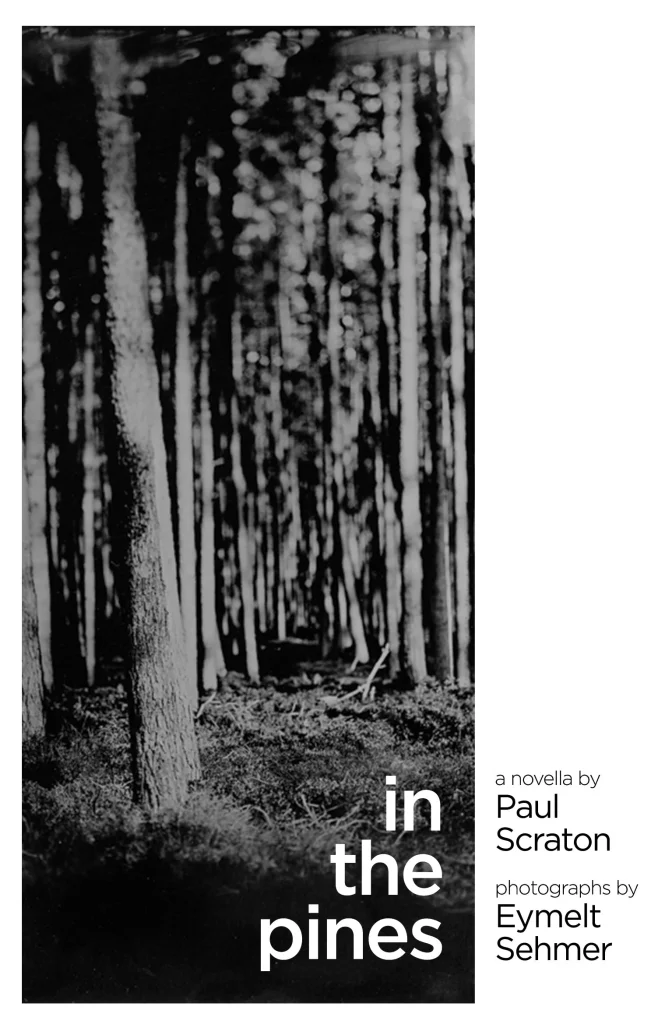
In the Pines by Paul Scraton
The concept of this novella is simple but elegant: Eymelt Sehmer’s photographs that utilize the vintage collodion wet plate process are paired with Scraton’s fragmented, lyrical meditations filtered through an unnamed narrator who recalls the forest, childhood, folklore, and climate change. Similar to the photographs, which are sometimes hazy and other times vivid, the narrative sections move with a kind of fairy-tale dream logic that serves to both crystalize the central conceit of how nostalgia and the vicissitudes of aging create shifting perceptions of natural landscapes and make this idea more mysterious. Perhaps at its core, this book is a curious entanglement of traveling and ghosts: To travel—whether physically or mentally, to strange new places or comforting familiar ones—is to be haunted by the ghost of yourself and confront the specter of who you were before undertaking a journey.
Every Day Is for the Thief by Teju Cole
I love books written by or about flâneurs. Baudelaire, Wilde, Woolf, Proust, Bernhard, Walser, Sebald. There’s something exquisite about abandoning plot in favor of the linguistic forking paths of a loitering, observant mind. Cole’s novel follows in that tradition. It is a stroll through the streets of modern Lagos, where we wander alongside the narrator—a nameless, autofictional alter ego who is and isn’t Teju Cole—through labyrinthine streets as he reconnects with family and friends in a homeland that feels both foreign and familiar. The fragmented vignettes and anecdotes are punctuated by Cole’s original photographs of everyday life, which refuse the exoticism of Africa in favor of a disquieting, intimate voyeurism. Sometimes picaresque, sometimes nostalgically melancholic, but always rich with insight, the book is a meditation on the frustrations of home and homeland, and how there is often no sense or refuge in “the combat between art and messy reality.”
Brother in Ice by Alicia Kopf
Justin Torres Re-Maps Queer History
The author of “Blackouts” on winking, reading, and growing into a gay literary uncle
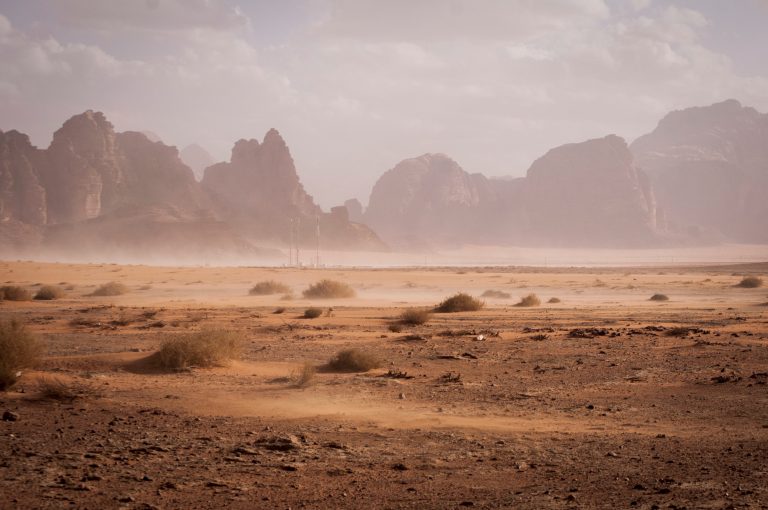
At face value, this is a debut novel about an aspiring artist living in Barcelona, her autistic brother, and an obsession with polar exploration. But it is also a shapeshifter of forms: at times a clandestine diary, other times a travelogue, occasionally populated with biographical portraits, and sometimes illustrated research notes examining the history of polar exploration. It merges science with philosophy, blurs facts with fiction, arranges archival photos alongside imagined drawings. But it is less a novelistic voyage in search of geographical places than a lyrical inquiry into the emotional landscapes of the body and the tensions that emerge when familial obligations and gendered hierarchies collide with artistic life. Juxtaposing feminine creativity against the history of masculine conquest, the book seems to ask: Who gets to live—to explore, to love, to obsess, to make dreams reality—and who gets proverbially frozen in ice?
The post 9 Unique Works of Fiction That Pair Text With Photographs appeared first on Electric Literature.




 Bengali (Bangladesh) ·
  English (United States) ·