

Archaeologists have unearthed a massive 2,000-year-old tomb of an elite nomad from the Xiongnu Empire in Central Asia. The nine-level tomb contained more than 400 grave goods and is the largest Xiongnu tomb ever found in Mongolia.
Archaeologists identified the enormous tomb full of riches during a four-year excavation at the site of Duurlig Nars in northern Mongolia, according to a translated statement from the National Museum of Korea, whose researchers have been excavating the site in cooperation with the Institute of Archaeology of the Mongolian Academy of Sciences and the National Museum of Mongolia.
Duurlig Nars is the largest noble burial complex of the Xiongnu Empire, with nearly 300 ancient burial mounds called kurgans. The Xiongnu, also known as the Hunnu, were a collection of nomadic tribes who coalesced into a mobile empire on the Mongolian steppe in 209 B.C. The Xiongnu were connected to a broad trading network that stretched from the Roman Empire in the West to China and the Korean Peninsula in the East.
When the Xiongnu Empire fractured in the late first century B.C., one band moved west, picking up new tribes and eventually becoming the horde known as the Huns. Both the Xiongnu and the Huns were well known for their fighting and horseback riding skills.
The newly announced tomb is roughly square, with a long passageway extending from it, according to the statement. Including the passageway, the tomb is about 240 feet (73 meters) long, roughly the size of the Great Sphinx of Giza. Archaeologists discovered nine concentric layers of stone, each smaller than the last, going down around 48 feet (14.5 m) deep, making the tomb a kind of inverted pyramid.
 National Museum of Korea
 National Museum of Korea
 National Museum of Korea
 National Museum of Korea
In the tomb's central chamber, archaeologists found a wooden burial chamber with a coffin. The burial chamber is smaller than other elite Xiongnu burials, according to the statement, which may suggest that the society was changing and Xiongnu power was declining when the tomb was created in the late first to second century A.D.
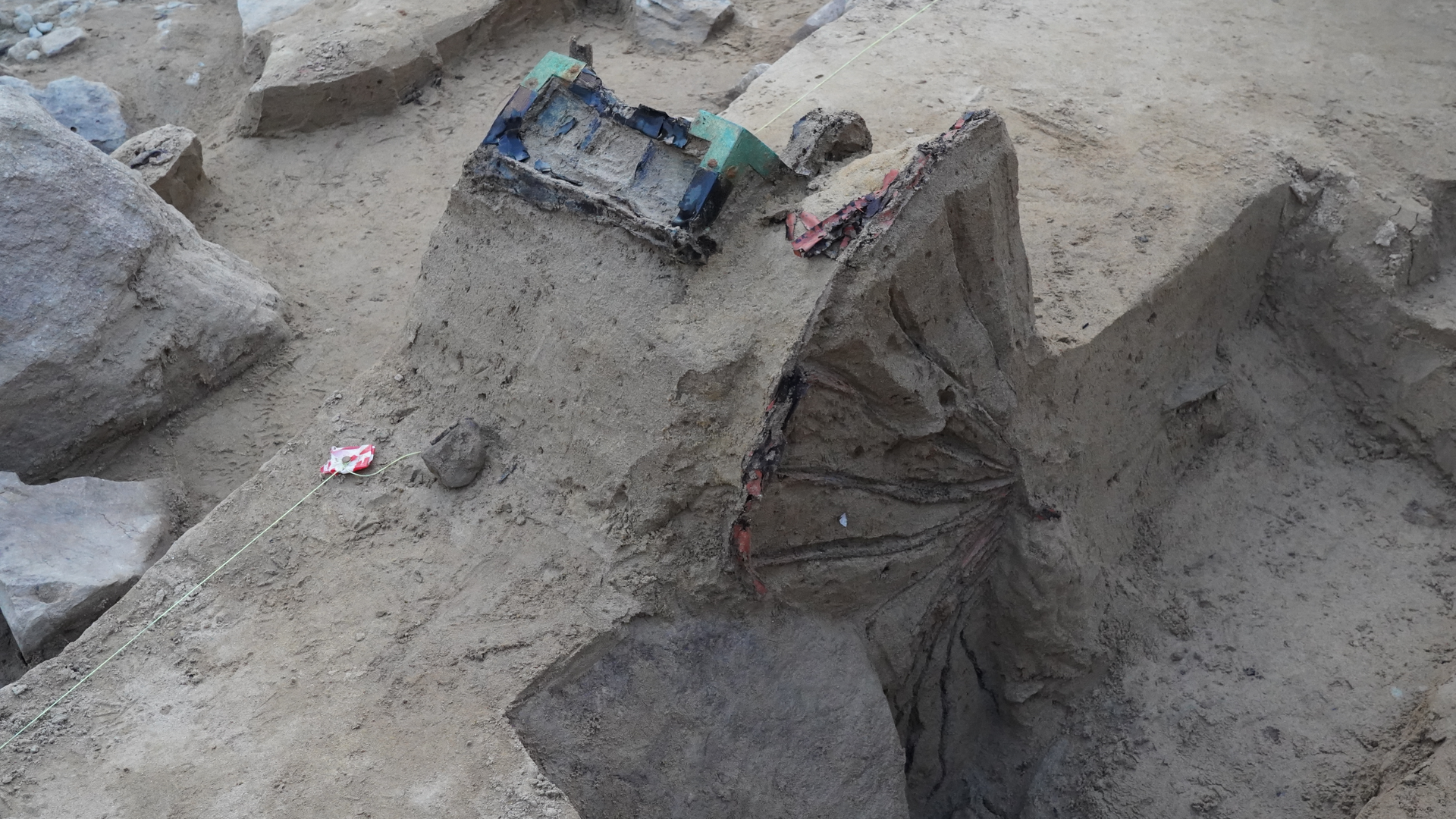
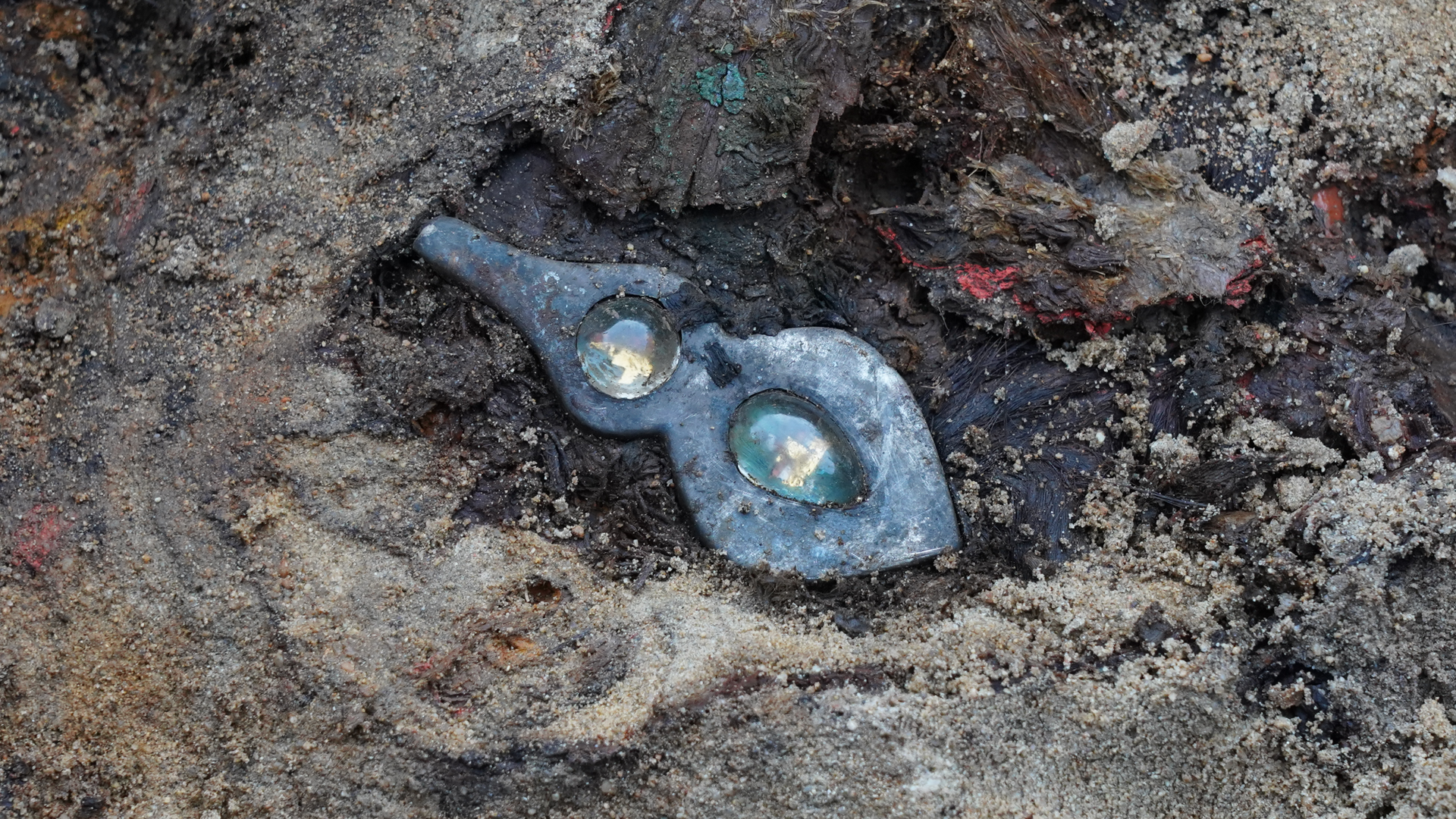
Artifacts found in the tomb show the extent of the Xiongnu's connections across Eurasia 2,000 years ago, according to the statement. Among the grave goods recovered from the tomb were silver-and-quartz accessories crafted to decorate horses, as well as a wheel from a lacquered horse-drawn carriage, suggesting the tomb's occupant was a person of high social status.
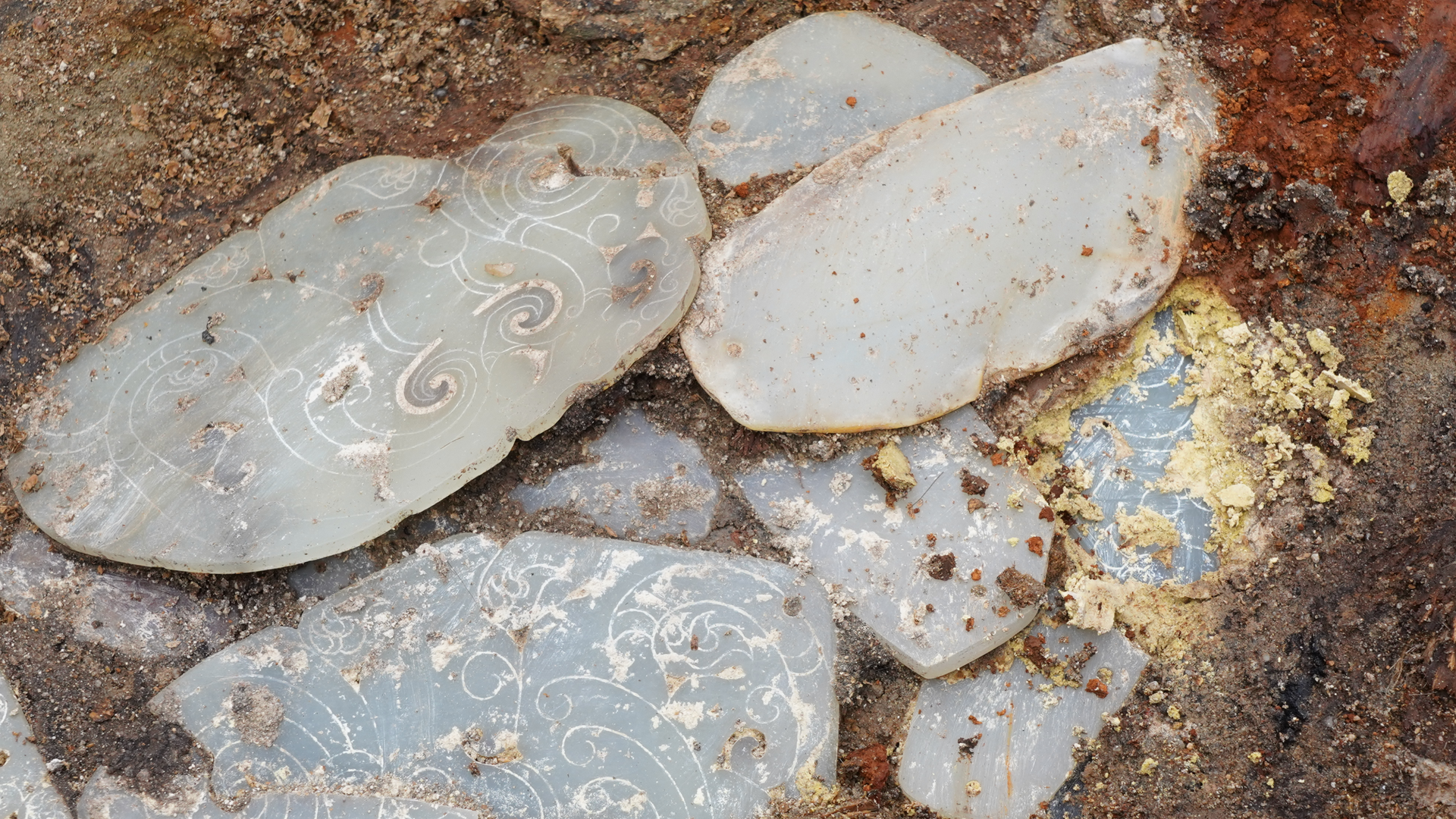
Additionally, archaeologists found evidence of connections with the Han dynasty, which arose around 200 B.C. and was the second imperial dynasty of ancient China. On the bottom of the wooden coffin, archaeologists recovered 15 flat, overlapping pieces of jade.
Han dynasty burials of important people often included at least one "bi," the term for a jade disk. But unlike the typically circular "bi," the jade pieces in the Xiongnu tomb are irregular and have elaborate designs engraved on them, according to the statement. This may suggest that the Xiongnu adopted a Han burial practice but put their own spin on it.
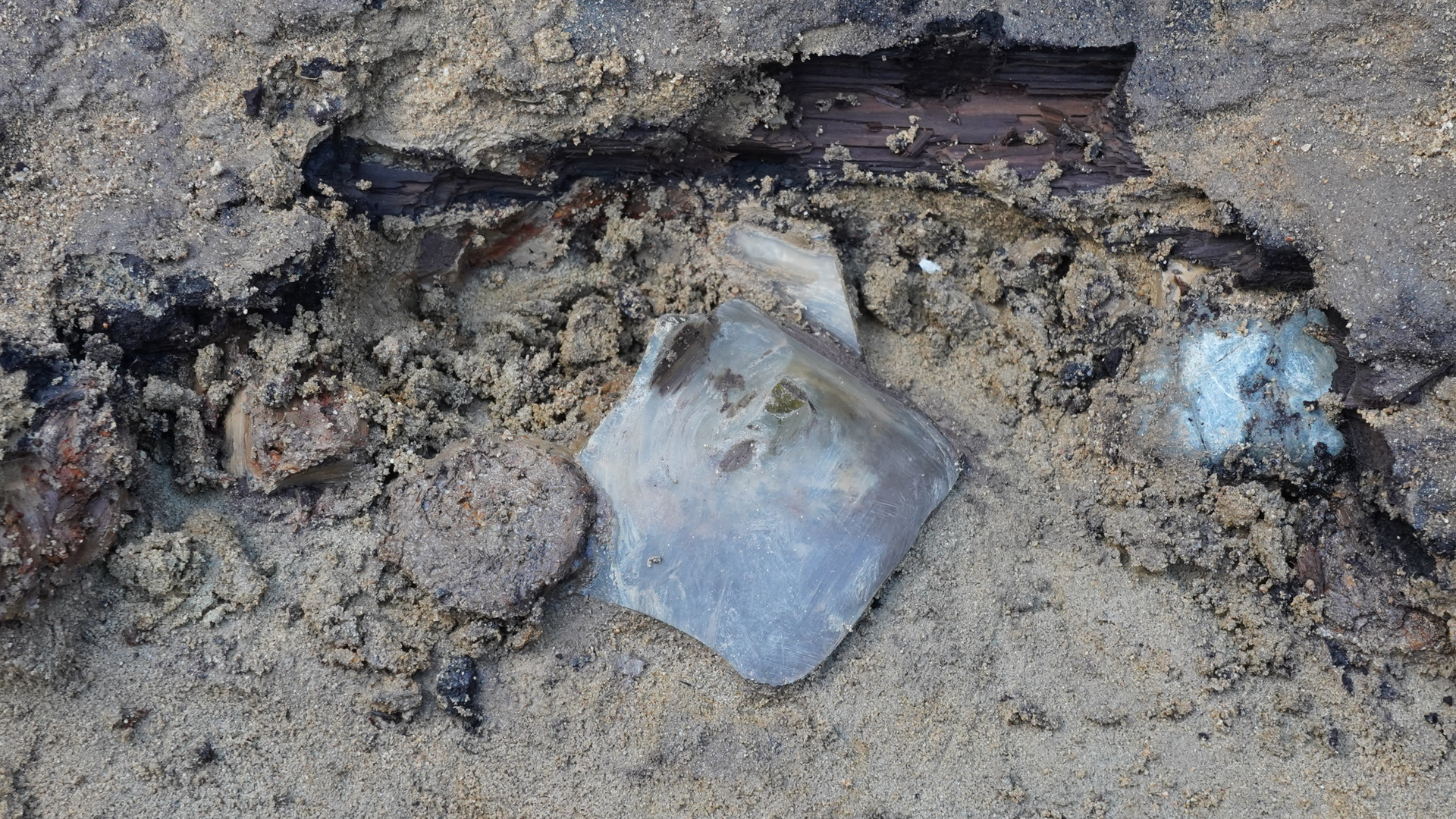
Archaeologists also found a broken cup in the tomb. The transparent glass cup with a handle may have been manufactured in the Roman Empire, the archaeologists believe. Additional tests will be carried out to try to determine where the glass cup was made.
So far, archaeologists are unsure who was buried in the tomb. But they plan to use DNA analysis techniques on the teeth and hair they recovered from the coffin to figure out the person's chromosomal sex and whether the individual was related to other people interred in the Duurlig Nars burial complex. According to the statement, future analyses of this important tomb will help archaeologists paint a more detailed picture of ancient Xiongnu society two millennia ago.





 Bengali (Bangladesh) ·
 English (United States) ·