

In brief: Citing the Wall Street Journal, Cointelegraph reports an alleged 49 percent stake held by StringZ in the holding company behind the planned World Liberty Trust Company, a figure that has not been independently confirmed. The OCC has granted that institution preliminary conditional approval, but no final authorisation to open for business. Before drawing any conclusion, ownership, final licensing, permitted services and reserve controls each have to be checked separately, because a stake in a holding company is not a banking licence and a preliminary approval is not a running operation.
The report on the World Liberty Financial US Trust Bank ties an alleged investment from Abu Dhabi to a planned regulated US trust structure. The subject is in focus because World Liberty Financial is treated as potential stablecoin infrastructure, and the public attention around Trump crypto gives it additional reach. One qualification matters: the stake itself cannot be independently confirmed from the available sources, whereas the regulatory side can at least be partly traced through published OCC filings. This article therefore keeps three levels apart on purpose: the reported transaction, the actual state of the charter process, and the business model that might be attached to it.
What the reports actually say
On August 28, 2026, Cointelegraph wrote about a stake in WLTC Holdings LLC, citing the Wall Street Journal and people familiar with the matter. According to that account, StringZ Holding RSC, in places also referred to as StringZ Holdings RSC (DE) LLC, holds 49 percent of the holding company behind the World Liberty Trust Company. That is a reported figure, not a confirmed fact. The actual percentage, the purchase price, a possible closing date, the voting rights, the beneficial owners and the precise link to Abu Dhabi all remain open.
The comparison with the OCC decision is instructive: StringZ is indeed named there as an investor, together with passivity commitments covering its indirect stake. A specific 49 percent figure, or a particular ultimate backer, is not disclosed in the OCC decision Corporate Decision #1385. It is exactly that gap which makes the Cointelegraph report a story to be placed in context rather than equated with the official record.

Where this leaves us so far: The ownership report is a reported transaction, not an independently confirmed one. The OCC filings support only certain statements about the investor structure and the passivity commitments.
The decisive difference: capital, charter and opening for business
A holding company owns stakes in subsidiaries. Capital at holding level can fund build-out, staff, technology and compliance, but it does not replace a supervisory permission. That is where the confusion starts: on August 14, 2026, the OCC granted the World Liberty Trust Company, N.A. a preliminary conditional approval. That is not a final authorisation to begin operations. Only once every pre-opening condition has been met can a final clearance follow.
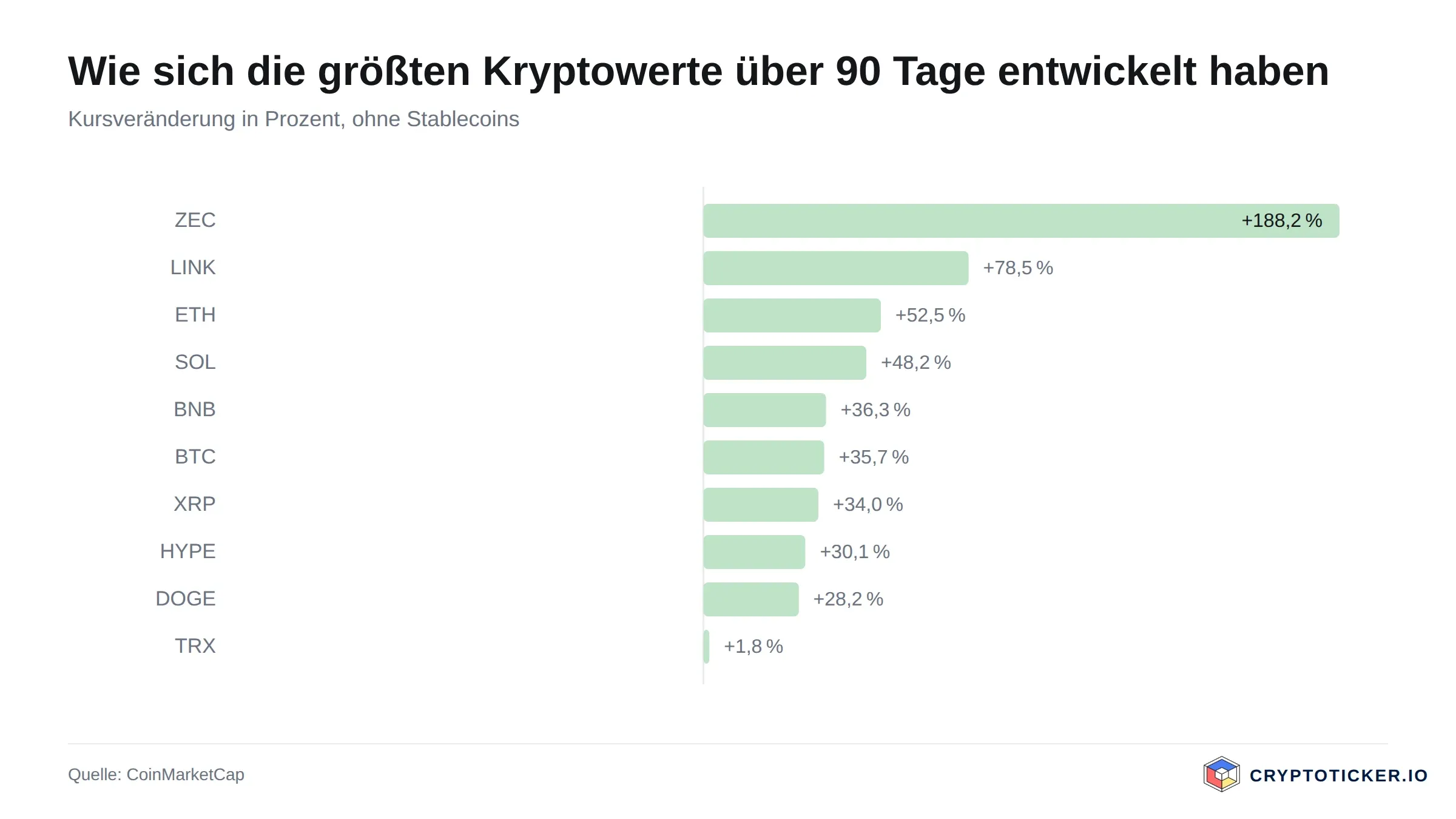 The largest crypto assets over 90 days, based on data from CoinMarketCap
The label crypto bank is therefore too loose. Depending on the charter and the conditions attached, custody, fiduciary administration, payment or exchange services may be permitted without the institution offering the full range of a conventional commercial bank. Anyone wanting to verify the licensing status should cross-check Corporate Decision #1385, later final OCC publications and the list of active, nationally regulated institutions. For state-chartered institutions, the relevant state regulator, the FDIC or the Federal Reserve would matter as well.
What the planned institution could do
A national trust company is a specialised institution for fiduciary, custody and settlement services, not a conventional deposit-taking and lending bank. The public charter application and the conditional approval provide for USD1 issuance and redemption, reserve management, digital custody and exchange services for custody clients. That is a planned, or conditionally approved, range of services, not business already under way.
One point matters for consumer protection: according to the application, the company is not to carry FDIC deposit insurance. The word "bank" therefore implies neither automatic deposit insurance nor permission for every kind of banking business.
What follows from this: On the OCC record, the World Liberty Trust Company is not an institution that has already launched. Its likely focus is USD1, reserves and custody; the scope and the start date depend on the final conditions.
Why reserves and custody are at the centre
A stablecoin is a digital token designed to track a value, typically the US dollar. A stablecoin bank would therefore matter above all at the intersection of issuance, reserve management, redemption and custody. Stablecoin reserves are meant to back the tokens outstanding, and client money and client crypto assets have to be kept separate from them in legal, accounting and operational terms.
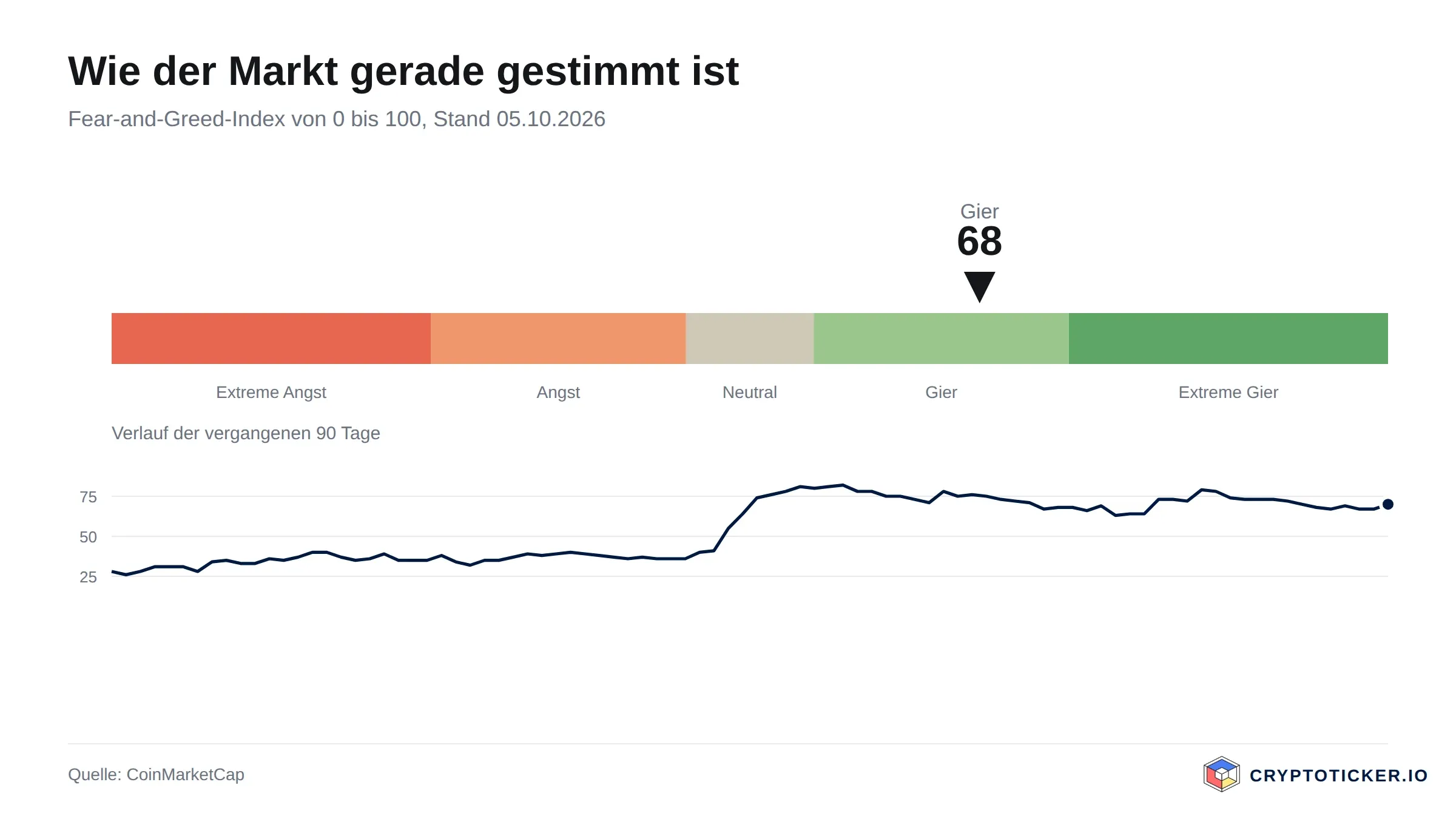 The Fear and Greed Index places market sentiment between extreme fear and extreme greed
Issuers of payment stablecoins must, under 12 U.S.C. § 5903, hold identifiable reserves on at least a one-to-one basis, disclose their redemption procedures and meet requirements on liquidity, risk, IT, sanctions and anti-money-laundering. Payment stablecoins are also not FDIC-insured and may not be marketed as if they were. On custody itself, what counts is who controls the private keys, which access rights exist, whether client holdings are separated from company assets, and how recovery works after a loss or a cyberattack.
The checklist before any assessment
Before the report can support a firm view, a structured run-through is worth the effort, with none of the points counting as already answered either way:
Transaction: Is there a company announcement, a register entry or another primary document covering the stake, the price, the date and the voting rights? Ownership: Who is the direct shareholder, who is the beneficial owner, and what concrete role does Abu Dhabi play as a fund, as a company, or merely as a reported source of capital? Regulation: Which company holds which permission? Have the OCC pre-opening conditions been met, and is a final authorisation to operate documented publicly? Business model: Are USD1, reserves, exchange and custody actually on offer, and which services are expressly permitted? Safeguards: Are there audited reserve reports, a separation of client assets, security arrangements and procedures for BSA/AML and sanctions?The Bank Secrecy Act is what establishes the central US reporting and record-keeping duties aimed at money laundering and financial crime.

A practical rule: Only primary documents on ownership, final licensing and actual business activity allow a firm view of a crypto bank or a stablecoin bank.
World Liberty Trust Bank: attention is not evidence
The combination of World Liberty Financial, reported capital from Abu Dhabi and a planned piece of US financial infrastructure is a genuinely relevant theme. Trump crypto also explains the high level of public attention, but it is evidence of neither political influence nor commercial success. At the World Liberty Financial US Trust Bank the transaction details are still open, while the regulatory interim position is clearer: a conditional OCC approval, no final authorisation to operate. Anyone following the story should keep the report in view but assess the stake, the licence and the operating stablecoin business strictly apart.




 Bengali (Bangladesh) ·
 English (United States) ·