

Twenty years after Pluto lost its planetary status, people are still arguing about it.
This spring, NASA Administrator Jared Isaacman publicly threw his support behind "make Pluto a planet again," reigniting the familiar debate. Social media threads are filled with people arguing over whether Pluto should be grandfathered into the planetary club, whether dwarf planets are simply another kind of planet, and whether the distinction matters at all.
The disagreement dates to August 24, 2006, when members of the International Astronomical Union adopted a definition of a planet that placed Pluto in the dwarf-planet category. The scientific debate over how best to define a planet has continued in the years since, and the public has many thoughts, too — many people still cling to Pluto's identity as a planet. But why?
The planet we grew up with
From its discovery on February 18, 1930 to its demotion, Pluto belonged to one of the first maps of the universe that students learned: our solar system. There were nine planets, usually memorized in order through classroom diagrams, models and mnemonics such as "My Very Elegant Mother Just Served Us Nine Pies."
Deana Weibel, a cultural anthropologist at Grand Valley State University, says those childhood associations have staying power long into adulthood. As a planet, Pluto was also particularly memorable: the farthest planet, the smallest planet, and a relatively recent addition to the solar system. "It was the knowledge that new planets could be added, with its story of being discovered in the 20th century," says Weibel.
For people who absorbed that version of the solar system as children, the 2006 decision required replacing something that had been an established fact. Laurie Groh, a licensed psychotherapist and owner of Shoreside Therapies in Milwaukee, says that helps explain why the change could provoke an emotional reaction disproportionate to its effect on everyday life. "People aren't grieving a planet," says Groh. "They're grieving the idea that what they learn is permanent. It isn't. Science changes and evolves."

That attachment may fade as generations raised with eight planets get older — but there's not a black-and-white cutoff date. Rob Crotzer, founder and editor of OuterSpaceTrip.com, has watched his own nine-planet upbringing filter down to his daughter Emily, who was born well after Pluto's reclassification. She learned about Pluto from him, her grandmother, and an astronomy atlas published before the 2006 vote. "My daughter was born into the eight-planet solar system," Crotzer says, "yet she has decided that eight isn't enough."
Why our brains resist recategorization
Nostalgia isn't the only force at play. "Our brains work via comparison and categories. That's how we make sense of anything and everything," says Matthew Leahy, a licensed clinical psychologist who studies memory and cognition. Humans rely on categories to organize enormous amounts of information, and changing an established category requires revising a framework that was already functioning perfectly well.
But Pluto presents an especially curious case because the stakes for most people are so low — its planetary status hardly affects the general public day-to-day. "The emotional meaning of a category can sometimes matter much more to us than its practical importance," says Leahy.
Groh also points to the way the change happened. Unlike Pluto's naming, when the public suggested monikers for the new planet, the public didn't participate in the scientific process of its recategorization. Changes imposed quickly from outside, Groh says, can invite resistance even when there is a solid reason behind them.
Rooting for the underdog
Then there is Pluto itself: small, distant, and lonely. "For many people, the issue is less about astronomy and more about rooting for the little guy, the underdog," says Kevin Schindler, historian and public information officer at Lowell Observatory, where Clyde Tombaugh discovered Pluto in 1930.
The language surrounding the change encourages that interpretation. Pluto is routinely described as having been "demoted," rather than simply reclassified, turning a technical distinction into something that sounds punitive. "We don't like the idea of the 'little guy' getting kicked out," Groh says. "We personify Pluto when we have that reaction."
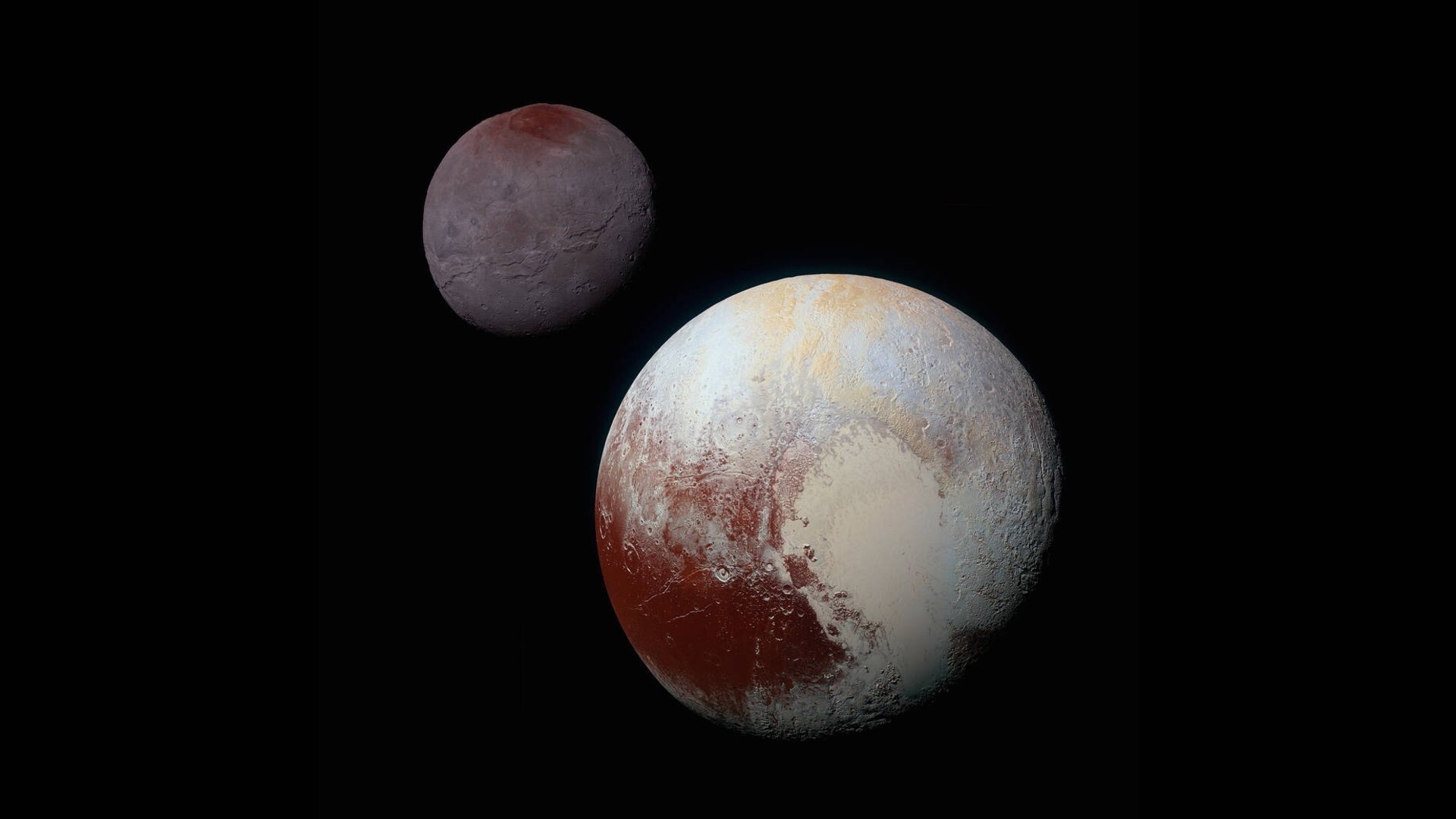
That personification has helped give Pluto a cultural life all its own. At Lowell Observatory, affection for the dwarf planet is strong enough to inspire the annual I Heart Pluto Festival, a multi-day celebration of its discovery, science, and history. Nearly a century after Tombaugh first spotted Pluto from Flagstaff — and two decades after its reclassification — people still gather specifically to celebrate it.
In other words, becoming a dwarf planet didn't necessarily diminish Pluto's popularity; if anything, it gave people another reason to rally behind it.
Does it matter what Pluto is called?
Scientifically, yes, it does matter how we classify Pluto. Jessica Libby-Roberts, an assistant professor and exoplanet scientist at the University of Tampa, points to Pluto's unusual orbit, small size, and similarities to other Kuiper Belt objects as reasons the dwarf-planet classification makes sense. Categories allow researchers to compare objects and make sense of how the solar system formed.
But Libby-Roberts doesn't view its exclusion from the eight planets as a knock against Pluto. "Honestly, I think Pluto would rather not be grouped in with the boring rule-abiding planets anyway," she says. "It seems much happier doing its own thing."
A scientific label doesn't determine whether Pluto is interesting, either. Libby-Roberts notes that the 2015 New Horizons mission overturned expectations of a relatively generic, cratered world, instead revealing a dynamic one with mountains, glaciers, and an atmosphere.
"In some ways, it doesn't matter what Pluto is called because regardless of what label we humans assign to it, Pluto will keep orbiting the sun and doing its thing," Schindler says.



 Bengali (Bangladesh) ·
  English (United States) ·