

I call my evening meal “dinner”, while my partner names it “supper”. For others, my version might refer to lunch, while my significant other’s term could be confused for a late evening mini-meal.
That’s because, broadly speaking, the word you use for this course depends on where you’re from. The New York Times’ impressive British-Irish dialect quiz captures this difference and dozens of others, narrowing your answers down to specific regions.
Though it’s not quite as involved as all that, a new survey from YouGov has shown another word that could reveal your hometown: “alleyway”, and its many variations.
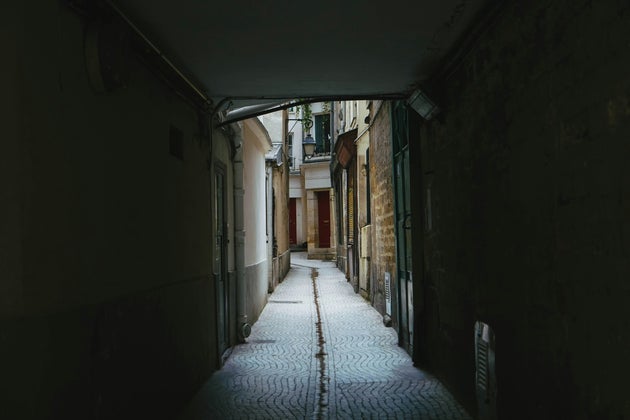 Alley
Terms for alleyways, by UK locations
A lot of the UK (84%) use the term “alley”, while 31% use “passage”. But some areas use other terms, too.
By word and area, these are:
1) A “ginnel”
This term is used by people in:
West Yorkshire (59%), Lancashire (55%), South Yorkshire (54%), Greater Manchester (51%), and Scotland (7%).2) A “cut”
An alley is mostly referred to as a “cut” in:
Northumberland (31-35%), Tyne and Wear (31-35%), Durham (31-35%), Cumbria (24%), and Teeside (18%).3) An “entry”
This is most common in:
Merseyside (36%),Staffordshire (22%),Cheshire (20%),The West Midlands county (19%),Clwyd in North Wales (19%), andWarwickshire (16%).4) A “snicket”
This shows up most commonly in:
North and West Yorkshire (40-41%), East or South Yorkshire (28-32%).5) An “eightfoot” or “tenfoot”
The term, which changes according to the length of an alley, is used in:
East Riding of Yorkshire (34%), Hull, more specifically (56%), Lincolnshire (23%) – to be precise, the parts of Lincolnshire that used to be in Humberside.6) A “jitty”
You’ll see this used most often in:
Derbyshire (47%),Leicestershire (38%),Nottinghamshire (28%), andNorthamptonshire (18%).7) A “gully”
That’s heard more often in:
The Black Country (25%), Mid and South Glamorgan (21%).8) A “twitten”
A rare “exception” to the broad trend of Southern English areas not using alternatives to “alley”, this term is seen in:
East Sussex (29%), and West Sussex (19%).9) A “close”
This study found that most people who used this term were from:
All of Scotland more broadly (41%), though it’s not evenly used: usage is at about 62% in Fife, but 27% in the Grampian region.10) A “vennel”
Again, this showed up across Scotland (13% overall), but it’s more common in:
South East Scotland (36%), Edinburgh (24%), and Tayside, Fife, southwest Scotland, and Central Scotland (13-16%).11) A “wynd”
You’ll find this mostly in:
Scotland more generally (11%), and Areas like Fife (26%) more specifically.12) A “pend”
This is seen in:
Scotland more generally (5%), and Tayside more specifically (17%).






 Bengali (Bangladesh) ·
 English (United States) ·