

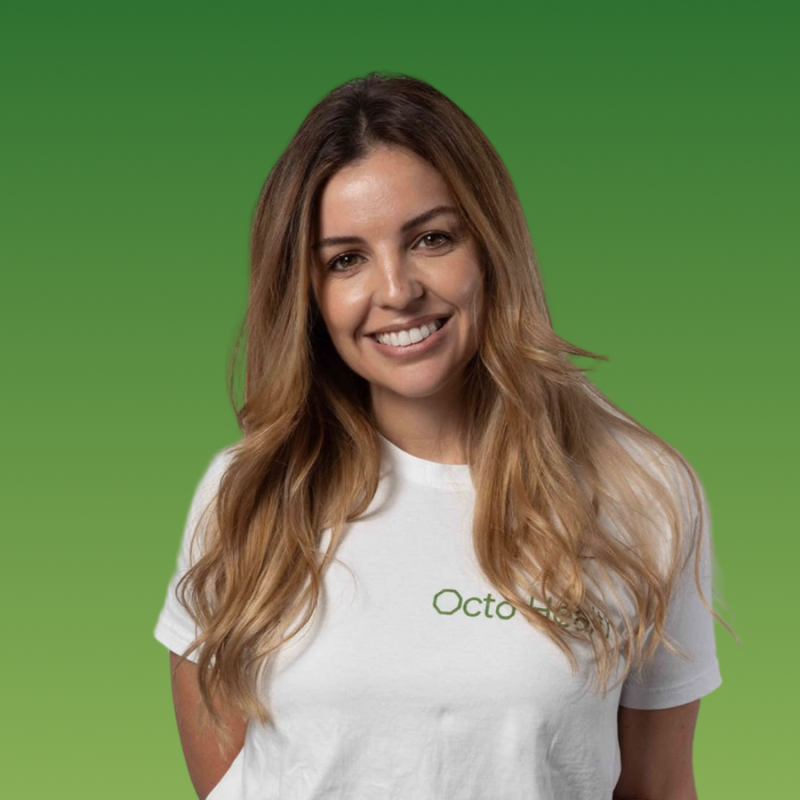
 Catarina Kemper, Founder and CEO of Octo Health
During the years I spent trying to understand what was happening with my health before eventually being diagnosed with endometriosis, I accumulated an extraordinary amount of data. Lab results. Imaging reports. Doctor’s notes buried across different patient portals. Pages of symptoms I had tracked myself. The problem wasn’t that the information didn’t exist. It was that no one, including me, could easily see it together. I still wonder whether having a clearer picture of how my health was changing over time would have helped me and my doctors connect the dots sooner. Today, patients have access to more health information than ever before. That’s progress. But it has also exposed the next problem in healthcare: A patient with access to all their health data can end up with total visibility and zero understanding.
Increasingly, people are seeking out methods to gain more power over their health data so that they can evaluate changes in real time and not have to wait for an annual physical to understand their health. We see this demand reflected in the steady increase of wearable smart devices like watches, rings, chest straps and patches, which logs data related to the heart, respiratory and metabolic systems, sleep performance and patterns, and more. Wearable use among U.S. adults rose from 30.2% in 2020 to 41.1% in 2024, according to national survey data published in JAMA Network Open, yet only 14.2% to 19.2% of wearable users shared their data with their clinician. Most people are motivated by a specific end goal they want to attain, symptoms they want to understand and track, a condition or disease they need to better manage, or they are trying to create an early-warning system that can flag metrics that diverge from baseline data.
Healthcare has made real progress on health data access and interoperability. Patients have increasingly gained the ability to access their medical records online, while federal initiatives such as the 21st Century Cures Act have strengthened their rights to access and share electronic health information. More recently, TEFCA (the Trusted Exchange Framework and Common Agreement) has established a nationwide framework to facilitate the exchange of health records across different healthcare systems. Yet despite these advances, health information remains fragmented, and accessing it is still very different from being able to understand and use it.
But having access to our health data isn’t the same as understanding it. Attempting to interpret charts, graphs, numbers, reference ranges, and the occasional red flag explains very little without context. Patients still need to know what their lab results mean, which markers matter, what changes are meaningful, and what actions to take. Medical information without context and understanding only serves to increase anxiety.
A single test or data point is a snapshot. What’s more important is how a person’s numbers move against their own baseline and in the context of their overall health, taking comorbidities into account, for example.
Perimenopause is a prime example where a single test is misleading. Hormones like FSH and estradiol swing widely from month to month, so a single blood draw may look normal depending on the week it was taken. Months of cycle dates, sleep patterns, overnight heart rates, and symptom logs will tell the patient much more than any one lab value. Similar patterns hold true for tracking iron deficiency, prediabetes, and other chronic conditions—isolated tests miss the bigger picture that long-term tracking against a personal baseline reveals.
However, there’s a disconnect happening. An AMA/Medscape survey this year reported that while 77% of U.S. physicians said they’re considering using wearable data in clinical workflows, just 6% have integrated it. And nearly a third of physicians get requests to review patients’ wearable data at least weekly. The desire on both the patient and clinician side to use more wearable data is there, but it hasn’t yet been integrated into the point-of-care inside patient’s charts where it can provide more context to the overall picture of a patient’s health.
The next phase of interoperability has to move from access to usefulness. Here’s what I suggest:
Data alone is not the goal. It’s the possibility of having a more insightful and productive 15-minute doctor’s visit. With a clear summary of what has changed, a patient can ask relevant, data-backed questions, prompting the clinician to direct actions that improve the patient’s health.
About Catarina Kemper
Catarina Kemper is the Founder and CEO of Octo Health, an AI health testing company building a more intelligent way for people to understand and manage their health by testing +100 biomarkers a year and giving them context. She founded Octo Health after being diagnosed with endometriosis and experiencing firsthand how fragmented healthcare can be. Her medical records, bloodwork, symptoms and other health data lived across different systems, with very little connecting them into a clear picture.





 Bengali (Bangladesh) ·
 English (United States) ·