

 Illustration: Lex Villena
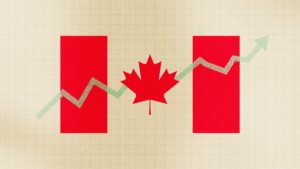
Back in June, I wrote a post about Canada's two active secession movements: one in Alberta and one in Quebec. Since then, there have been some important developments. Alberta secessionists suffered a major defeat. Quebec secessionists are in better shape, but the odds are still against them succeeding anytime soon. That said, both movements may well persist for a long time to come.
Yesterday, Alberta secessionists lost a referendum on secession by a massive 75-25 margin. Pollsters expected a blowout, but this margin is close to the outer edge of expectations. Moreover, the result may actually understate the true extent of opposition to secession in the province. As noted in my earlier post, the question put to the voters was not directly about secession, but rather on whether "the Government of Alberta [should] commence the legal process required under the Canadian Constitution to hold a binding provincial referendum on whether or not Alberta should separate from Canada." Essentially, it was a referendum on whether to hold another referendum. Some "yes" voters might have been confused about what it meant or wanted to hold a second referendum, while planning to vote "no."
United Conservative Party Alberta Premier Danielle Smith (who played a key role in arranging yesterday's vote, despite opposing secession herself) has pledged not to hold any further referenda on secession. She may well be happy to sideline an issue that divides her party (Alberta secessionists are overwhelmingly right-of-center UCP voters).
All of this is bleak news for Alberta secessionists. But it's too early to say their movement is dead. As noted in my previous post, secession movements often persist for many years, even in the face of defeats in referenda and other political setbacks. Scotland, Quebec, and Catalonia are all examples of this phenomenon. And some 25% of Alberta voters did express support for secession, despite opposition from the leaders of all major political parties. That's a minority, but far from an insignificant one.
Meanwhile, in Quebec, on October 5, the secessionist Parti Quebecois (PQ) won the provincial election. But they got only 28% of the vote (the lowest percentage for any winning party in the history of Canadian provincial elections). That translated to a "minority" government that has 59 seats in Quebec's National Assembly (the provincial legislature), 5 short of a majority. And, as discussed in my previous post, secession remains unpopular, with polls showing opposition by a margin of 2-1 or more. For much more detailed discussions of the Quebec election and its ramifications, see analyses by Canadian election/polling experts Eric Grenier and Philippe Fournier.
As Fournier emphasizes, PQ leader Paul St. Pierre Plamondon (known as "PSPP") remains committed to holding a secession referendum. But the minority nature of his governments makes it unclear whether the PQ can find the votes to enact legislation to hold one. The left-wing Quebec Solidaire party (which holds 9 seats) is also pro-independence. But they may not be willing to work with the PQ. In addition, PSPP has promised not to hold a referendum so long as Donald Trump remains president of the United States, claiming it would be too dangerous to do so while Trump continues his trade war with Canada and otherwise threatens the country. Unless Trump dies or gets impeached and removed (both relatively unlikely), he will remain in office until January 2029. Canadian minority governments generally don't last more than two years. So PSPP may not be in power long enough to outlast Trump.
While Quebec secessionists seem unlikely to prevail in the near future, the fact that they managed to return to power is still a sign of the movement's persistence. And they have survived referendum defeats in 1980 and 1995. Thus, the movement is likely to continue to be a thorn in the side of Canadian federal governments, perhaps for many years to come. It has demonstrated its staying power over many years, much more so than Alberta secessionists.
Many Canadians believe Trump's threats against their country have weakened secessionists in both Alberta and Quebec. PSPP's stance is just part of the evidence for this conclusion. Trump's trade war and threats to make Canada the "51st state" have bolstered national unity and made the Liberal Party government of Prime Minister Mark Carney much more popular than might otherwise be the case. Trump is making Canadian national unity - and the Canadian Liberal Party - great again! But for him, the Liberals would likely have lost last year's Canadian federal election to the Conservatives.
Perhaps, all along, Trump has been trying to help the Liberals and stymie secessionists. If that's the true objective of his Canada policy, then maybe it's not quite as evil and stupid as otherwise seems to be the case. On a more serious note, Trump's policies have illegally usurped congressional authority over trade, damaged our economy, and alienated a crucial ally - all for no good reason.
In my June post, I outlined reasons why I am more sympathetic to Alberta's secession movement (motivated by conservative economic ideology and grievances about federal fiscal transfers and energy policies), than Quebec's (motivated by Francophone ethno-nationalism). Although I think the Alberta movement has greater merit than Quebec's, for reasons also summarized in the earlier post, I remain skeptical that Alberta secession would accomplish more good than harm. I also explained why these movements may be of interest to many non-Canadians and why I (an American) comment on them them:
[T]hese events are… of interest to students of federalism and secession, and to anyone who cares about the future of America's northern neighbor and one of our most important allies. And history shows that secession movements often persist even after defeat in a referendum….
From a US perspective, I worry that a successful secession movement would make Canada a weaker and less effective ally. Unlike our current president, I think a strong Western alliance is essential….
Some might find it inappropriate for an American to comment on Canadian politics. I disagree. Canadians and other non-Americans often express views on US politics. And they have every right to do so. Political analysis should be judged on its substance, not on the background of the author. In addition,… Canadian secessionism potentially impacts the US in various ways, and raises broader issues about the morality of secession movements that Americans and others have reason to take an interest in…. I am a longtime academic expert on federalism and secession-related issues, and I know French, as well as English. Thus, I think have the necessary qualifications to write about these issues. Whether the commentary is any good or not, is for others to judge.
The post Update on Canada's Two Secession Movements appeared first on Reason Magazine.




 Bengali (Bangladesh) ·
 English (United States) ·