
 1 hour ago
3
1 hour ago
3 
TLDR
UBS lowered its 12-month KOSPI target to 8,000 from 8,800, a near 10% cut Higher interest rates, a stronger Korean won, and oil above $100 a barrel are the main pressures Consensus earnings-per-share revisions turned negative in September for the first time this year UBS still expects strong KOSPI earnings growth of 256% in 2026 and 38% in 2027 Samsung Electronics and SK Hynix rose after a US semiconductor gauge ralliedUBS cut its 12-month price target for South Korea’s KOSPI index to 8,000 from 8,800. That is a drop of nearly 10% and reflects growing pressure from higher interest rates, a stronger won, and rising oil prices.
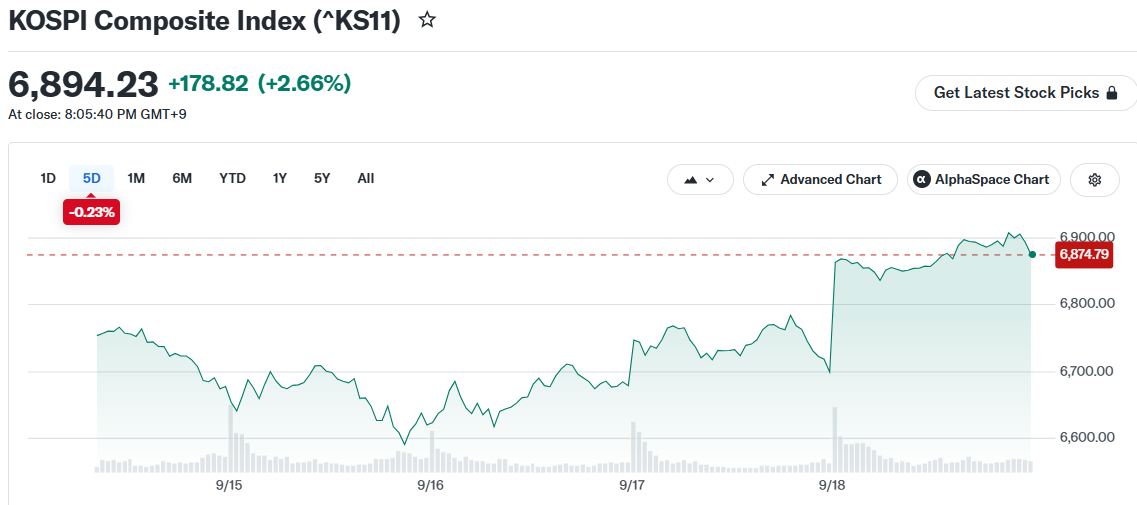 KOSPI Composite Index (^KS11)
Analyst Yong-Suk Son made the call in a note published Friday. He lowered the implied earnings multiple to 7 times from 8 times, citing what he called mounting macro headwinds even as earnings growth stays strong.
One key concern is that consensus earnings-per-share revisions turned negative in September. They fell 0.7% month over month after being positive earlier in the year. Memory chip upgrades that had driven gains earlier have now reversed.
Despite the target cut, UBS still forecasts KOSPI earnings-per-share growth of 256% in 2026 and 38% in 2027. Son said the index may stay rangebound until third and fourth quarter earnings seasons give more clarity on whether those gains can hold.
Rate Hikes and Oil Push Yields Higher
The Bank of Korea has raised rates twice since July. The 10-year government bond yield has jumped to 4.5% from 3.4% at the start of the year. Oil is trading above $100 a barrel, adding to inflation pressure.
A stronger Korean won is also a drag. UBS estimates that for every 1% the won appreciates, KOSPI earnings fall by around 1.1%.
UBS set an upside KOSPI target of 9,200 and a downside target of 5,100, giving a wide range that reflects the uncertain outlook.
On the sector side, UBS said memory chips remain its preferred area. The firm named Samsung Electronics and SK Hynix as top picks. However, it is shifting toward value and quality stocks that offer shareholder returns, given slowing momentum and tighter liquidity.
Asian Markets and Chipmakers Gain
Separately, Asian stocks and bonds edged higher on Friday as oil prices pulled back. Brent crude fell 0.8% to around $104 a barrel, easing some inflation concerns.
Samsung Electronics and SK Hynix both climbed after a key US semiconductor index rallied. Wall Street posted its best session since August the prior day, bouncing back from losses that followed the US Federal Reserve’s first rate hike since 2023.
The 10-year US Treasury yield fell nine basis points to 4.93% as oil retreated. It had hit 5.02% earlier in the week after the Fed move.
MSCI’s regional equities gauge rose 0.5%, though more stocks fell than rose, suggesting gains were not broad-based.
Lower energy prices could give central banks more room to assess the impact of tighter policy, which may support both stocks and bonds in the near term.
The post UBS Cuts KOSPI Target as Rate Hikes and Oil Prices Weigh on South Korean Stocks appeared first on CoinCentral.


 Bengali (Bangladesh) ·
  English (United States) ·