
 2 hours ago
1
2 hours ago
1 

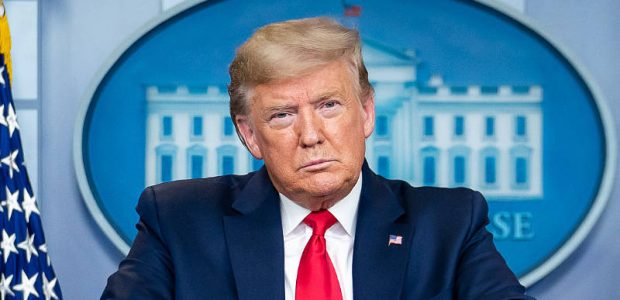
 President Trump’s statement on his UN address, “While Others Have Talked, I Have Acted.” Courtesy of the White House.
This week, in his address to the UN General Assembly, President Trump called out several dictatorial regimes in front of the world, at an institution whose Human Rights Council he has called an embarrassment for enabling Christian persecution and shielding dictators.
The UN has a long record of placing abusive regimes on human rights bodies. In 2003, Libya, then under UN sanctions for terrorism, was elected to chair the Commission on Human Rights, the Human Rights Council’s predecessor. Saudi Arabia won a seat on the council in 2016.
Trump criticized the council at the 2017 General Assembly. He called it “a massive source of embarrassment to the United Nations” that governments with egregious human rights records held seats. The following June, after then-Ambassador Nikki Haley’s attempt to reform the council failed, the United States withdrew.
A White House fact sheet named Venezuela, Cuba, Burundi, China, and the Democratic Republic of Congo as council members with records of continual human rights abuses. It also said the council had passed more resolutions condemning Israel than Syria, Iran, and North Korea combined.
At the 2018 General Assembly, Trump said the council had become “a grave embarrassment to this institution, shielding egregious human rights abusers while bashing America and its many friends.” He said the United States would not return until it was reformed.
The elections continued. In 2020, the General Assembly elected China, Russia, and Cuba to the council. Iran won a seat on the UN Commission on the Status of Women but was removed in 2022 over its crackdown on women protesters. The following year, the Human Rights Council named Iran’s ambassador to chair its 2023 Social Forum. That same year, China and Cuba were re-elected to the council, along with Burundi. In 2024, Saudi Arabia was elected to chair the women’s commission.
When Trump withdrew the United States from the council again in February 2025, a White House fact sheet said Iran, China, and Cuba used it to shield themselves despite their human rights records.
In Tuesday’s speech, Trump described U.S. action against Venezuela. On January 3, U.S. forces carried out Operation Absolute Resolve in Caracas and arrested Nicolás Maduro, who is in federal detention in New York awaiting trial on drug trafficking charges. “Since that day, hundreds of political prisoners have been set free, and we’re working closely with the leaders of Venezuela to forge a much better future for the Venezuelan people,” Trump said.
Trump also cited an oil agreement signed in August with the government of interim leader Delcy Rodríguez, Maduro’s former vice president. He called it “the largest oil deal in history,” saying it covered 65 billion barrels and would benefit both countries.
Trump followed his account of the Venezuela operation with a warning: “The United States will no longer permit threats to America to gain a foothold anywhere in the Western Hemisphere — and if necessary, we will use our unmatched military might to secure the vital national interests of the United States.”
On Iran, Trump said, “I will never allow Iran to have a nuclear weapon.” U.S. military action against Iran’s Islamic Revolutionary Guard Corps (IRGC) began February 28 with strikes that killed Supreme Leader Ayatollah Ali Khamenei. Trump told the Assembly that as a result of Operation Epic Fury, “all 159 ships of their navy are now lying at the bottom of the sea,” Iran’s air force “is gone,” and its economy “is gone,” with inflation “well over 300%.”
He posed a choice between a deal that would let Iran rebuild and a decision to “annihilate the Islamic Republic.” He predicted a deal after the U.S. midterm elections and urged countries to enforce the “complete economic isolation of Iran” until it ends attacks on commercial shipping, gives up its nuclear ambitions, and stops its support for terrorism. Most of Iran’s delegation walked out during his remarks.
Turning to Cuba, Trump said “the communist regime is under great pressure, the biggest pressure they’ve ever been under. It’s an absolutely failed state. It’s failing like never before, and it will fall.” He said Secretary of State Marco Rubio was “deep into negotiations with Cuba” and added, “We’ll not allow a haven for foreign adversaries to threaten America on our own doorstep.” He also said, “Communism will never be coming to America, but freedom will be coming to Cuba.”
The Cuban delegation walked out during his remarks. Cuba’s foreign minister, Bruno Rodríguez Parrilla, called them “falsehoods and slanders” and denied that formal negotiations were under way. The next day, Rubio said Cuba had a “golden opportunity” to change course and that the U.S. was prepared to help, while declining to speculate on military action.
Trump has predicted the Cuban government’s collapse since Maduro’s capture in January, when he said the island would soon “fall of its own volition.” At the Shield of the Americas summit in Doral, Florida, on March 7, he said Cuba was in its “last moments” and did not rule out a “friendly takeover.” After backchannel talks collapsed in May, the administration’s timeline lengthened. In August, Rubio told Axios the policy required “patience and persistence,” aiming to put Cuba “on an irreversible glide path toward a different future” by the end of Trump’s term. New sanctions followed on September 17.
The Human Rights Council’s Independent International Fact-Finding Mission on Iran found reasonable grounds to believe that two U.S. airstrikes on February 28 amounted to war crimes. The strikes killed at least 178 civilians, including children at a school in Minab. The mission also found that Iran’s government committed crimes against humanity during its crackdown on protesters. The Pentagon declined to comment while its own investigation continues.
This report illustrates why Trump withdrew the United States from the council. For decades, Iran’s rulers have repressed, tortured, and killed their own citizens. Estimates of those killed in this year’s protest crackdown reach around 40,000. Iran has also supported Hamas, Hezbollah, and the Houthis. Cuba has spent decades suppressing political opposition and restricting freedom of speech and the press.
Yet the council has repeatedly given abusive governments seats, and its latest Iran report subjects two U.S. strikes to the same level of scrutiny as the IRGC’s nearly 50 years of abuses. That record helps explain Trump’s decision to leave the council and confront those governments directly.
The post Trump at the UN: “While Others Have Talked, I Have Acted” appeared first on The Gateway Pundit.



 Bengali (Bangladesh) ·
  English (United States) ·