

Forthcoming Steam Frame aside, It's been a while since we had anything actually shake up the VR space with any kind of scale. But if "insider reports" that the usually reliable VR leaker SadlyItsBradley (Brad Lynch) relays are anything to go by, we could have some greatly improved VR headsets in the pipeline thanks to industry movements towards more Micro-OLED tech.
That pipeline isn't too short, unfortunately, as Lynch explains that mass production won't be here for a couple of years:
Insider Reports are indicating that Samsung Display has initiated talks with equipments suppliers to build a fab that can produce these ultra high brightness Micro-OLED displaysSDC will order the equipment this year, install it in 2027, with mass production starting in 2028 🥹 https://t.co/2zVNgEHmISJune 15, 2026
"Insider Reports are indicating that Samsung Display has initiated talks with equipment suppliers to build a fab that can produce these ultra-high brightness Micro-OLED displays. SDC will order the equipment this year, install it in 2027, with mass production starting in 2028."
Our Jacob Ridley got to try out Micro-OLED tech earlier this year in a Pimax VR headset. And the long and short is that he found it really impressive, preferring it to traditional QLED optics. That one was using a Sony panel with a lower vertical resolution but still-high pixel-per-degree clarity of 53 thanks to reduced FoV.
While he noticed a little more glare than usual, it wasn't too distracting and has the benefit not only of the usual vibrancy of OLED, but also of being crystal clear and having no discernable screen door-ing at all. The only real downside is the extra few-hundred dollars slapped on top.
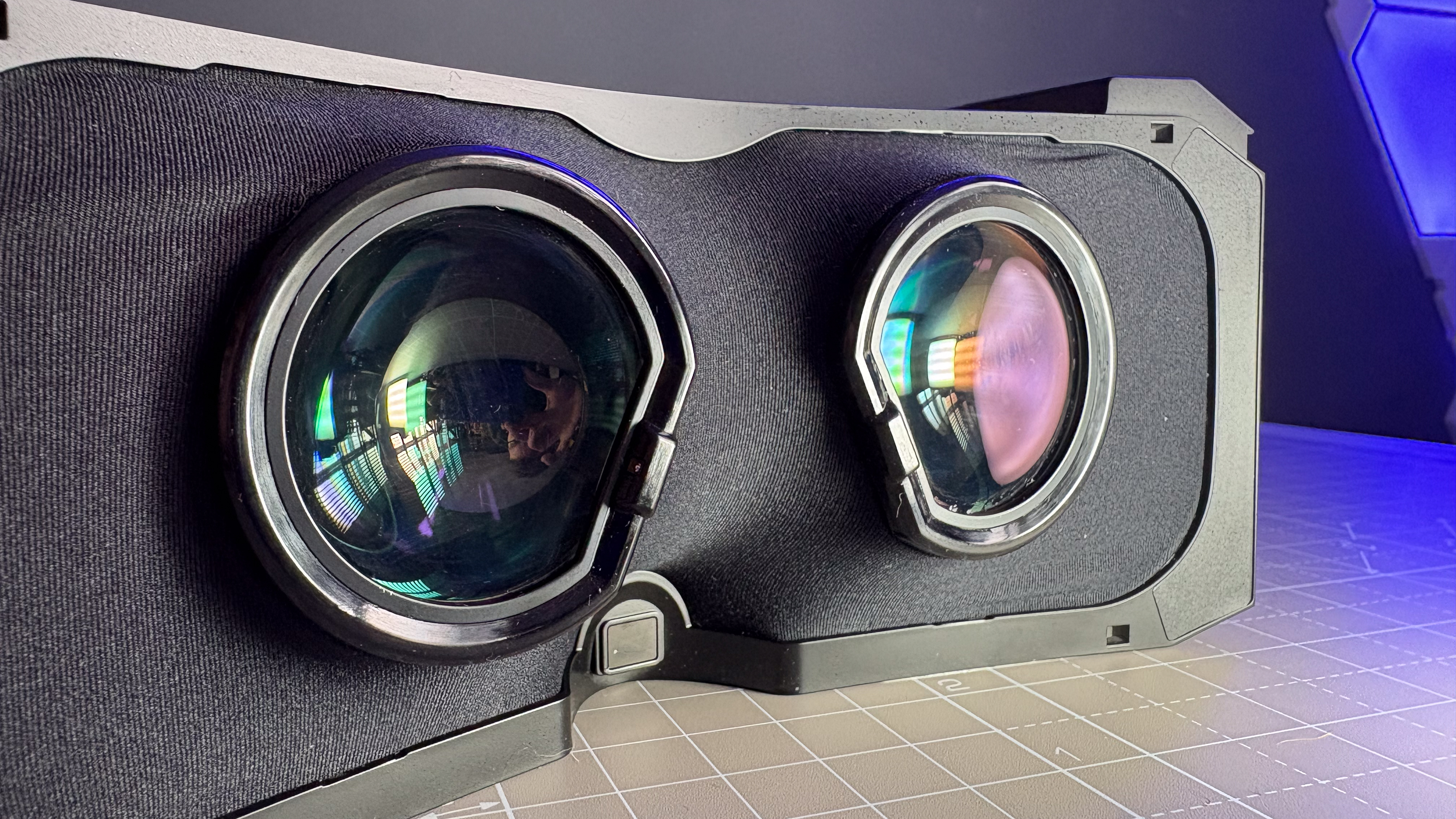
Micro-OLED's quality mostly comes down to the sheer pixel density that is possible because the light-emitting diodes are put into silicon rather than glass as would usually happen with an OLED. Manufacturing on silicon wafer substrates can be much more precise, so the number of pixels per inch can be orders of magnitude higher with a Micro-OLED than with a standard high-density PC monitor.
It's a process that's still very much in its infancy, even if it has been used in some places, such as for the Apple Vision Pro and the aforementioned Pimax headset. Sony has been the big player in this space until now, but it seems Samsung is pushing to get things up and running too.
With displays being one healthy bastion during a global memory and storage crisis, it's good to hear news like this, even if any big projected industry shifts are still a couple of years out.




 Bengali (Bangladesh) ·
  English (United States) ·