

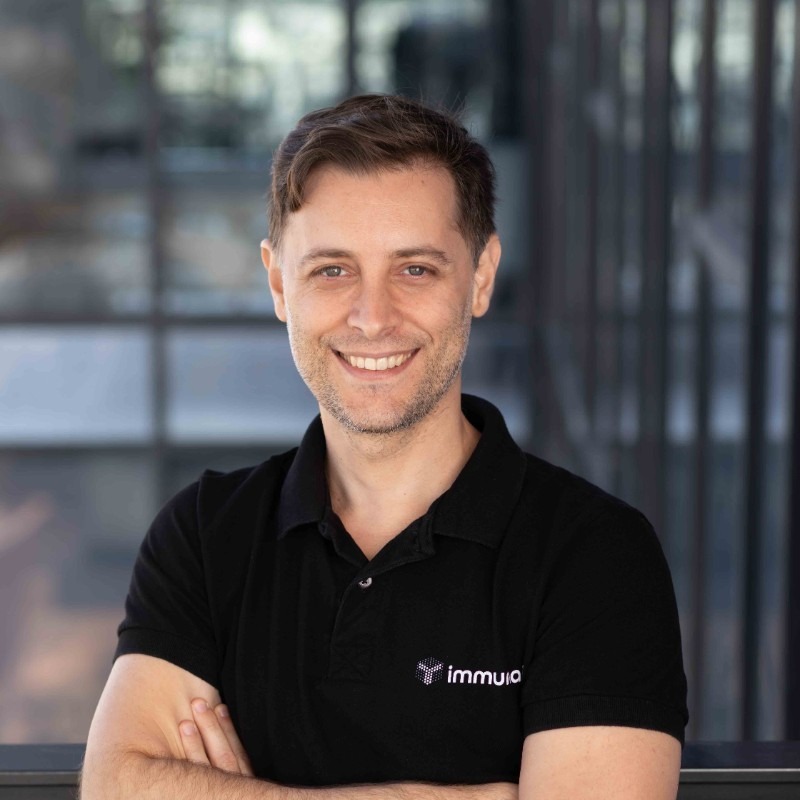
 Noam Solomon, co-founder and CEO of Immunai
For decades, the industry has organized itself around a single question: how do we discover more, and better, drug candidates? Target identification keeps getting smarter, molecule generation keeps getting faster, and AI has now touched nearly every stage of early discovery. Yet a molecule is only ever as good as the patients it happens to be tested on, and that half of the equation has received a fraction of the innovation investment.
Consider what happened across non-small cell lung cancer last year. Seven new FDA approvals arrived in 2025, each tied to a specific genomic alteration rather than a broad diagnosis, spanning antibody-drug conjugates, bispecific antibodies, and targeted kinase inhibitors. That wave didn’t happen because the underlying biology of lung cancer changed. It happened because the field finally had the tools to see that “lung cancer” was never one disease to begin with, and to match each therapy to the subset of patients whose tumors were actually driven by the mechanism it targets.
Contrast that with a 2023 JAMA Internal Medicine analysis of drugs the FDA approved between 2018 and 2021, which found that roughly one in ten had failed to meet its primary efficacy endpoint in the pivotal trial that supported approval. Some of those drugs went on to help real patients anyway. But a meaningful share of what looks like scientific failure in this industry is actually a measurement failure: a real effect, diluted past the point of statistical detection by a population that was never properly stratified in the first place.
Why patient selection is harder than it sounds
The instinct, when a trial disappoints, is to blame the molecule. Increasingly, that instinct deserves scrutiny. A 2025 study in a Nature portfolio journal found that oncology trials using biomarkers to stratify patients tend to show meaningfully higher success rates than trials that don’t, and the FDA has now recognized dozens of genes, along with markers like MSI-H and tumor mutational burden, as validated predictors of response across cancer types. That is real progress, and it still understates how much work remains, because a biomarker that predicts response in an observational cohort does not automatically hold up once it’s tested prospectively.
The PROFILE trial in Crohn’s disease is instructive here. A blood-based biomarker had shown real promise in earlier observational research, predicting which newly diagnosed patients were likely to face an aggressive disease course. When that same biomarker was tested in a properly powered interventional trial, it failed to demonstrate the treatment interaction researchers were looking for. The result wasn’t a wasted trial; researchers now know, with far greater confidence, that this particular signal isn’t the one to build a stratification strategy around, which is exactly the kind of finding that should redirect resources rather than get quietly filed away as a disappointment.
That is the deeper lesson pharma needs to sit with. Stratifying patients well is not a matter of bolting one more biomarker onto an inclusion checklist and calling it precision medicine. It requires understanding how a patient’s underlying biology behaves before treatment starts, how confidently that behavior predicts response, and whether the signal actually replicates once real dollars and real patients are on the line.
What separates the companies that will win this decade
Bringing a new drug to market now costs an average of $2.67 billion for large pharmaceutical companies, according to a recent Deloitte estimate, and a substantial share of that cost has nothing to do with the underlying chemistry or biologic design. It comes from enrolling patients who were never going to respond, dosing without a clear rationale for who needs more and who needs less, and running trials against populations so heterogeneous that a genuine effect gets lost in the noise before anyone has a chance to see it.
Every company chasing AI-driven drug discovery right now has access to increasingly similar tools for generating candidates faster, which means discovery speed is likely to commoditize as a source of advantage much sooner than most pharma strategy decks currently assume. What won’t commoditize as easily is the discipline of knowing, earlier and with more precision, which patients a given mechanism is actually built for, paired with the infrastructure to prove that before a trial is designed rather than after it fails.
The companies that build that discipline into how they run trials, not just how they design molecules, are the ones whose late-stage failure rates will start to look structurally different from everyone else’s over the next several years. That is a harder capability to build than a better screening algorithm, and precisely because it’s harder, it’s the capability that will end up mattering more.
The next generation of breakthrough therapies won’t just be better designed. They’ll be better matched to the patients who were always going to benefit from them, identified early enough that the trial actually has a chance to prove it.
About Noam Solomon
Noam Solomon is the co-founder and CEO of Immunai, a biotech startup using single-cell genomics and machine learning to discover and develop novel therapeutics that reprogram the immune system. Noam, who began his studies at Tel Aviv University at the age of 14 and earned his bachelor’s degree in computer science by 19, continued his academic journey earning two PhDs at MIT and Harvard. While at MIT, Noam met his co-founder, Luis Voloch, and launched Immunai in 2018. Under Noam’s leadership, Immunai has partnered with top pharmaceutical companies and academic institutions to improve clinical trial success rates and therapy effectiveness.




 Bengali (Bangladesh) ·
 English (United States) ·