

Rockets are launching to space on a near-daily basis these days, but short of livestreaming a liftoff from the comfort of your Wi-Fi router, relatively few spectators are in the right place and time to see one with their own eyes.
That wasn't the case Tuesday morning (Oct. 13), when SpaceX launched the CRS-35 mission for NASA. A Falcon 9 rocket lifted off from Pad 40 at Cape Canaveral Space Force Station in Florida at 6:35 a.m. EDT (1035 GMT), carrying a cargo variant of SpaceX's Dragon spacecraft on the company's 35th commercial resupply mission to the International Space Station (ISS). Following the northward path of the space station's orbit at the time, the rocket flew a trajectory along the United States' East Coast.
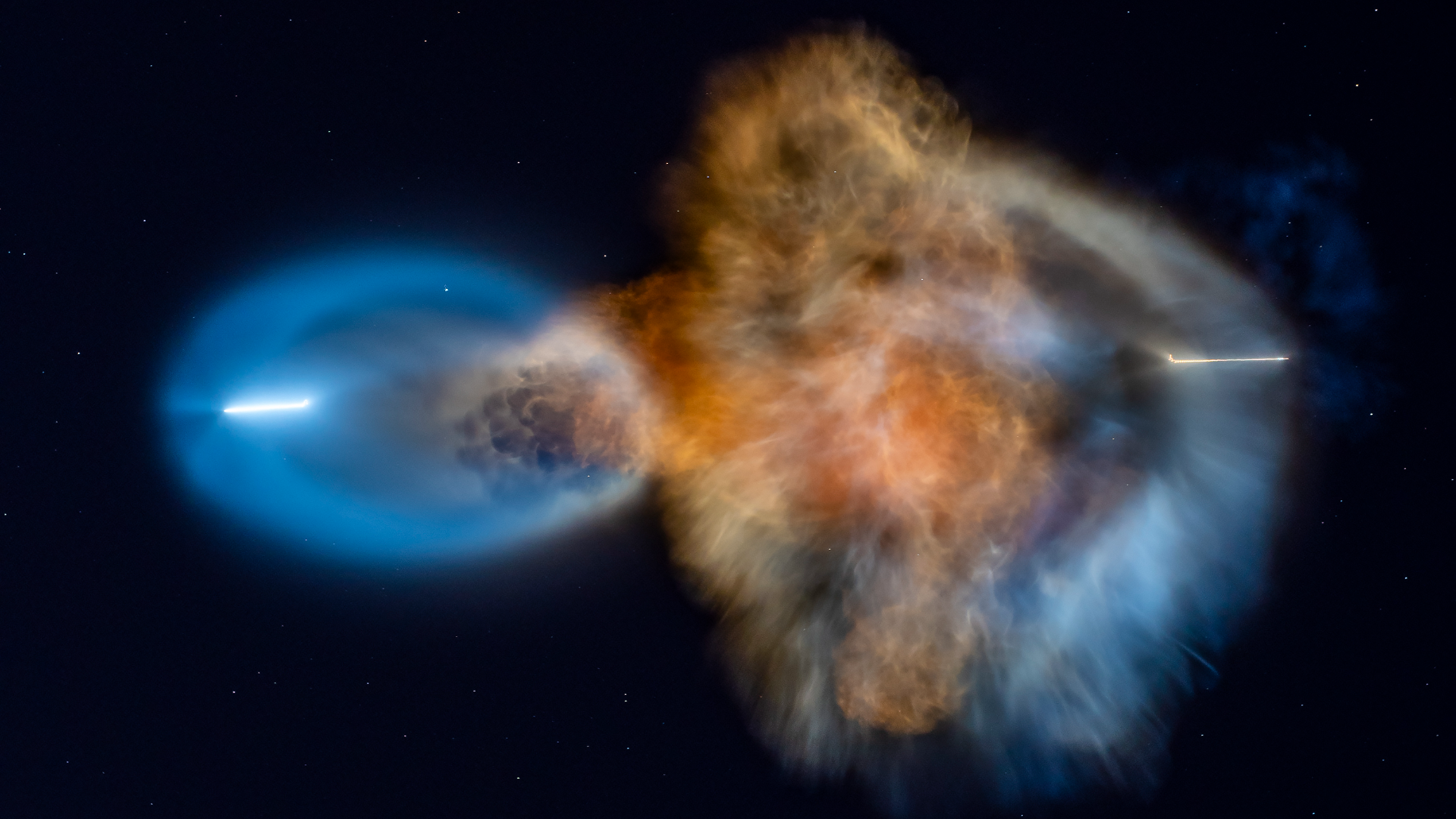
Falcon 9's expanding engine plume grew substantially wider than the rocket itself as it climbed in altitude into thinner, less dense air, and was illuminated by the early dawn light, making the sight visible to millions. "You can imagine my surprise when I opened my back door to let the dogs out this morning," Ellen Alence told Space.com. She snapped a pic of the rocket from her farm Colbert, Georgia.
"Many of you are talking about the 'space jellyfish' following this morning's launch from Space Launch Complex 40 at Cape Canaveral Space Force Station in Florida," NASA's Kennedy Space Center wrote in a post on X. The post explains the "jellyfish" phenomenon that is sometimes visible during dawn and dusk launches, and included additional photos of the launch.
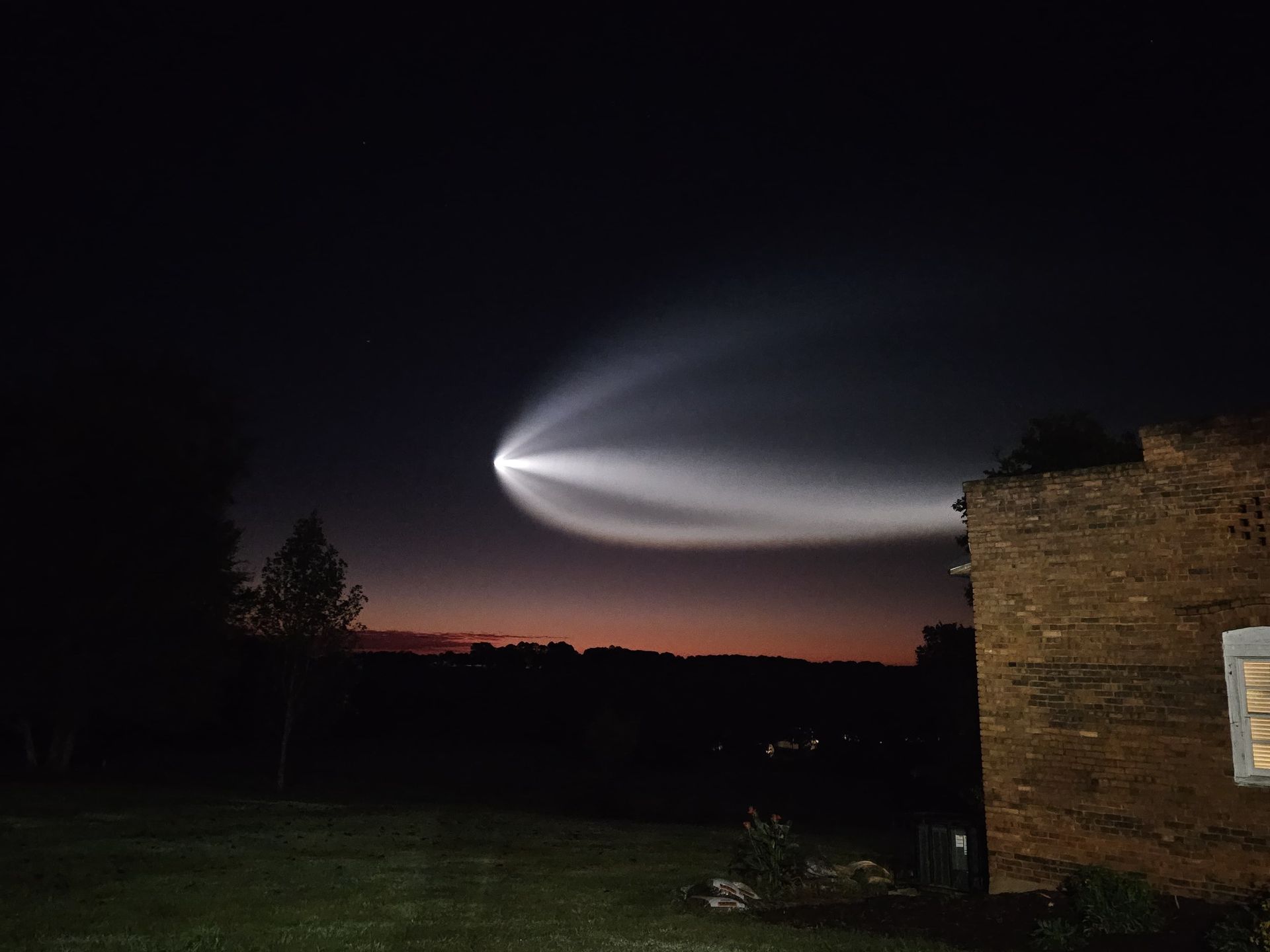 This morning’s SpaceX rocket launch, as seen from a farm in Colbert, Georgia.Ellen Alence
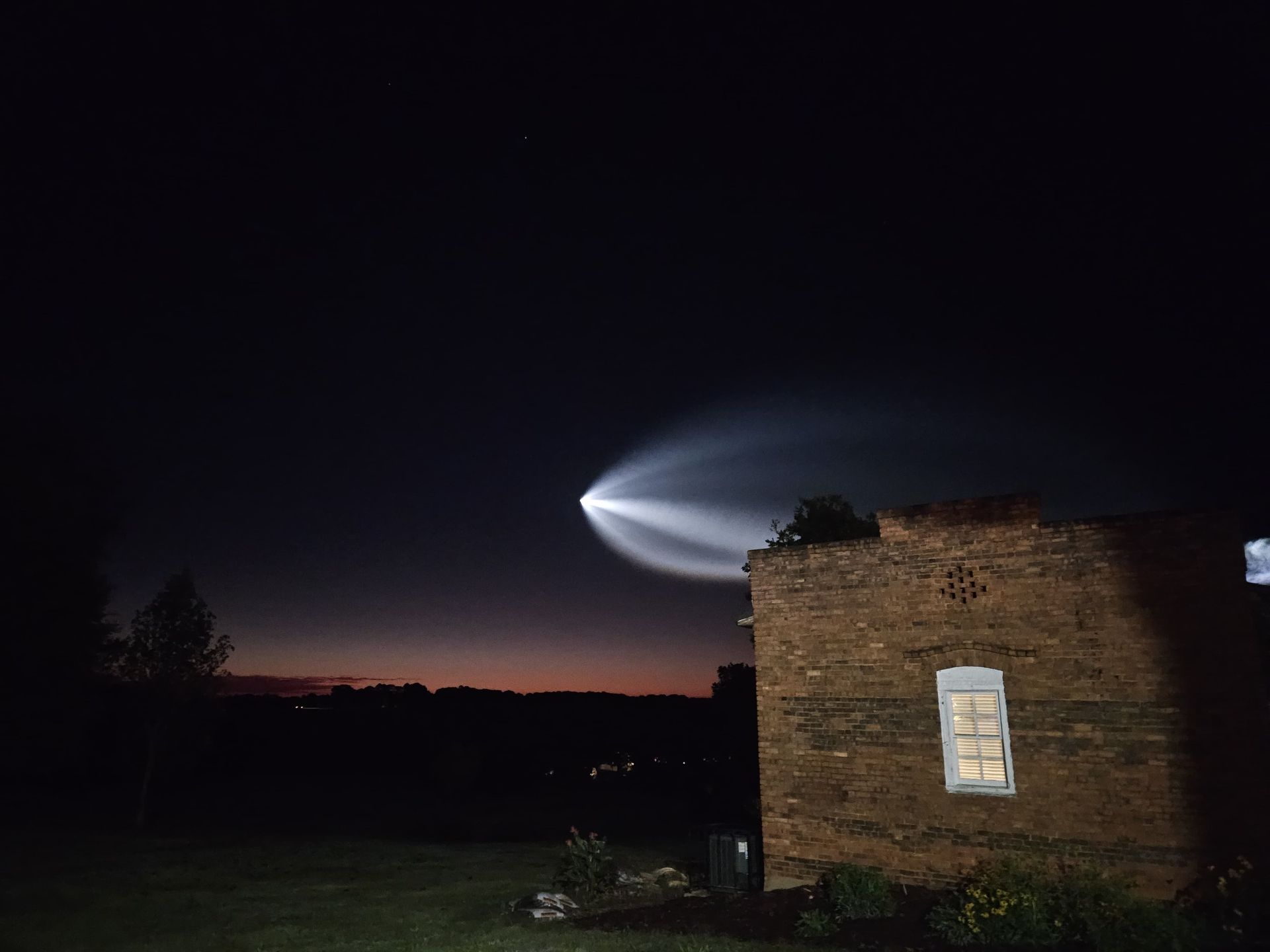 This morning’s SpaceX rocket launch, as seen from a farm in Colbert, Georgia.Ellen Alence
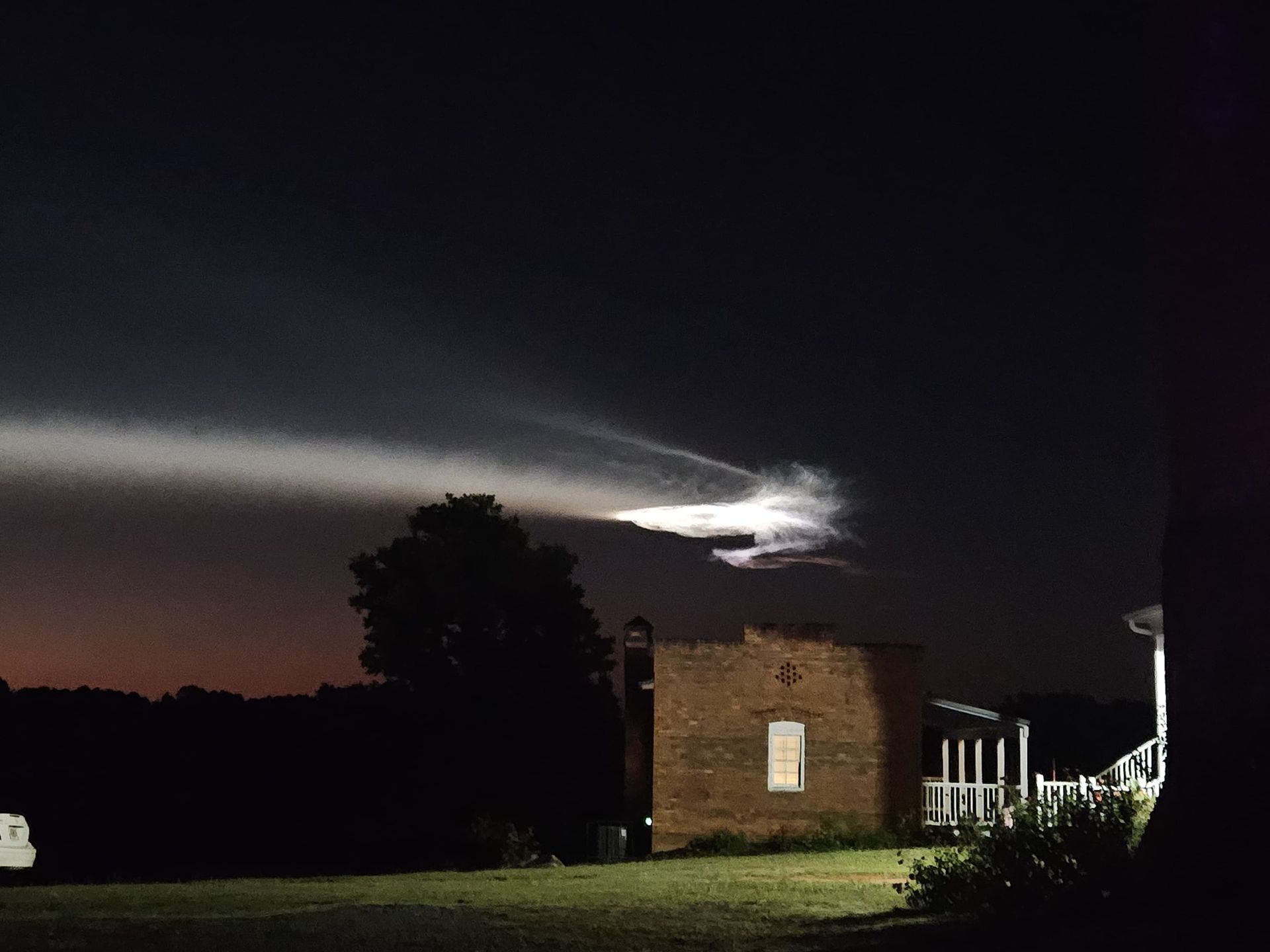 This morning’s SpaceX rocket launch, as seen from a farm in Colbert, Georgia.Ellen Alence
"A jellyfish happens near sunrise or sunset when the exhaust plume from the rocket becomes brightly illuminated, creating a glowing shape resembling a jellyfish," the post said.
Many of you are talking about the “space jellyfish” following this morning’s launch from Space Launch Complex 40 at Cape Canaveral Space Force Station in Florida.More than 6,300 scientific investigations and cargo are on their way to the @Space_Station, as part of SpaceX's 35th commercial resupply services mission for NASA.A jellyfish happens near sunrise or sunset when the exhaust plume from the rocket becomes brightly illuminated, creating a glowing shape resembling a jellyfish.Show us where you captured the jellyfish?October 13, 2026
Further up the coast, Richard Mack Wilson-Leigh spotted the flight from Durham, North Carolina. His view of the rocket came just seconds before the vehicle's stage separation, which was followed immediately by the rocket's main booster performing an engine burn to right its trajectory for landing back at the Cape. Wilson-Leigh said that part caught him off guard more than the initial site of the rocket. "I thought it blew up at first," he jokingly told Space.com.
"At first, I thought it was a comet," Wilson-Leigh said. "My mind jumped between two thoughts: that is just beautiful beyond belief, and it is the end of the world.”
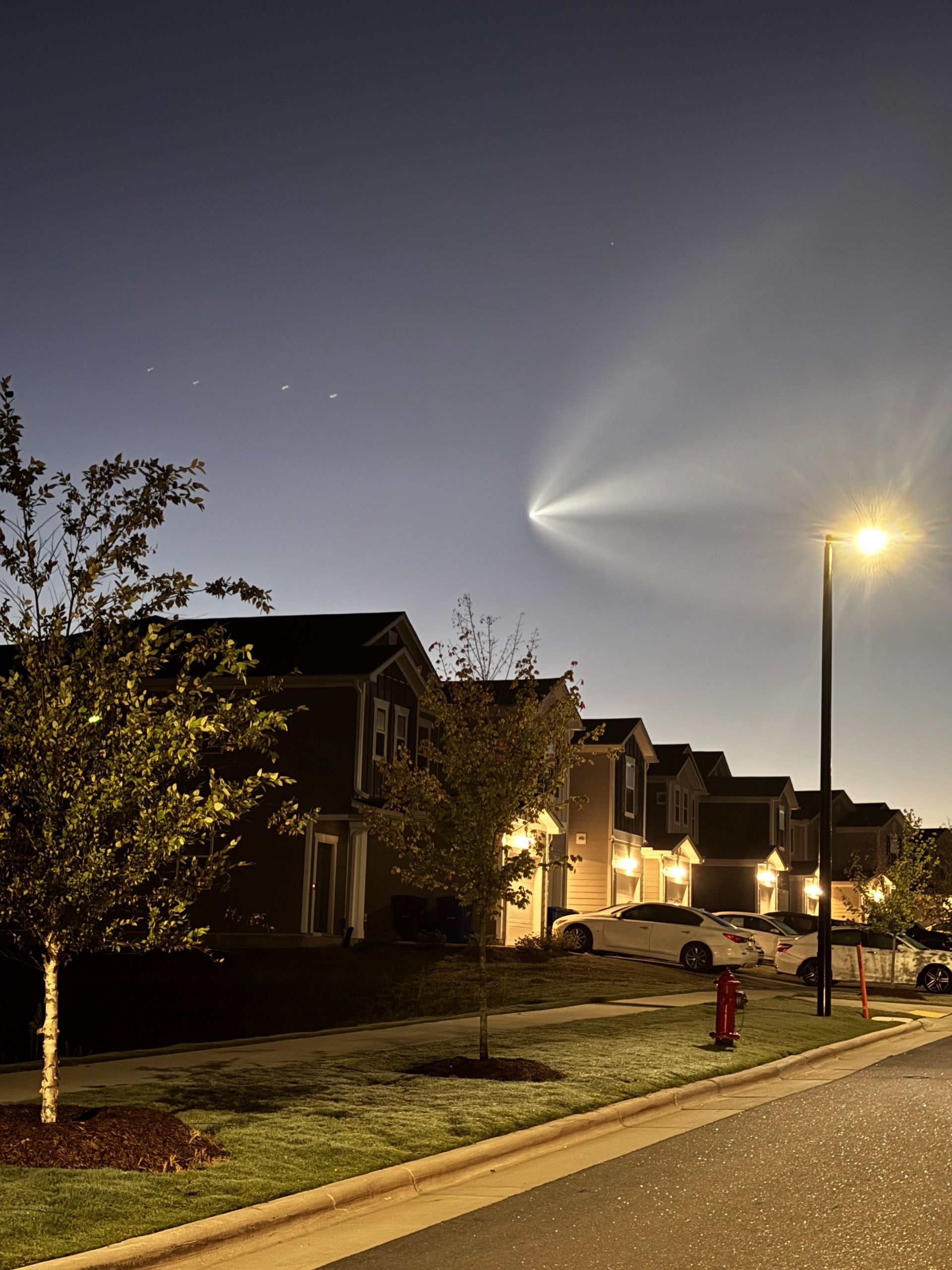
That stage separation came about 2.5 minutes after liftoff, and put on a dazzling display for those awake to see it this morning. As Falcon 9's booster began the journey to its landing zone, the rocket's second stage continued onward to orbit with Dragon and the capsule's 6,300 pounds (2,860 kilograms) of cargo for the ISS.
The spacecraft will spend roughly two days catching up to the ISS, where a recent personnel rotation swapped the astronauts of SpaceX's Crew-12 mission with those of Crew-13. The latter arrived aboard the orbital laboratory Oct. 1, which was followed several days later by the return of Crew-12 to Earth on Oct. 8.
Falcon 9 launches the CRS-35 mission to the @Space_Station https://t.co/QiHIqlDLTHOctober 13, 2026
The Dragon carrying the contents of CRS-35's manifest will arrive at the station Thursday morning (Oct. 15), and will autonomously dock to the space-facing port of the Harmony module at around 11 a.m. EDT (1500 GMT). Coverage of the arrival here at Space.com beginning at 9:15 a.m. EDT (1315 GMT).



 Bengali (Bangladesh) ·
  English (United States) ·