
 1 month ago
45
1 month ago
45 
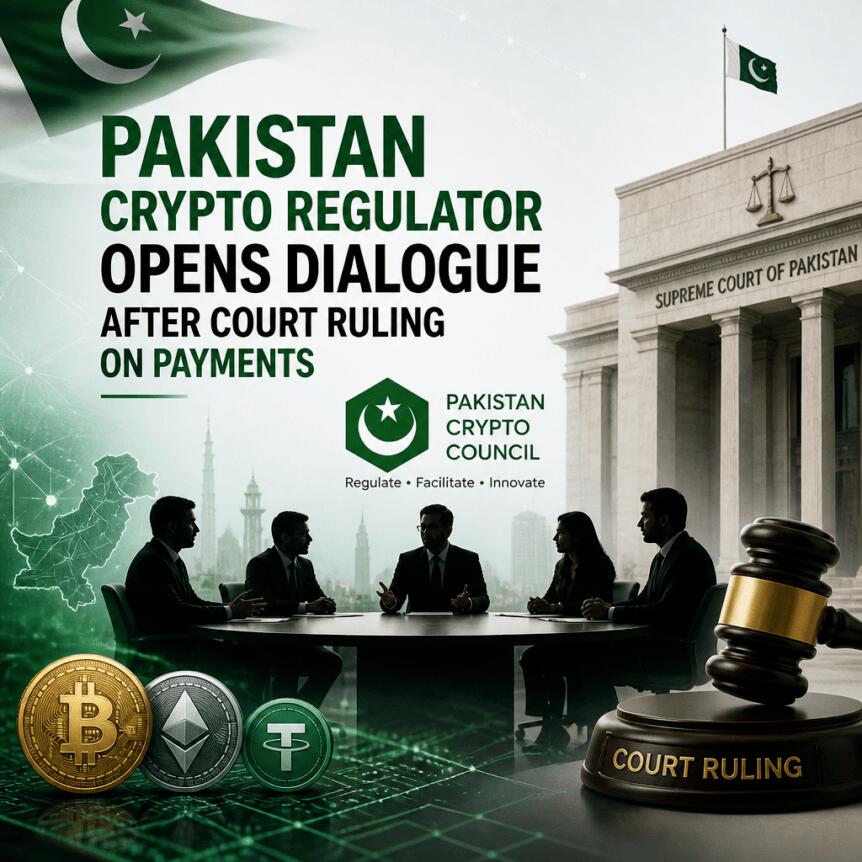
Pakistan’s virtual-asset regulator is urging continued dialogue on how digital assets should be assessed under Islamic law, after a prominent scholar backed a religious ruling that certain crypto-based purchases are impermissible.
Pakistan Virtual Assets Regulatory Authority (PVARA) chairman Bilal bin Saqib met with Mufti Taqi Usmani, and in a post shared on Saturday he said the conversation covered blockchain technology, digital assets, stablecoins, and tokenized real-world assets (RWAs), alongside the need to shield Pakistanis from fraud and financial harm.
Key takeaways
PVARA chairman Bilal bin Saqib called for scholars and regulators to keep discussing how Islamic law should apply to different categories of digital assets. Mufti Taqi Usmani and other scholars reportedly issued a ruling declaring crypto-based purchases impermissible, including transactions involving stablecoins such as USDT. Saqib did not directly dispute the religious ruling; instead, he emphasized differentiated technical and Shariah review rather than one uniform approach. The episode underscores a broader challenge for Pakistan’s move toward a regulated crypto industry: maintaining compliance both legally and religiously.Religious ruling vs. regulator’s call for category-by-category review
According to Pakistani outlet Dawn, Usmani and five other scholars signed an Islamic legal ruling issued by Jamia Darul Uloom Karachi on Friday. Dawn reports the ruling states that purchases made using cryptocurrency—including stablecoins such as USDT—are not permitted because, under their interpretation of Islamic law, digital tokens do not constitute recognized property or wealth.
Speaking after his meeting with Usmani, Saqib chose a different emphasis. He said the discussion highlighted that digital assets are not a single, uniform instrument and therefore should not be judged through one lens. Instead, he argued for “careful technical assessment alongside rigorous Shariah examination,” suggesting that separate asset types and use cases may warrant distinct evaluation.
Pakistan’s regulated crypto pivot intensifies the stakes
The exchanges come as Pakistan moves away from years of broad restrictions and toward licensed oversight for virtual assets. In April, the State Bank of Pakistan reportedly allowed banks to open accounts for virtual asset service providers (VASPs) that are licensed by PVARA, ending an eight-year restriction on regulated institutions dealing with crypto.
That banking adjustment followed the passage of Pakistan’s Virtual Assets Act 2026 in March, which established PVARA as the statutory body responsible for licensing and monitoring virtual-asset activities. With this framework in place, the PVARA chairman’s comments indicate the regulator sees public acceptance and compliance scrutiny as tightly linked.
The religious question may carry particular weight in Pakistan’s social and political context. The 2023 national census reported that about 231.7 million people—96.35% of the population—identified as Muslim.
Stablecoins and tokenized RWAs at the center of the debate
Within Saqib’s remarks, stablecoins and tokenized real-world assets (RWAs) featured prominently, reflecting how mainstream crypto utility increasingly extends beyond volatile tokens. Stablecoins are designed to track a reserve-based reference value, while tokenized RWAs aim to represent exposure to conventional assets through blockchain mechanisms.
At the same time, the religious ruling reported by Dawn specifically flagged crypto-based purchasing—including stablecoin payments—as impermissible under the scholars’ view of what counts as legitimate property or wealth. Saqib’s response did not concede or reject the legal reasoning; rather, he stressed that regulators and scholars should continue distinguishing among categories of digital assets and examine their practical functions in addition to their Shariah interpretation.
What investors and builders should watch next
For Pakistan’s licensed crypto sector, the immediate question is whether ongoing engagement between PVARA, religious scholars, and industry participants leads to a clearer framework for how different tokens are treated in real-world transactions. Saqib’s call for continued dialogue suggests the regulator may seek more granular alignment rather than a blanket approach—something that could influence how VASPs structure products, payment rails, and consumer-facing services.
Readers should watch for follow-up statements from PVARA, the State Bank of Pakistan, and religious authorities clarifying how guidance may evolve for stablecoin payments and other crypto-enabled commerce, especially as the country’s regulated market expands.
This article was originally published as Pakistan Crypto Regulator Opens Dialogue After Court Ruling on Payments on Crypto Breaking News – your trusted source for crypto news, Bitcoin news, and blockchain updates.


 Bengali (Bangladesh) ·
  English (United States) ·