

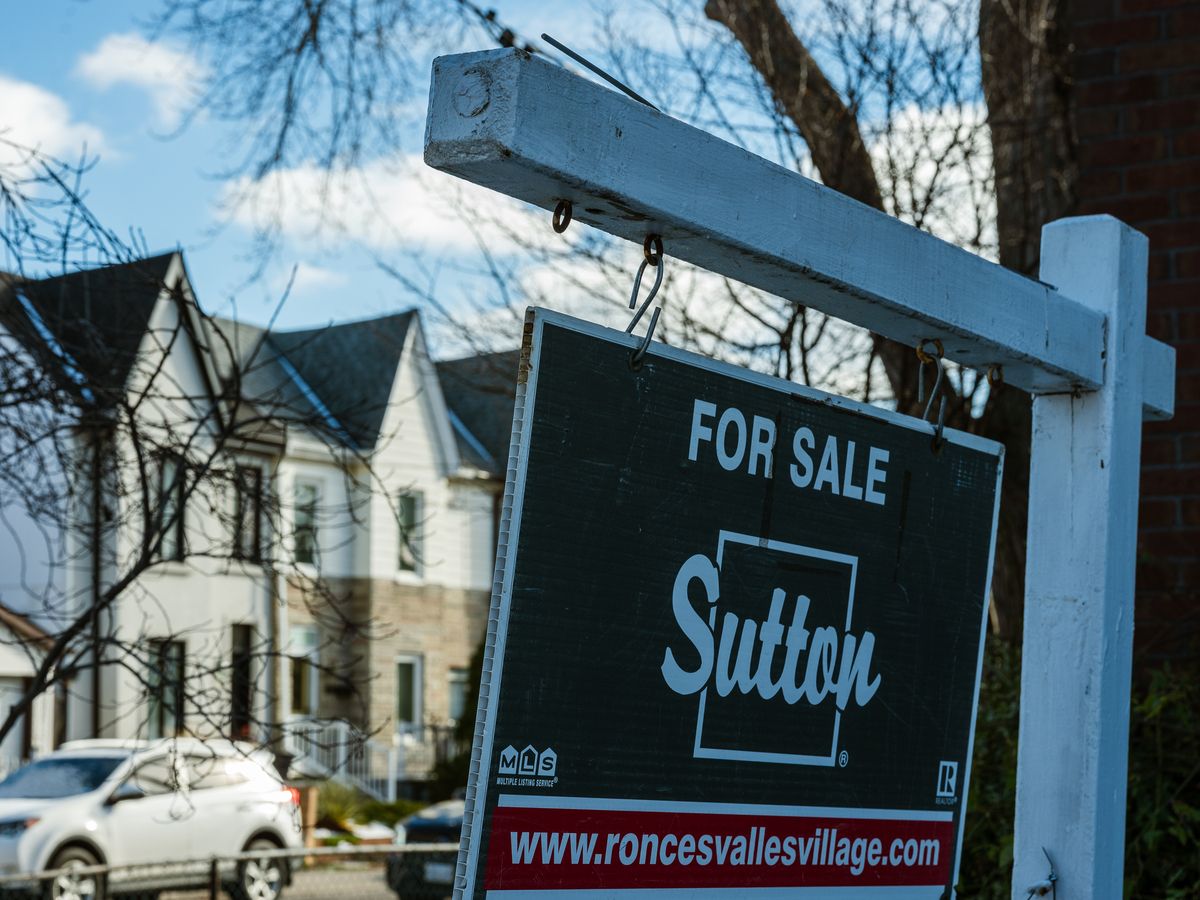
A majority of people who aren’t already homeowners have no plans to buy a house within the next year, according to a recent survey.
A poll of 1,501 Canadians on homeownership sentiment by personal finance platform NerdWallet Inc. indicated cost of living played into their lack of plans but affordability was the primary roadblock.
“The market is inaccessible to first-time buyers and there’s no surprise that Canadians believe the system is broken,” said Clay Jarvis, NerdWallet’s lead writer and spokesperson on Canadian real estate and macroeconomic trends.
More than 50 per cent of respondents who were non-homeowners did not plan on buying a house within the next year. Rising home prices and unpredictable costs were top barriers to homeownership for 23 per cent, with 34 per cent of those being generation Z , the oldest of whom are 29.
Meanwhile, survey recipients who already own property were more likely to plan to purchase homes, with seven per cent looking to scale up or purchase an investment property in 2026, according to the survey.
Thirty-three per cent were concerned about the price of down payments or mortgage rates. Despite a sluggish real estate market, the Canadian Real Estate Association (CREA) forecast the national average home price will rise 1.5 per cent on an annual basis to $688,955 in 2026 and $695,094 in 2027, depending on geopolitical and economic factors. However, it varies by geography, with virtually no growth seen in B.C., Alberta, and Ontario, and gains of two per cent to five per cent in other provinces.
“What’s really holding people back from buying are basic financial barriers like mortgage rates, home prices and low down payment savings. The real issue is about affordability,” said Jarvis.
Among survey respondents, 28 per cent said they were committed to renting while seven per cent planned to stay with relatives despite wanting to enter the market.
“When home prices are rising, rents follow suit. And that means renters are struggling with higher rental costs and a bigger required down payment to buy. Cost of living increases, especially with higher inflation for a few years, have squeezed savers’ cash flow even more,” said Jason Heath, a certified financial planner at Objective Financial Partners Inc.
Jarvis said, “It’s easier to buy a home when you own one, which speaks to the inequality that homeownership creates. Property-derived wealth stays within families and young Canadians struggle to build wealth for a major investment.”
Weaker buyer demand affects sellers. Last month’s home sales were nine per cent below the five-year average and nearly 19 per cent below the 10-year average, according to CREA, despite May historically being an active month for real estate.
In the NerdWallet survey, more than four in 10 reported feeling some form of regret related to homeownership. Most regret was tied to unexpected out-of-pocket maintenance costs, according to the survey. Nine in 10 respondents agreed that homes in Canada are overvalued and nearly seven in 10 found the housing market unfair to first-time buyers.
While the majority of respondents said homeownership was out of reach, respondents aged 18-34 were twice as likely to agree to this sentiment than those over 55.
“We need to get back to an overexuberant market for Canadians to feel confident purchasing property. Seeing some movement in prices and a stronger job market would help, otherwise the piece of the pie that’s available to people who don’t already own homes is going to get smaller,” said Jarvis.
“People are really up against it financially. If people don’t know how much they’re going to need to spend on food or gas next month, they’re going to have really thin financial margins,” said Jarvis.
• Email: [email protected]
Canadian home sales post first 'meaningful' gain in 2026Why this developer thinks we need even more rental housing




 Bengali (Bangladesh) ·
  English (United States) ·