

On Nov. 14, 1969, the Apollo 12 mission launched to the moon. This was the second moon landing of the Apollo program.
The two astronauts on board were Pete Conrad, commander, and Alan Bean, the lunar module pilot. Astronaut Richard Gordon, the command module pilot, stayed in the command module and orbited the moon while his crewmates went to the surface. The astronauts made a pinpoint landing in a lunar mare called the Ocean of Storms.
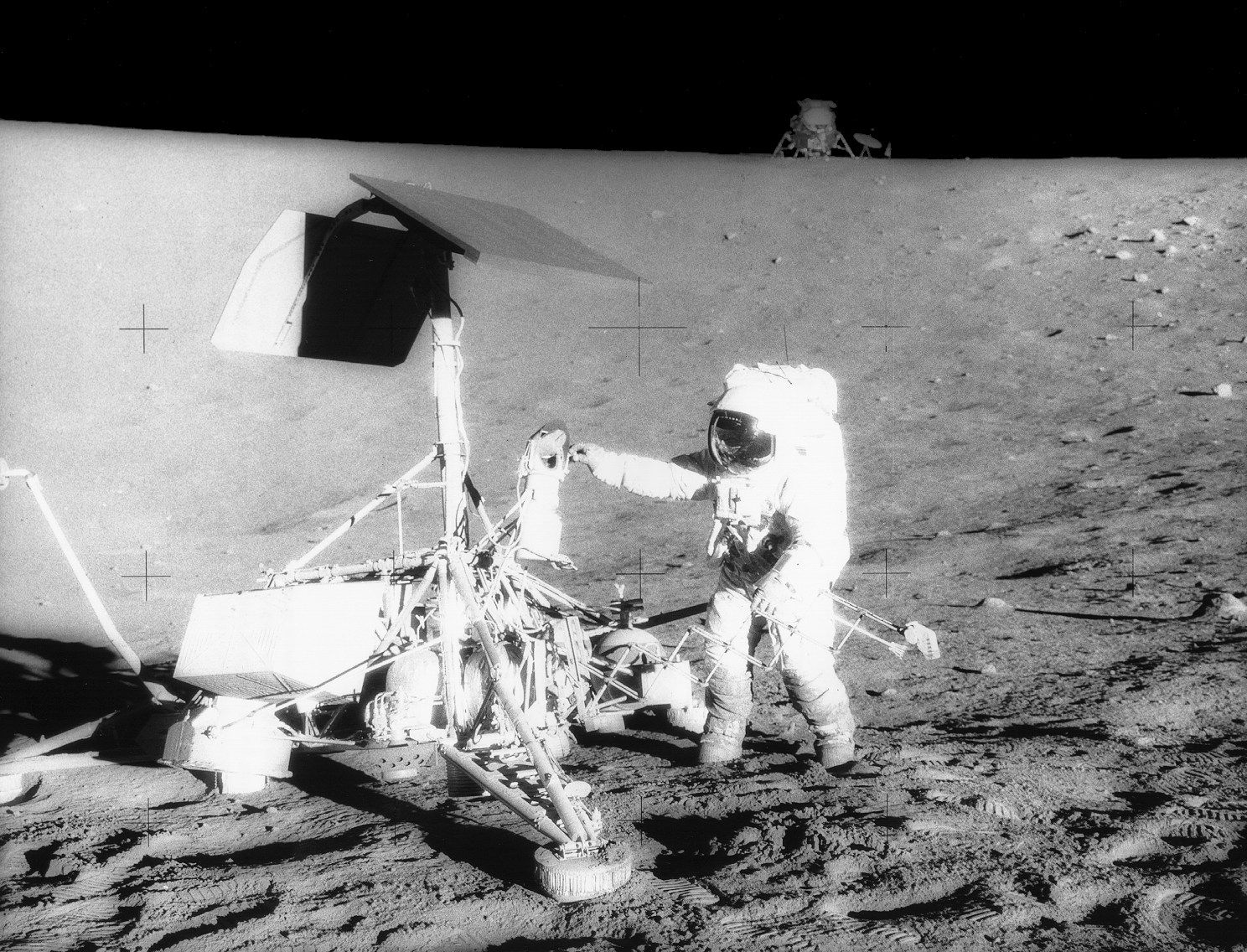
The previous moon mission, Apollo 11, drifted far from the planned landing zone. But Apollo 12 landed close to a scientific target. That target was a robotic lander called Surveyor 3. Scientists wanted to look at Surveyor 3 to see how well the spacecraft lasted on the moon since it landed there more than two years earlier.
The Apollo 12 moonwalkers also performed a lot of moon science. The astronauts picked up 75 pounds of moon rocks. Most of the rocks were basalts that formed from molten lava. These basalts showed the Apollo 12 landing site is more than 3 billion years old.
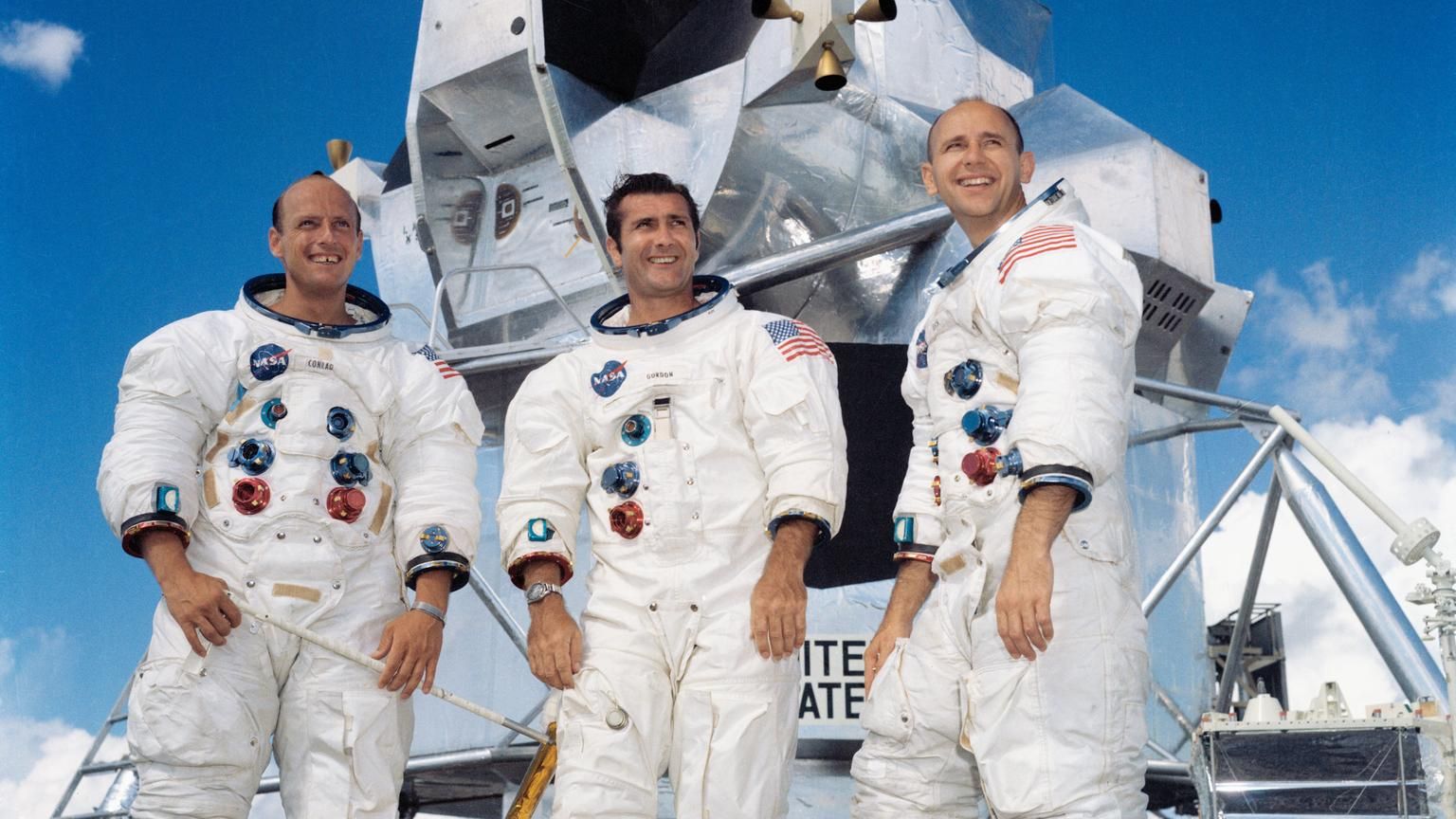
Why it mattered
Apollo 12 proved that the Apollo 11 moon landing was not just a one-off stunt while setting the stage for even more ambitious missions.
To truly explore the moon and advance our understanding of how our solar system formed, the follow-on Apollo flights needed to be able to land where the geologists had identified as areas of interest. Apollo 12, with its touchdown in proximity to the Surveyor probe, proved this was possible.
The launch of Apollo 12 also underscored the importance of having a well-prepared Mission Control team, an asset that would be critical to outcome of the next mission, Apollo 13.
The ability to recover from a complete electrical short out with the simple call of a through of a switch "SCE to AUX" proved that knowing every detail about how the spacecraft worked was key to a successful program.
Want more space history? Check out our full On This Day In Space Story archive and watch our On This Day In Space videos on YouTube.




 Bengali (Bangladesh) ·
 English (United States) ·