

AI today can write our class essays, plan our meals and draft our emails. But not everyone agrees on whether this type of help is good or bad. Recent headlines have warned that artificial intelligence will not just make us lazy and stupid; they’ve suggested AI could lead to the downfall of civilization. But the truth may lie somewhere in the middle of those best- and worst-case scenarios, says Trent Cash. He’s a behavioral scientist at University of Waterloo in Canada.
The type of AI tool and how it’s used make all the difference in whether someone hangs onto or picks up skills, new data show.
AI will most likely weaken our skills when it simply does the work for us. “If we offload a specific skill to AI,” Cash says, “we’re probably not going to retain that skill particularly well.” Staying engaged while using AI — by learning from its feedback or examples — may, however, enhance our skills.
Fears of AI whittling away human intelligence like some sort of digital pocketknife are likely overblown, Cash says. He dismisses the idea that AI will cause people to completely forget how to think.
“Humans are resilient,” he points out. “I don’t think that [AI is] going to suddenly turn our brains to mush.” But staying sharp will take effort on our part.
When AI replaces the work, skills fade
A new wave of research is sketching out how our brains deal with help from AI. The answer can sometimes look grim.
Take one 2025 study of doctors who’d been trained to spot growths — called polyps — on patients’ colons. Doctors got an AI tool’s help spotting polyps for three months. Later, when the doctors returned to working alone, they didn’t detect polyps as well. This suggests the doctors “kind of forgot what to look for,” Cash says.
The same pattern plays out with other skills, such as learning a new math concept. One 2025 study looked at high-school students using an AI tool like ChatGPT to solve practice problems. The AI seemed to help. But take the tool away, and those students did worse than ones who never used it.
Something similar can happen with reading comprehension. Consider people who used an AI tool to solve practice SAT questions. Those people had a hard time coming up with correct answers when the AI was taken away, a new study finds. After losing their AI helper, people were also more likely to skip questions.
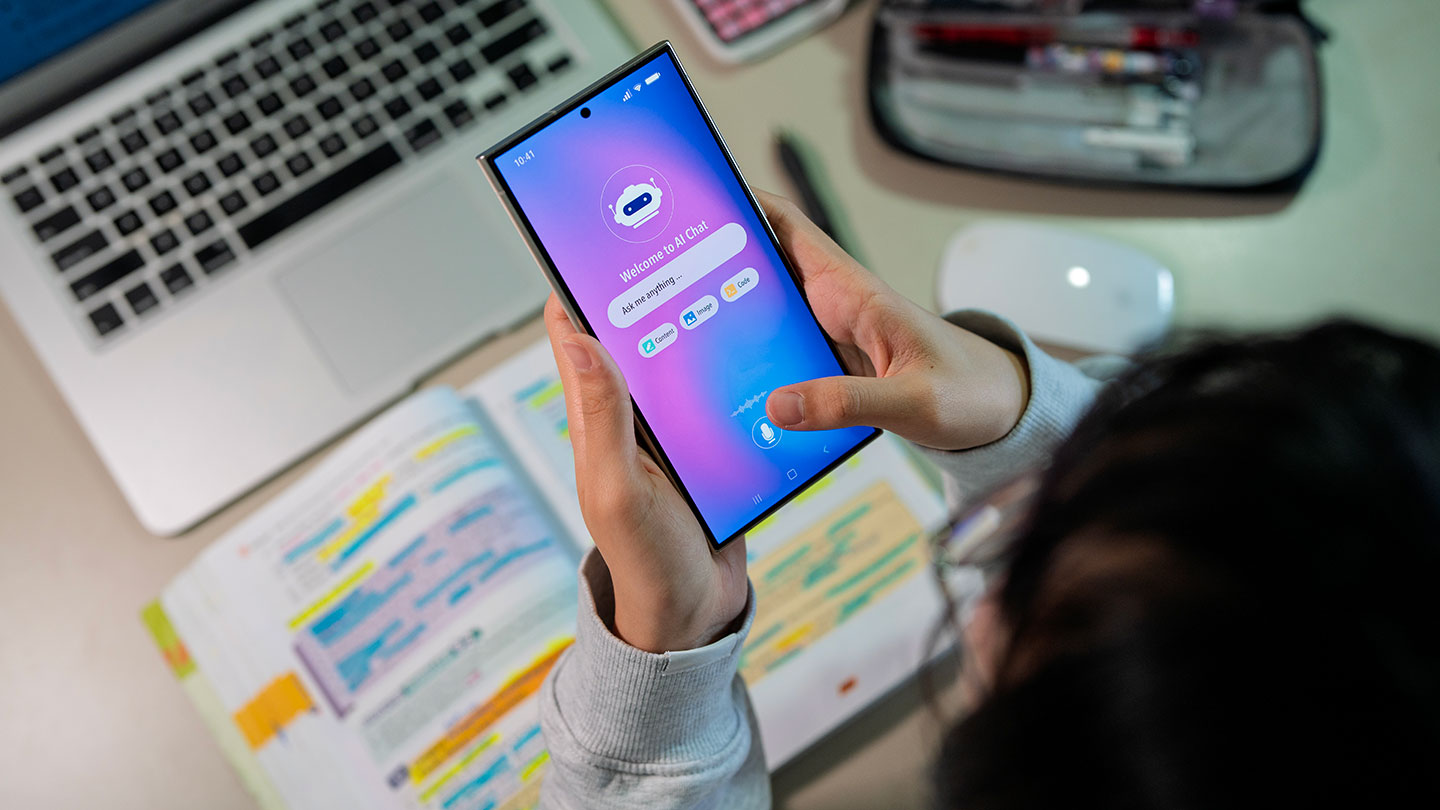 More than half of U.S. teens use chatbots for homework. Treating AI like a tutor may help them pick up new skills. But turning to AI to simply churn out answers is unlikely to result in real learning. Thai Liang Lim/iStock/Getty Images Plus
That was “particularly concerning,” the study’s authors conclude, because persistence is key for learning. These researchers shared the findings at the 2026 Conference on Language Modeling in San Francisco, Calif., on October 8.
All these results suggest people can struggle once they let AI take over their tasks.
For Cash, the lesson is “use it or lose it” — where “it” is your own brainpower. Don’t let AI do all your thinking for you, he says. “If you’re not engaging with the cognitive work, you’re not going to learn the skill.”
AI can help when it keeps people thinking
Using AI doesn’t have to mean your skills will crumble. You can put in the effort needed to learn even as you’re getting digital help, says Alp Sungu. The key is using AI tools that offer guidance or examples, rather than spitting out answers.
Sungu is an economist at the University of Pennsylvania in Philadelphia. He worked on the study of high-school students using AI for math. In that study, his team designed an AI tool with some limits. It worked like ChatGPT but didn’t give away answers. Instead, it offered hints and encouragement. That approach helped students learn as well as those who just studied with books.
AI can be a helpful math tutor if used right — and harmful if not
Using AI as a tutor is different from using it as an answer machine, Sungu says. Students still had to put thought into their studying. The struggle of working through a new concept is where real learning happens, he says. “When you’re solving a problem, you need to get your hands dirty.”
For those willing to put in some effort, AI can be a good teacher, says Benjamin Lira Luttges. This behavioral scientist also works at the University of Pennsylvania.
An AI tool can help people learn how to edit cover letters, his research has shown. After practicing with either an AI tool or human feedback, people edited a poorly written cover letter without any help. Then, human judges picked which letters would likely land a job interview. Letters from both groups were equally likely to get picked, Lira Luttges’ group reports. The team shared these results on arxiv.org in February. (Studies posted there have not yet been vetted by other scientists.)
The AI tool in that study had taught by rewriting an entire cover letter itself. That may sound like its students weren’t doing much thinking. But it’s not what the team found. People didn’t just accept the AI-revised draft. They sat with it for a while, tinkering with the language. “They were still working,” Lira Luttges says.
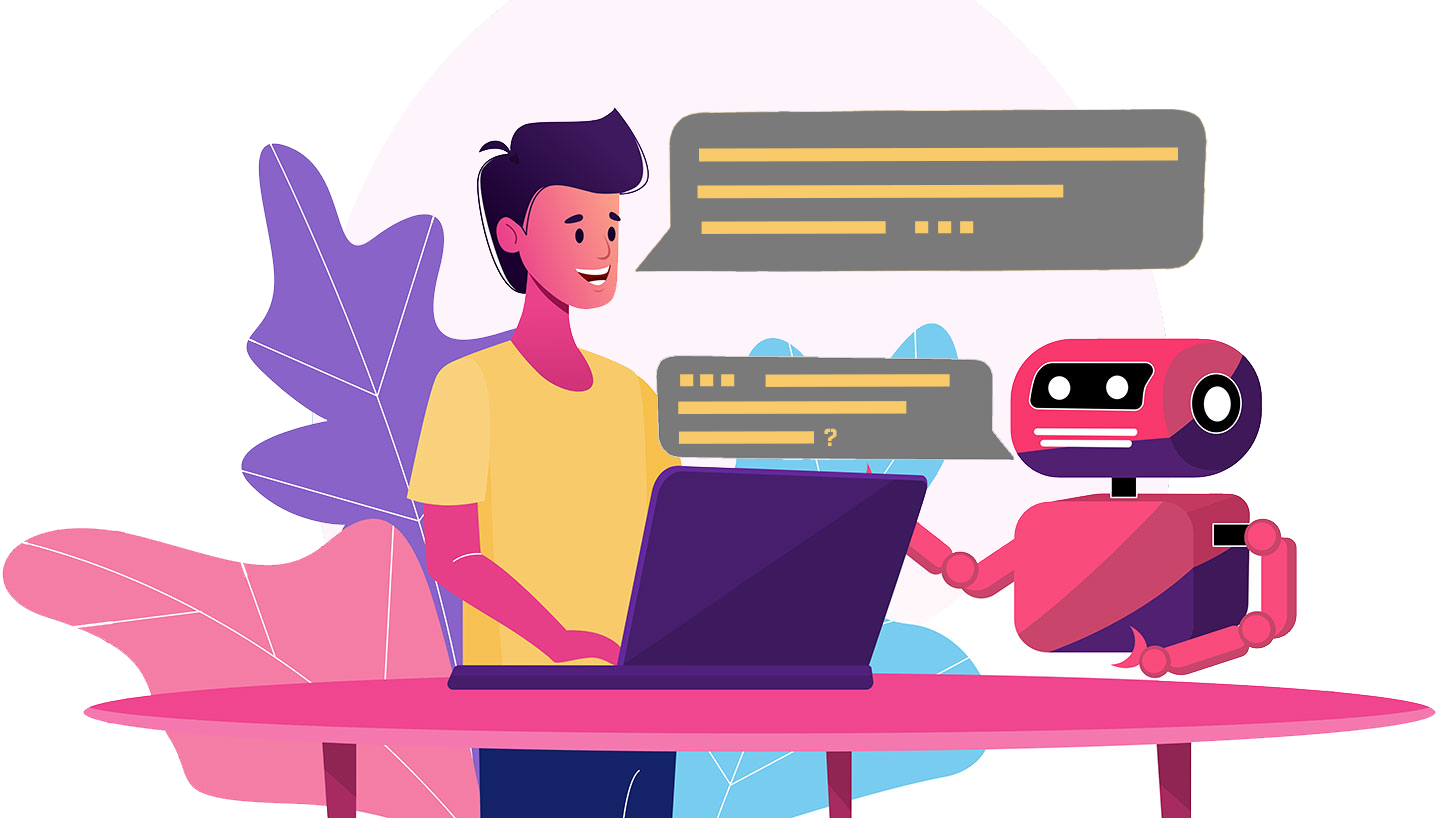 AI can help us learn new skills when it offers guidance rather than simply spitting out answers.Namthip Muanthongthae/Moment/Getty Images Plus; adapted by L. Steenblik Hwang
This hints that AI can teach by example — “if you have people who are motivated to learn,” he says. In short, AI systems that keep people’s brains engaged might be able to sharpen some of our skills.
Still, we should be careful in choosing what thinking we outsource to computers, experts say. If there’s a skill you value, don’t give it over to AI, Cash advises. “We know skills come from practice and are maintained through practice.”
Lira Luttges agrees. People should think about what skills they want to protect, he says. That might be coming up with the perfect way to phrase a sentence. Or it may be devising a tasty dish using items in your pantry.
“You shouldn’t delegate the things that you enjoy and that give you meaning,” he says. “Outsource the crap, not the craft.”





 Bengali (Bangladesh) ·
  English (United States) ·