

Turns out, “good vibes only” might be making you feel worse. Today, we’re exploring why the “good vibes only, stay positive, look on the bright side,” movement is often more harmful than helpful and how to build a deeper, more resilient form of optimism and hope that is truly capable of making your life better.
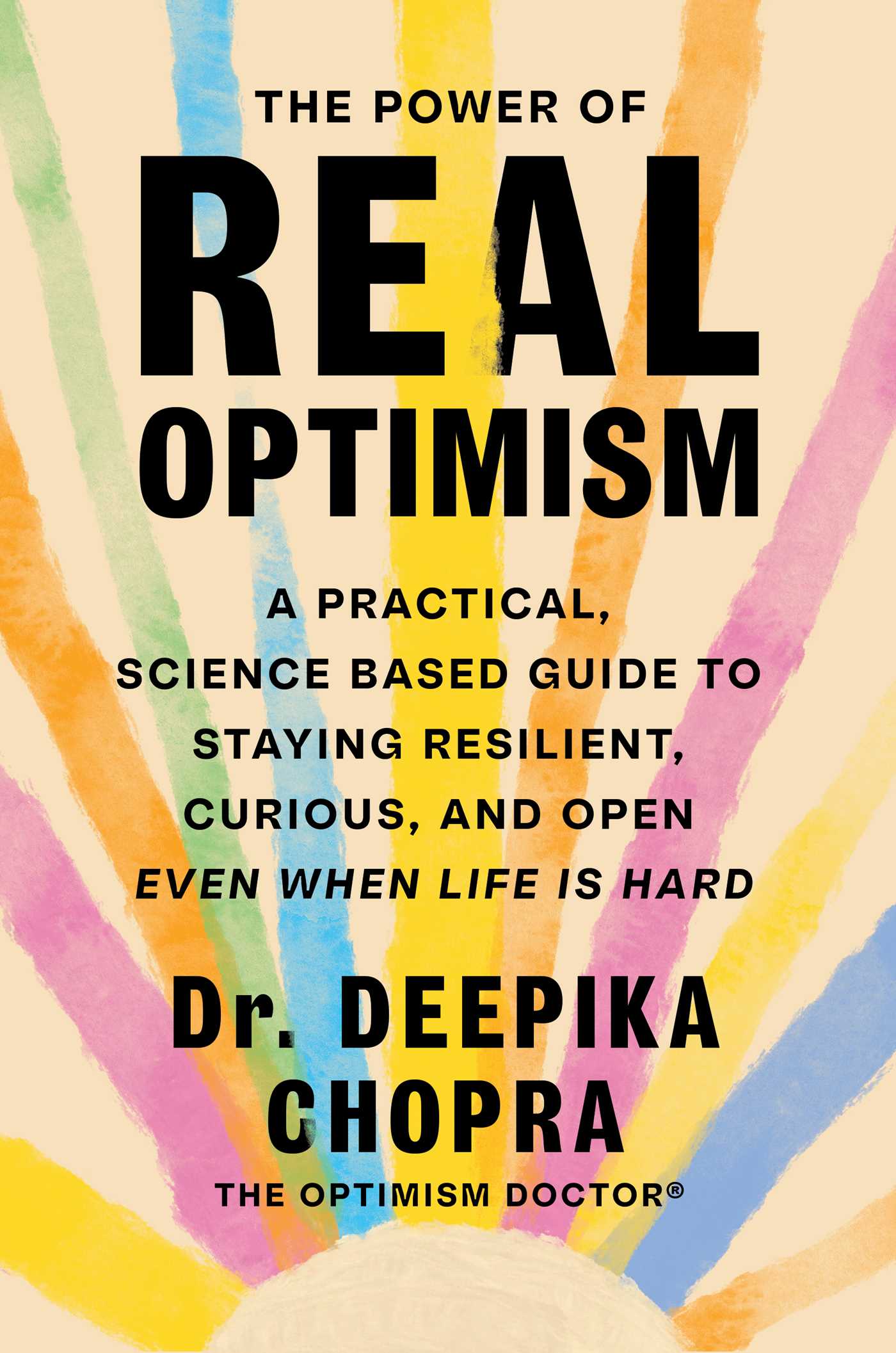
Our guest, Dr. Deepika Chopra, is a clinical health psychologist known as The Optimism Doctor® and author of The Power of Real Optimism. With postdoctoral fellowships at UCLA and Cedars-Sinai, she specializes in the science of hope, resiliency, and visual imagery.
We talk about:
The 7/10 rule for affirmations – why the traditional approach to affirmations is broken, and a different way that ensures your brain actually believes what you’re telling it instead of rejecting it as bunk. How to schedule “worry time” to contain anxiety so it doesn’t leak into and paralyze your entire day. A specific 12-second practice to “clock” joy and physically rewire your brain’s neural pathways for better problem-solving. The distinction between hope and false hope, and how to find the “crack of light” when you’re in your darkest hour.If you’ve ever felt the pressure to “just be happy” while struggling through a difficult season, this conversation offers a grounded, science-backed alternative. Click play to learn how to build the muscle of real optimism and navigate life’s challenges with more curiosity and ease.
You can find Deepika at: Website | Instagram | Episode Transcript
Next week, we’re sharing a really meaningful conversation with Eric Zimmer about the ‘Little by Little’ method for making meaningful life changes that actually stick. Be sure to follow the GLP wherever you get your podcasts so you don’t miss it!
Check out our offerings & partners:
Join My New Writing Project: Awake at the Wheel Visit Our Sponsor Page For Great Resources & Discount Codes_____________________________________________________________________________________________________
Episode Transcript:
Jonathan: So, we have all been there going through a genuinely hard time and someone with the best intentions turns to you and tells you, “just look on the bright side,” or “everything happens for a reason.” It’s what we now call toxic positivity and honestly, it can feel pretty alienating when you’re just trying to get through the day. I wanted to dig into what it actually looks like to stay hopeful without faking it.
My guest today is Dr. Deepika Chopra, often called the Optimism Doctor. She’s a clinical health psychologist and author of the new book, The Power of Real Optimism. Deepika has spent years studying the neuroscience of hope, but she also shares a really personal story about how she had to use these exact tools when her own child faced a major health crisis. In this conversation, we talk about a counterintuitive strategy where you actually schedule time to worry so it stops ruining your morning or your day, why your brain might be rejecting those standard positive affirmations and her 7/10 rule to fix it, and a simple way to use curiosity as a bridge when you’re just not quite ready for full-on happiness. Deepika is so grounded and wise, and she’s out there in the trenches with us practicing these tools in real time. So excited to share this conversation with you. I’m Jonathan Fields, and this is Good Life Project.
Jonathan: I think an interesting starting point for us is this experience that so many people have that has kind of become phrased as some form of quote, “toxic positivity.” You know, and while that phrase I think is relatively new, the experience of it is not new to the human condition at all. Take me into this.
Deepika: Yeah, that is a great point and actually a wonderful place to start. I like to sort of caveat the idea of what we—and I’m gonna put this in quotations—refer to when we say toxic positivity. And I know sometimes people have a really tough time putting the word “toxic” next to “positivity” because it’s sort of this oxymoron or sort of like, why would we ever think being positive in any way, shape or form can be toxic? And so I wanna sort of first and foremost kind of address what we’re talking about when we talk about that.
And so when we sort of dive into what we call toxic positivity, it’s really about not allowing ourselves or people around us to experience the full range of human emotion, which as humans, we were built to do. And so, again, I wanna caveat that with, I pretty much believe—it is my opinion—that for the majority of time when we are using words or notions with ourselves or with others and they sort of dive into toxic positivity, it most always comes from a good intention or a good place. But we have to really start looking at it because something that we are doing out of good intention and from a good place doesn’t necessarily mean that it is effective at best; it could be really detrimental at worst.
And so what we’re talking about here is, you know, things like “good vibes only,” or “it could be worse,” um, you know, or “don’t worry,” “just be happy,” “put on a happy face,” or “find the silver lining right away.” Whatever these things are, they’re sort of telling us that we need to discount how we are authentically feeling in the moment and move past that into something that feels better. And really it’s because whether it’s ourselves or the person that we’re sitting across from, we as humans don’t really like sitting in that discomfort of seeing somebody else’s pain. It’s very uncomfortable for us and out of the goodness of us as humans, we want to either A, fix it, or bring them out of it because we don’t want them to be experiencing it. Or, you know, something deeper is happening that we sometimes don’t even recognize intentionally: it makes us feel uncomfortable and strange and in a place where then we start thinking and sort of matching that emotion, and we don’t wanna feel those things. It opens up sort of the Pandora’s box.
And so I think that, you know, I always like to say that for the majority of the time, you know, I think when someone comes to you with a struggle or is going through something and you’re sitting across from them, more often than not—and this is true for our children, true for our friends, colleagues, partners—more often than not, people are not asking us for a solution or to fix something. They really, honestly are asking us to give them a space where they feel safe, they feel validated, and they feel like they’re being related to. And so I think that when you sort of take that pressure off of “I need to fix this,” and you’re sort of like, “I might just be a safe container right now, or a mirror, or just creating this one space to allow someone to feel how they feel and not run away and not shut it off and not have them swipe it under the rug,” but just be there and not have the pressure of making it better. It sort of also removes the pressure of trying to package it up in a nice package.
Jonathan: Yeah, I mean that makes sense to me. And there are a couple things I’d love to unpack there. One is this notion that, you know, when somebody comes to you—let’s say you’re going through something, you’re struggling, right? And you go to your friend and you’re sort of telling them what’s going on and you know, their response is some version of, “but just look on the bright side,” you know?
Deepika: The number one is sort of just like, “well, like it could be worse,” you know, or like, “ah, that sucks, but like, at least blah, blah, blah, blah, blah.” Like, I worked with this patient and I remember one of the forms that were illustrating this. I remember she was going through a really difficult season of her relationship and had found out a lot of… a lot of the years of marriage that she was in to this partner, and they had children, was really starting to unpack itself as like one big web of lies. And there was a lot of betrayal and deceit and, you know, she was at this point where she already kind of didn’t feel a lot of love for this person, but still mourning the loss of—they were starting to separate—mourning the loss of the identity of being a wife. And, you know, she was an empty nester at that point and what that might look like for her life. There’s still a lot of mourning going on, even though she had expressed to me that she was not in love with this person and hadn’t been for a long time, for many of the reasons that are now bubbling up and coming to light.
But one of her friends said, “At least it’s not like you just lost the love of your life, like he died, thank goodness.” And it was like, she actually felt like, “oh my God, you’re right, that’s true, at least it wasn’t like I’m a widow to someone I’ve loved my whole life and they’re gone,” which many people experience. And that made her feel like her own process through this and the feelings that were coming up for her were just not valid or warranted enough. It’s not like it left her feeling…
Jonathan: Yeah, or even acceptable, like it’s not socially acceptable—like things could be so much worse, you shouldn’t be complaining about your lot.
Deepika: Exactly, “it could be worse.” And I think that person didn’t mean it in a way… you know, the intention was there to kind of be putting things in perspective for her. Maybe she knew her well enough that she knew the intricacies of her life and how she may or may not take it. But we do say types of things like that and we say them to ourselves in these moments of extreme struggle. And yes, sometimes that type of perspective is really important, but it’s only able to be used once you are feeling safe and validated in your authentic feeling. And I think the misconception so many people have is that optimism—to be optimistic—means that you have to feel good and the emotions are always positive all the time. And actually, I’m sure we’ll unpack it all, but optimism is really cultivated in the perseverance through struggle and through resiliency. And so you obviously have to experience some not-so-great feelings. And we all do. None of us are immune to struggle, and that’s the piece.
Jonathan: That makes a lot of sense. It’s like the perspective taking is important, but it’s much more effective when it follows acknowledgement of the reality of what you’re going through. And as you said, also, you know, a lot of times this isn’t coming from a bad place. This may be somebody who deeply cares about you. They just don’t know “how can I help this person feel better?” “How can I help them see all the good in their lives?” And they just want you to feel better. But you made a really interesting point that I don’t wanna skip over too, which is this notion that sometimes we are actually the facilitators of toxic positivity without us intending or realizing it, in part because we are so uncomfortable with the suffering or perceived suffering that somebody really close to us is experiencing, that it’s less that we wanna get them out of suffering, but we care about them so much that we’re feeling it empathetically and we don’t wanna feel it.
Deepika: Yeah, it’s absolutely true and it is a practice. Um, you know, it’s a skill. It’s a trainable psychological skill. But a lot of times, some of these skills are kind of counterintuitive. We are social animals. We wanna connect to other people. We have empathy, and these things are really important and good things, but we have to learn how to actually use them effectively and boundary them. It’s really important to not allow somebody else’s experience and story to run your current experience and story. And there are ways to train ourselves to still be that empathic safe space or container or just person without then, you know, sort of avalanche it to coming up with all the other examples that we connect to. And now our day is starting in a way that it didn’t even start with.
Jonathan: You’ve used the word optimism a number of times now. Um, and it’s the focus of your newest work. Toxic positivity is just a straight-up loaded phrase. Optimism is also loaded in really interesting and I think really misunderstood ways. So when you use the word optimism, what are you actually talking about?
Deepika: Yeah. It is a wildly misunderstood word, and this was something that was so eye-opening to me during my work. You know, I am known as the optimism doctor, and I specialize, and for many, many years I’ve really focused on optimism and hope theory and resiliency and all these things. And I thought I even understood what optimism was. And when I started unpacking the neuroscience and psychology behind it, I realized, wait a second, we define optimism incorrectly. And even while I was writing this book, um, you know, I actually—an accrual irony—two months into writing this book, went through probably the most difficult season of my life as a mom and as a human. We got some really scary, awful bad cards dealt to us with the health of one of our children. And even when I knew the tools and even when I knew the research and I was in the midst of writing the book, my autopilot went on and I started to see optimism as what I thought it was, not what I knew it was. And it took writing the book and the tools and going through and using the tools in real time in very imperfect conditions for me to fully understand and grasp what we’re really talking about here.
So I call it “real optimism.” And when I’m talking about this idea of real optimism, I think a lot of people have this notion of, you know, someone that’s optimistic is wearing rose-colored glasses and always seeing the glass half full and really accessible to silver linings all the time. And they don’t experience negative emotions. And you know, I’ve also heard along the way in my work that a lot of people think that optimists are not rooted in reality and they’re sort of devoid of reality even.
Jonathan: Yeah. Delusional is a word you sometimes hear.
Deepika: And I think that when you think about optimism the way that most of us think optimism is, that might be true—it’s someone that isn’t really realistic. But when you actually unpack what we define as optimism from a scientific point of view and a psychological point of view, a person that is optimistic in that regard—or I like to call a real optimist—is someone that is so keenly and mindfully aware of the roadblocks and the less than ideal situations and the setbacks that, again, none of us are immune to. The caveat is that they really see those setbacks as something that are temporary and something that they have the ability to overcome or persevere through. And that’s really based on historical personal resiliency. So all of your hard days that you’ve already gotten through—you know, it doesn’t change the circumstance, but it’s part of your resiliency story.
And then another piece of that is just… I think there is this idea and word that comes to mind so strongly besides resiliency that has to do with optimism, and it’s curiosity. It is… and someone that is looking with an optimistic mindset is someone that is able to sit in their authentic true feeling, which many times can be the ones that don’t feel good, but they are curious at the very same time. So there’s an “and,” and they’re curious about how this might change. They don’t know how, they don’t know when, but they know this experience will change. And even if you are not necessarily projecting that it will be for the better yet, a direction that we like to sit in that is so overlooked is neutrality. And just the idea of curiosity—like, “I wonder how this will change”—is an optimistic place to be in.
Jonathan: So in your mind, is that stance—sort of like, I look at optimism the way you just described it as sort of a psychological stance—how much of that is genetic? How much of it is environmental, how much of it is learned or learnable?
Deepika: From an evolutionary standpoint, we were all programmed and predisposed to be a little bit more pessimistic. But what we know about the modern world and how we exist in it today: we no longer survive and thrive chronically and consistently imagining worst-case scenarios, but we still need to be prepared. And so the thing with optimism is it is something that we can learn. It is something learned. It is a psychological skill. I don’t believe optimism is a mood or a personality trait, and I see it as a muscle. And we’ve seen a lot of research done and although there’s not like one firm thing that people agree upon, the most I’ve ever seen that there is a sort of genetic component to it, or heritability rate, is about 20 to 25%. So the majority—and that’s still quite a bit—but the majority and the bigger portion of it is something that is learned and something that we can actually sharpen and work out like a muscle.
Jonathan: I mean, it’s so interesting to me because—and tell me if I’m getting this wrong—the research that I’ve seen around happiness, um, when they’re trying to sort of tease out how much of this might be genetic, um, you know, the phrase “set point” is often thrown around in that exploration versus environmental versus learned. Often the number that you hear is closer to 50% genetic and 50% or so a blend of other things. But you’re saying optimism is actually potentially much more under our control then.
Deepika: Yeah. And so much more based on the things that we have been through and how we interpret what things are. So it is an active process. And I also have come to realize through the work that I don’t see people as an optimist or a pessimist. Optimism, like so many things, exists on a continuum, and we are naturally more prone to be optimistic in certain areas of our lives and naturally more prone to be pessimistic in other areas of our lives. I am someone that likes the science and the data and real practical tools, and I am just with everybody else in the trenches trying to implement those tools. And sometimes it is simple, and other times—which I have been humbled by, especially when writing this book—it feels impossible, but it’s not. But it feels impossible. And I get that. And there are some times and some seasons in life where the tools and all of your growth will just not be as easily implemented. And the reason for that is the brain prioritizes safety and survival over growth. So unless you fix the first part and you… unless you feel safe and you are in a situation where you feel regulated, your brain can’t tend to the growth piece.
So the first and foremost part of any of this is just to create more space to feel regulated and safe. And these things can be small, practical things and actionable items that we do on a daily basis because we all live in a world where it is more likely than not for us to be feeling a sense of instability and uncertainty and not safe. And you know, a long time ago, again, from an evolutionary standpoint, we as humans might have experienced fight, flight, and freeze and being in that situation like maybe once a week when we were hunting or whatever that was. And nowadays, in the modern world, most of us—especially women—we are actually in that state of fight, flight, or freeze probably, I would say, throughout the entire day and even in our sleep.
Jonathan: You also mentioned something that I don’t want to skip over, which is this notion—’cause I think, well, you know, a lot of people would probably say, well, I’m just either a really optimistic person or I’m a really pessimistic person, just broadly. But you made this really interesting distinction, which is that you can actually have sort of a very different affect present in different domains of your life. So you might be someone who also thinks—or maybe even if you realize that you’re like, oh, I’m actually really just unlucky in love. Like, every relationship I know is gonna explode, it’s just gonna blow up. But at work, like literally, I will figure out anything, I will always find a way to succeed and to thrive and to get everything that I want and make everything I want happen in work or in health, you know? So I think it is really interesting that it’s not this blanket thing, but we can look at the different, sort of major buckets of our lives and say that we have a certain set of assumptions about how optimistic or pessimistic we are in each of those different contexts.
And I guess one of my curiosities is… the big scrolling question in my head is like, why does it matter? Um, you know, what does it change for us if we are able to step into more of a state of—using your phrasing—”real optimism” versus anything else?
Deepika: Yeah. And that is such a fair question and the reason why I’m so passionate about this is I think we can all understand just cognitively why being optimistic is probably good emotionally or mentally, right? So it just feels better, right? Like you could probably be like, yeah, that makes sense. And someone that’s optimistic is probably experiencing better mental health. And it’s true; people that score higher in optimism do experience better mental health. But what I thought was so interesting and astounding was how much research was out there connecting and correlating optimism and higher levels of optimism with actually better physical health.
And so, you know, this was really interesting for me as someone that spent a lot of my training years as a psycho-oncologist and working with people at the hospital that had cancer diagnoses or their family members. It’s interesting to me that there is such an impact on our physical health that then, when you start to look at all of this and we’re a whole human, it starts to make a lot of sense. Because obviously our mental health is not separate from our physical health and what we know about people that are more optimistic and that rate higher in optimism: they experience less respiratory viruses and they bounce back quicker from them. They have way better cardiovascular health and they suffer cardiovascular health issues at a much, much lower rate.
They have better relationships—and what we know about that from most of the research that’s focused now on wellbeing and positivity and happiness, and you know, that longitudinal study that came out of Harvard that was so amazing and showed us a lot, really pointed to the one factor that we can look at that helps predict how happy we are later in our life is our quality of connections with other people. You know, our social connections. And people that are higher on optimism and score higher on optimism, they get to experience better social relationships, more of them and better quality of them. We also—what I thought was so interesting—a new study that just came out was… yes, we also know and can understand the emotional impact of having great relationships and we’ve seen it related again to wellbeing and happiness, but a study just came out relating that to actually your cells biologically aging slower. So there is just so much there in holding a more optimistic mindset and living longer. There’s longevity studies on this as well, and not just living longer—like racking up the years—but actually thriving in those years.
And I think it’s an important conversation now because we are all starting to understand and realize—I think we’ve been told this, but now we are experiencing it on an everyday basis—we cannot control the majority of circumstances that go on and we are so exposed to everything that’s going on. Our brains and bodies were not actually meant to be exposed to this much stuff. But at the same time, I truly believe that we have to know what’s going on. I don’t think ignorance is bliss, of course; again, I think that we need to work on ways to boundary our stimulation and what we are exposed to, but I truly believe that I want people to be more equipped with tools, and that’s where real optimism comes in, so that they can keep showing up, keep being engaged deeply, feel about the world and about themselves, and not numb out and not be paralyzed by it, you know? And find a way to actually navigate through it. I always say real optimism doesn’t deny the dark; it just gives us the tools to see in it, and we all need those tools.
Jonathan: Sort of like rolling with that concept and also tying in, as you mentioned earlier, um, your work in psycho-oncology—you know, basically working therapeutically with people through a cancer diagnosis and treatment. Right. It brings up this really big question that I think a lot of people have, maybe not in the context of cancer, but in just a lot of struggle or adversity in their lives. It’s this notion of hope or false hope. You know? So talk to me a little bit about the relationship between optimism and hope and also this concept of false hope.
Deepika: Well, I mean, I think it’s very similar to a real sort of basis of looking towards the positive and toxic positivity. It’s very similar, hope and false hope. And hope is very intrinsically related to optimism. One of the greatest tools we have at our disposal to actually increase our optimism and the idea of expecting something to go in a better direction, or at least something that’s different than our current direction, is through the work of visual imagery and visualization. Like I would close my eyes and I think, “what does optimism look like?” And to me it is sitting in a dark room, maybe on the floor and feeling some amount of pain or worry in some sort of negative loop. I’m not really able to find it within myself to leave this room. I’m sitting in it. I’m not too scared of it. I don’t like it. I want to be out of here. I’m not too scared of it ’cause I’ve been here before and I know I have gotten out and I know I won’t be here forever, but I’m like still very in whatever it is that I’m feeling and I’m going through and I’m seated there.
But then like, I look up and in a distance there’s a door, and the door may not be open. The door, uh, I don’t know if it’s unlocked. I see some light beneath, you know, there’s a crack of light there. I see the direction. I’m not really sure how to get there, but I notice the door. That’s hope. That little tiny, small crack. And once your brain sort of unlocks that this is temporary, there is a possibility that I will move from this position—just that unlocking—I don’t, again, I don’t know what that looks, I don’t even know what’s behind the door, but the fact that I know there’s a possibility, then your brain can start kicking in with the executive functioning and solution-based sort of attention and abilities. And you might start to notice, you know, that the door looks unlocked or you might start to have more curiosity of what might be behind it. And your mind might be swirling with ideas of whatever that is. And then you may, you know, have enough within you to say, “oh, like, I think I could get up” and you might walk towards the door and you might even put your hand on the handle. So it can be a fast process or it can be a really slow process. But the truth about optimism is that you are again, really in your authentic feeling and you’re there and you’re not trying to bypass it, but at the very same time—and it’s like one of those “and” situations—you still make space for hope. You make space for the idea that something different lies behind the door.
Jonathan: How do you make that space when somebody is in their darkest hour? I think a lot of us are like, “oh, I’m struggling,” but you know, if I really think about it, yeah, I can see… I can imagine the possibility of a door out there and the slight… I don’t even know what shape it is, but I can wrap my head around this notion that there is this something out there. Whereas, you know, when someone’s in their darkest moment and they’re struggling to even understand how the existence… this door that just seems so elusory, so impossible to them. Like, I’m so curious, how do you go from that? From just abject rejection of any hope of any sense of possibility to just the slightest bit of, “well, maybe”?
Deepika: Well, optimism is trained through a few different things, and one of them is explanatory style. So it’s really about reminding ourselves that—if you could do one thing—just remind yourself that this is temporary. Whatever that is—this feeling, this season, this moment—even if the circumstance never changes with it, like how you exactly feel in this moment, in your darkest period or moment. Even if you had one millisecond of, “I think this is temporary,” and then you go right back to it, and then you have another moment of like, “this is temporary,” that is a good enough place to start.
The second way that we train optimism is through the collection of evidence. And so if you are able to remember to remind yourself of your own personal strengths… and that is spending a lot more time, especially when you’re not in a dark place, just every day reminding ourselves of the things we’ve been through and how we got through them. Just having that evidence in our brain. A lot of this is proactive; these are tools that I wish people were trained with at a younger age, as I’m so passionate about that. So that when those times come, your brain already has those pathways created and you remind yourself, “listen, I’ve been through hard things before.”
And even if it’s just that, even if what you feel… and this is reminding me a lot of the place that I was in when I was writing this book—I mean, definitely the darkest hardest point in my life. And that story’s not even written of how it ends. Like, I don’t know. It is so uncertain. We are dealing with something that is so rare and it completely shattered everything that we thought of. And even just mourning the idea of a childhood that we could… in that time, I remember something I dreamt of was just being able to have my small child have a fever and go to a pediatrician or call them and just give them Tylenol. Like, all of that was gone. Like, if he had a fever, we were in the hospital, we were admitted because it could be an infection from his port. And it just was such a dark, dark place. And for a few months, I could access none of this.
But I think that the piece of that is I had never been through something that I would think was as hard as that, but I have remembered that I had been through hard times before and I have gotten through them. And even though the words that came out of my mouth every day for the first two months were, “I cannot do this,” inside my head, I remember like, “I have to do this.” You know, like, this is my child. There’s no… like, I can’t. I would say “I can’t do this,” but I was packing him up on Tuesdays for treatment and taking him, and the whole way saying “I can’t do this,” but I was doing it. So after a few of those, I realized I can’t say “I can’t do this” anymore. I am literally doing it. I don’t wanna do it; it feels awful. I’m not able to think about how I’m gonna do it again next week, but I literally just did it. So it’s collecting evidence.
And then again, it’s that piece on feeling safe. And so if there’s even just one thing that someone can do in that moment, which is not even think about what it is they’re going through—allow themselves to accept “this is horrible” and “I know how shitty it is” and “I’m not trying to make myself move in that direction”—but I’m gonna use a 4, 7, 8 breath. That’s something that helps me a lot. Or I’m gonna use one of my tools for 30 seconds. My body and my nervous system and my mind is gonna be distracted by something else that actually elicits safety and makes me feel grounded in some way. I’m gonna come right back to feeling horrible. Just those moments, allowing our brains and bodies to have that reset. It is the only way that our brain kicks in that prefrontal cortex and the executive functioning to even help us with ideas or possibility or solutions.
Jonathan: It’s like you keep coming back to this notion of: before we have access to some of the tools that allow us to start to see any sense of possibility, we first have to find ways to basically down-regulate our nervous systems, to somehow find our way back to even a semblance—even a hint—of safety, of being able to breathe. Which is a powerful starting point that so many of us skip over ’cause we just wanna get to the possibility. We just wanna get to, like, to open the door, to see the door. And I think it’s such a powerful reminder that you keep bringing us back to: yes, and we also have to focus on our internal state, because that is gonna be the thing that regulates our ability to even notice all of these other things or use these other tools and strategies. You know, I think one of the most devastating things about long-term clinical depression is when people are deep in it, it’s not just the feeling that they have; it’s the sense of despair that they will never feel anything but what they feel now.
Deepika: Exactly, and that is a hallmark of pessimism and sort of the opposite of what we’re talking about. And yes, pessimism and sort of the hallmarks of pessimism are deeply rooted in clinical depression. And it is the idea that this will always be this way. So permanence and pervasive. And I had the reason for it to be this way—so taking responsibility for like, “this is because of me,” “it will never change,” “I will never get out of this.” That is a really tough place to be in and that is why there are many different… you know, if you are experiencing clinical depression, it’s important to get clinical help. And this is not a substitute for that. This is a great supplemental in addition, but there is a reason why specific treatment for depression is really important and it is not your fault.
Jonathan: And I’m glad you said that. If somebody’s listening, joining us, watching, and they’re like, “okay, so this sounds really interesting to me, and I would love to start assembling something akin to a toolbox so that when I’m feeling like I’m not in a state of real optimism—maybe really tending strongly towards pessimism or just in the middle”—but like you said, oftentimes the time to actually start to build the skills is when you’re actually not struggling so much. And they’re like, “I would love to start building a set of tools, maybe starting with one or two or three.” What are a couple of tools or strategies or approaches that people might start thinking about now?
Deepika: This is what I’m most excited about. I love helping people come up with their own sort of unique toolbox that can be so proactive. And so one of the things that I always have people do that I love and I do myself, and it really works, is I keep something that I call a “joy list” on my notes section of my phone. And anytime in my sort of normal, everyday life that I experience something that I consider joy… and it could also be sort of a “neutral plus” is what I like to call it. Like when people go get a steak and they’re like, “I want a medium rare plus.” A neutral plus also counts as something that is joyful. So it’s like pretty much neutral—it’s not making you feel bad, it’s not unsafe, but it’s okay. You feel okay and like a little plus. So we’re not at joy yet, but we’re headed there. If you feel that emotion or feeling in your body or cognitively, whatever that is, or joy, and you stop and ask yourself, “what am I doing right now?” And of course you also ask yourself, “is this safe?” So we’re not talking about things that make us feel good that are not good for us or that in any way, shape or form put us at risk.
So I love walking; walking’s like a really big part of my mental toolbox, even if it’s just one time around the block. But every time I would pass this one family’s home that was a block and a half away from where I lived, I just felt this feeling that—if I could have just… it could have just gone right by and I wouldn’t have known it if I wasn’t spending the time. ‘Cause another part of this is spending the time to actually recognize joy. Oftentimes our brains don’t allow us to, because it is more human of us to focus on the things that don’t feel good and that need fixing or that we need to improve on. But we are training ourselves like a muscle to actually… any time we feel joy… And first of all, you have to know what joy feels like for you—if there’s a physical response or if it’s a mental one or whatever it is. Some people literally catch themselves smiling and they don’t even know they’re smiling and they’re like, “oh, and now I recognize this feeling in my jaw and in my cheek when I smile and I’m smiling, that must mean there’s some joy.”
For me, I would feel it sort of in my chest and I would smile every time I walked by. These people’s home and she or he—I don’t even know who they are—they would spend a lot of time on it. It was a tiny garden, but it was so beautiful and it was always… visually to me, it stood out as if it was like a movie and just that one corner had magic to it. There were like butterflies and birds because there was… and there was colors. And I thought, oh my gosh, I’m always so happy. And I ended up bringing my kids to that. You know, every time we walked I’d point it out and then we’d start talking about it. And so that went on my joy list—like that corner with the two streets. Or, you know, seeing the way… I have a window in front of me in my office right now and there are these two palm trees. And seeing the way that they are so tall and have been there forever and just the way that they are against the sky always brings me joy. That’s on my joy list. Having a massage is on my joy list—that’s not always one that I can access. So we wanna make sure some of these are things that we can do in a moment. Listening to certain music is on my joy list. Doing 10 jumping jacks is on my joy list, but only 10, ’cause if it’s more, they don’t bring me joy. So you can get really specific about what works for you. A bath is on my joy list with a very specific salt. These are things that we put on our joy list. They could be a phone call with someone in particular. They could be a hug with your child. It could be laying in your bed for a few minutes wearing a certain pair of socks, whatever it is that brings you joy.
And again, I’m just trying to highlight really small things and some things are bigger. You put them on your joy list, and this is so powerful because of the type of world we live in. So yes, of course, one of the best ways is when you need it—when you need a moment and you’re in the middle of something that is hard or heavy and you’re not gonna think of what these things are, but if it’s readily available to you, take a scan. And more often than not, your eyes and brain actually just pick one, let you gravitate towards it ’cause there’s many to choose from, and you scroll and you’re like, “ah, I can do that right now.” And it’s a behavioral change which then will change your emotion. But where I like to use it a lot—and this is more proactive—is just throughout my day. Like if a call with a client gets canceled or finishes early before another call and I have like a three-minute window in there that I would just be scrolling on my phone, and performing one of those. I always say there’s no amount of time that’s too small to perform an act or to be in a behavior that helps us to feel more safe, regulated, or joyful. And so it’s replacing these small moments—I call them micro-moments—and it’s sort of stealing the time wherever you can to do them. And these are important because once you start doing them and program them into your day, your brain is so powerful and efficient; it already starts to create these pathways and it becomes like second nature to just do them more.
Jonathan: Years ago, I had the chance to sit down with the wonderful insight meditation teacher, Sharon Salzberg. And this was back when I was in the city and she had told me when I first sat down with her, she’s like, “you know, I was just walking over here and it was a gorgeous day as I was just walking, and as I’m walking,” she said, “you know, I was taking lines from the metta meditation—loving-kindness meditation—and with people as they just… total strangers as they walk by, she would like look at somebody, smile, and just think to herself ‘may you be happy.’ And then like somebody else would walk by and she would look at ’em and smile and like, ‘may you be at peace,’ whatever the different phrase would be.” So she was literally creating these little micro-moments—innocuous things that wouldn’t have actually… but she was just saying the slightest thing that made her feel good about it. That transformed an innocuous passing, fleeting second into something that… and she’s like, “I just walk around doing this on a regular basis.” And it really just changes the quality of how she experiences her world.
Deepika: It does. And like you can argue with it and say, well, that doesn’t change the circumstance of that person or anything around. But what it does do, number one, it can change your circumstance, which then can change other people’s circumstance. But if you are holding a positive thought, especially about somebody else and especially about a stranger, there is just potency with that. It’s such a beautiful practice because it puts you in a frame of mind that, again, from a neuro standpoint, starts unlocking pieces of your brain to problem solve. Like I bet that that person, while she’s doing that and her brain is trained to do that, she is probably coming up with great solutions to problems that she has. She’s coming up with ways to achieve goals. She is coming up with these wonderful ideas of creativity because her brain is now able to be in a space where it is open and ready to perform and ready to receive. We can’t really be in that space when we are in a negative loop. And of course, again, neutrality is really important, but what’s even better is obviously holding thoughts like that.
And again, an interesting piece of that is, to take it a step further: if you feel in a joyful moment, another thing that’s really great to do if you have the time is to set a timer and start with like 12 seconds, because that’s really powerful. But then go more and try to hold that joyful thought even more. And the way to do that is to start asking yourself questions. And when you ask yourself these questions, it’s also just helping your joy list to get formed and to be able to use it. But those questions to keep you rooted in that—try to use your senses and like, “what does this feel like?” “What does it sound like here?” “What is the physical sense of me feeling when I’m feeling this joy?” “What does it taste like?” Using our senses is so important; it keeps us in it. And it also trains our brain to wait… like, I’m experiencing something that’s important and valuable and I wanna clock it. And then your brain starts to understand that these are worthy moments and you will recognize them.
Jonathan: And I think that’s a lot of what we’re talking about here also. You’ve referenced a number of times our awareness of how we’re feeling. Also, it’s one thing to do a thing that in theory would make you feel a certain way, but it’s another thing to actually become aware of how it’s genuinely making you feel. And that’s part of the practice too. Share another, if you would. So we’ve talked about the idea of a joy list and explored a lot of different examples, which is wonderful. Tell one more thing that I think would be really fun or interesting or valuable to put into the optimism toolbox.
Deepika: I’ll give you one that’s super counterintuitive, that always surprises people, and it’s actually really fun for me to see people’s faces when I “prescribe” this. I have people schedule “worry time” into their actual calendar, into their day. So I am a big believer in: I do not try to help people or encourage them to think that they can manifest a life without worry. Worry is part of our human existence. When you care deeply about something, you are opening up many different aspects of what that means, and one of those aspects is worry. When you care deeply about something, you are opening up worry as part of the portal to come in, and that is normal. Of course, when worry or things like stress… stress is also a normal human emotion. It is a response to daily living. So that means we’re all, as long as we’re living, we are going to experience stress. But of course, these are all things, again, on a continuum. And if they become chronic and pervasive, that’s another thing to worry about. But what we don’t want are people walking around thinking that people that they look up to, or a life that they think is something that they should have, is a life that is stress-free and without worry, because that’s impossible. So now you’ve got this added shame or guilt or failure piece to an emotion that already doesn’t really feel good, but you have to sit in it and work through it, or effectively work through it in order to get through it, not feel shameful about it and feel like it was not supposed to be.
And so the way that worrying becomes pervasive and a problem—and I would argue most every single one of us has this issue—it’s the way we let it in the modern world. It’s that so many worry thoughts come in every moment of every part of the day, that if someone has all this worry—which we all do—it starts to impact our stress response, it starts to impact our decision making. It paralyzes us from our attention, from being able to hold attention to do anything, which we are all experiencing. And the information is so fast and so much exposure to it at all times. You just wake up and your eyes open, and we live in a world where worry thoughts are just overtaking. And so it’s important to create a container for your worry. And the goal is really to have like one chunk of worry time at a particular part of the day that works for you, but in order to get there, it’s multiple worry containers throughout the day.
And when a worry thought comes in, you just ask yourself—once you have this practice and you know when your worry time is, it’s literally in the calendar. And I always have… like if I’m at my office, I have a notepad of paper. I’m a tactile person, I love writing, but you can use your notes section again if you’re out and about, or your voice notes. And when a worry thought comes in, the first thing you just ask yourself is… well, you recognize, you’re aware—so the awareness piece, this is all making you more aware—”this feels like worry.” Um, “is this something I have to attend to right now?” “Is this emergent?” And some things will be. And you may have to… I was sharing this story with someone else the other day, and the emergent thought that came was, “I think I forgot to pack my son’s lunch.” That felt emergent. I needed to get him something to eat to school right away. So that’s not going in my container. That’s like, let’s address it now.
But if it’s something that is not emergent, then you just say, “okay, I’m not discounting this worry, I’m not trying to solve it either. I’m putting it… I’m jotting it down or I’m saying one word about it that will remind me, it’s going in my worry container.” And then at the time when you open that up—you know, it’s funny—a lot of times some of the stuff I put in my worry list or my scheduled worry time, I didn’t react to it, I put it aside, and now it sort of no longer has the worry for me. And then some things are in there that I really do wanna worry about. And some things are actionable items like you gotta just get done, and you do them in that time. And some things are… I literally allow myself space to worry existentially about things that we all worry about. But I don’t let it just run my entire day. I give it a space and I give it… I validate it, and I give it a space and time. And I have become so much more effective at dealing with them because I’m meeting the worry instead of saying, “you’re bad and you’re awful and I don’t want you at all,” or “I’m only gonna think about you.” And I give it the time and the space and the energy that it deserves, but on my time.
Jonathan: Yeah, I mean, that makes so much sense. And then I would imagine your brain is kind of like: well, instead of it just intruding nonstop and disrupting so much of your day, even if it starts to happen, then you get to tell yourself, “oh, but I actually have a time for this.” Like, I’m not just denying it, I’m not gonna not deal with it, but I have an appropriate time for this. So now I can just go back to what I was doing, and that makes so much sense. I want to ask you about one other tool that a lot of people have thrown around, and there’s a lot of controversy around it, and it’s this notion of affirmations. You know, there’s certainly one side that says “yes, affirmations will completely just bake optimism into the way that you move through everything,” and there’s another side that says “it’s complete bunk, it doesn’t work at all, the research shows it doesn’t do anything.” Then there are folks all over the place in the middle. There are deeply spiritual people, there are scientific people, there are practical people. Where do you fall with this?
Deepika: I love this question because I think I fall somewhere in the middle, but I have a really strong opinion about this and it is based on science and research. So I will first and foremost say: I do not believe in blanket statement generic affirmations for everybody. That is what I will say off the bat. Um, and here are sort of the more specific reasons. I believe much more in blanket statement generic affirmations for children, because children have not yet, for the most part, had years and years of experiences to form self-limiting beliefs, and have not collected evidence over time to have a really concrete set of beliefs that many times can be limiting. We as adults have those. And so what I will say about affirmations and sort of generic ones that we all have heard of and seen and probably tried, is that they do work for some people, but they do not work probably for the people that need them the most. And I have a way—and I talk about this in one of the chapters in the book, in The Power of Real Optimism there’s a whole chapter on affirmations—and I have the people that I work with go through this idea that I call the “seven-tenths rule.”
And you have to believe an affirmation seven outta 10. So I love things that are measurable. I come from a cognitive behavioral standpoint. Um, and 10 being the most, zero being the least: if you believe your affirmation at least seven out of 10, go for it, use the affirmation. It will be useful for you. If it is under seven, I would rather you choose a new one in the same direction, the same sort of space, but one that you believe seven outta 10. So the reason that this is the case is: someone that—let’s say—holds a belief that, you know, like you had mentioned before, like they don’t believe they’ll ever be in a relationship or a relationship that works out. A good affirmation for them is not the flip, which a lot of people will tell you to do—to just look in front of the mirror, especially before you go to bed and when you wake up, and just say, “I deserve to be in the best relationship ever” or “I am already living it, I am in the most amazing relationship ever right now.” ‘Cause a lot of times they’ll tell you to say it like it’s already there. And what your brain does is it goes, “wait a second, that’s not true. And how dumb of you to think that—I have 42 years of experiences and evidence to support that what you’re saying is complete bunk.” And now not only is that affirmation not working, it’s making you feel guilt, shame, failure, all of it, and reminding you of all the experiences and evidence why the opposite is true.
So in that circumstance, I still would be like: that is the goal and that is a great direction that we wanna go in—to really have you believe and expect that you can be in a wonderful relationship that really, truly lasts. It’s just not where we’re starting today. What we have to do is collect evidence or use affirmations that are within that same realm but that ring more true for you, ’cause your brain knows the difference. It is a very smart, efficient organ that is constantly thinking in future tense. And the way it’s programming that future tense is remembering the pathways you’ve already made from the experiences that you’ve had. And so really amazing tools that go hand in hand with that are, again, using the affirmations that you truly believe in seven outta 10. So for a person that might believe that they are not a person that people really tend to like—they’re not very likable—we want them, instead of saying “I’m likable,” we want them to be really specific and use something within that realm that they truly believe.
So maybe they come up with: “I could still hold ‘I’m not likable’—that still feels true for me and I don’t love it, I wanna change it—but I am a really great cook.” Or “I am so creative” or “I’m a great mom.” Whatever it is, something they truly like about themselves that they do believe seven outta 10 or more. And I’d rather them hold that thought. And then your brain starts to seek out other evidence to support thoughts like that. And maybe over time, in a couple months, you have like 15 different affirmations that you truly believe that you’re using that are in that realm, and you can no longer maybe say that “I am not a likable person,” but you also can’t yet say “I’m of course a likable person.” You’re just in that direction; you keep going. And then eventually you can say that.
Jonathan: Yeah. And that makes so much more sense to me than the blanket affirmations that I’ve heard where it’s just like, “say this thing and if you say it enough times, your brain will start to believe it and it will become your reality.” And I mean, maybe it’s the long-time skeptical New Yorker in me, but it’s like, dude, really? Um, no. You know? And what you’re saying about the 7/10 rule—the 7/10 rule, I think, is great, right? Because it’s like enough so that you don’t have to buy in a hundred percent, but you know there’s enough evidence if you kind of go looking for it. And then I could see your brain really buying in and reinforcing and reinforcing, and you’ll start to show up behaviorally differently, that’ll give you more evidence.
Deepika: You hit the nail on the head. Our brains do not start turning on that executive functioning unless it actually believes that something’s possible. Because listen, it’s got a lot of other things to do. So unless it believes in the possibility that this can occur, it’s not gonna put forth… you’re not gonna put forth the energy or effort, and you’re not gonna have the brain working on your side to do it.
Jonathan: Yeah, that all makes so much sense to me. It feels like a good place for us to come full circle in our conversation as well. So in this container of Good Life Project, if I offer up the phrase “to live a good life,” what comes up?
Deepika: What comes up for me is to be living a life that is consistent and congruent with what I feel is my purpose. And I say that kind of broadly for a reason, but I think another piece we didn’t really touch on… but change is a really hard human state to be in for all of us. But it’s constant, and the way that we can help ourselves with the idea of change and making change—’cause all of this requires work—is if we truly know our “why.” And so for me, if I understand my why in life and I am living on a daily basis—even if the things are small, and again, the things I’m doing don’t have to be like what my job is, although in this case, thankfully it is, but it’s not always the case for everybody—if most of the things I’m doing big or small in my everyday life are matching my why, then I feel like I am living a good life.
Jonathan: Thank you. Hey, before you leave, be sure to tune in next week for our conversation with Eric Zimmer about the little-by-little method for making meaningful life changes that actually stick. Be sure to follow Good Life Project wherever you get your podcast, so you don’t miss it. This episode of Good Life Project. was produced by executive producers Lindsey Fox and me, Jonathan Fields. Editing help by, Alejandro Ramirez and Troy Young. Kristoffer Carter crafted our theme music and of course, if you haven’t already done so, please go ahead and follow Good Life Project in your favorite listening app or on YouTube too. If you found this conversation interesting or valuable and inspiring, chances are you did because you’re still listening here, do me a personal favor. A seven-second favor is share it with just one person, and if you want to share it with more, that’s awesome too, but just one person even then, invite them to talk with you about what you’ve both discovered to reconnect and explore ideas that really matter, because that’s how we all come alive together. Until next time, I’m Jonathan Fields signing off for Good Life Project.
The post How Toxic Positivity Wrecks Lives & Relationships (and What to Cultivate Instead) | Dr. Deepika Chopra appeared first on Good Life Project.



 Bengali (Bangladesh) ·
  English (United States) ·