

Most of us have been hurt in relationship, and then we try to heal alone. Therapist and author Minaa B. thinks that is the quiet reason so much well-intentioned inner work stalls out, and she has spent years watching it happen from the other side of the room.
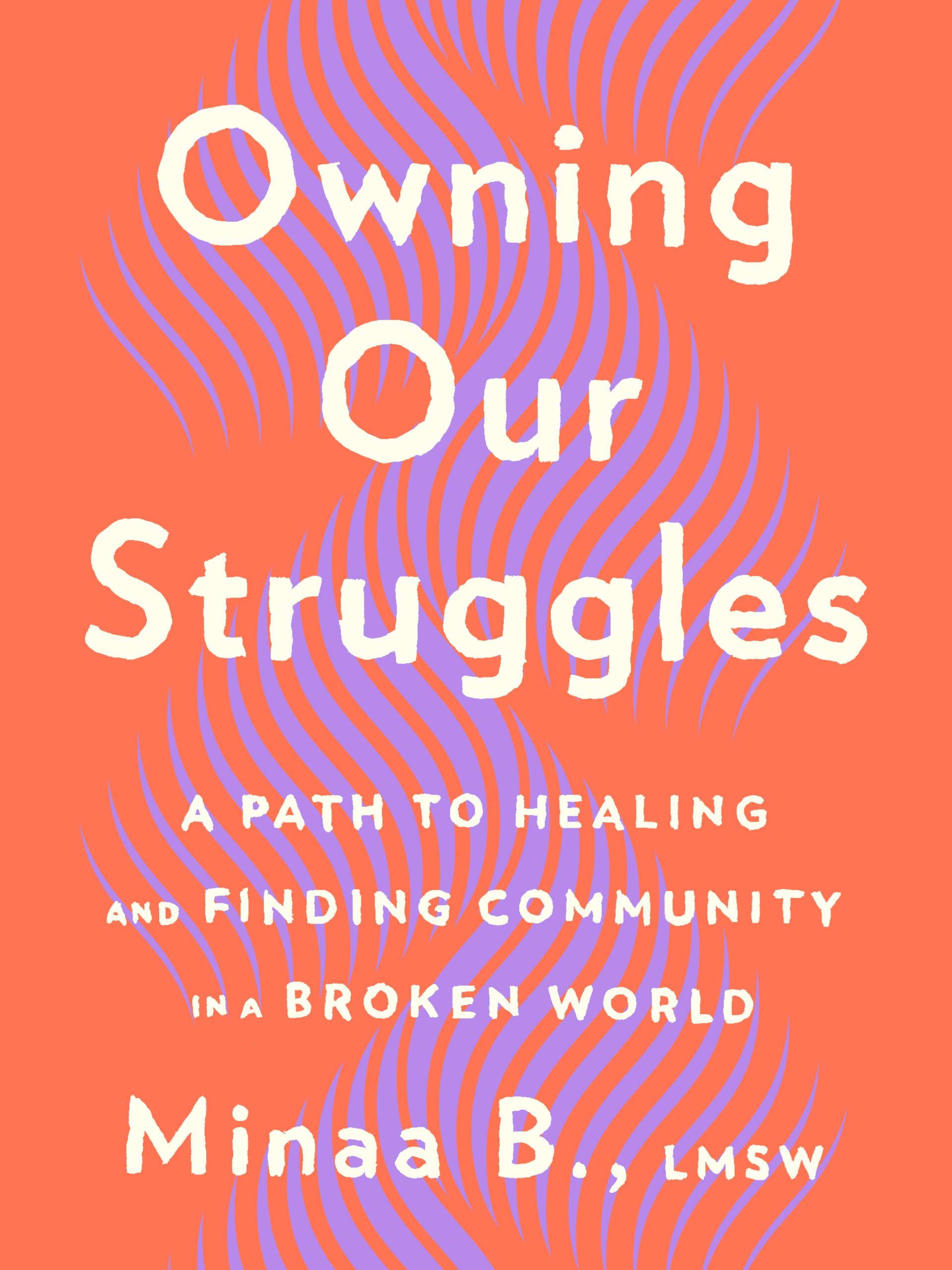
Minaa B. is a therapist with nearly a decade of practice across private practice, community mental health, and early childhood work, and the author of Owning Our Struggles, a book about the specific struggles we carry and what it takes to actually put them down. She is the youngest of thirteen, raised first-generation in a Panamanian and Colombian household where care was a group activity, and she brings that lived experience straight into a culture built around doing it yourself. This conversation was first released in 2023 and we are bringing it back as a Best Of, because the questions inside it have only gotten louder.
What you’ll explore:
The distinction between two kinds of support that can quietly save a friendship you’ve been avoiding because you don’t have the bandwidth Why people who do everything right for their wellbeing, the therapy, the practices, the tracking, can still find themselves crashing What radical acceptance actually asks of you, and why Minaa insists it is the opposite of giving up Where the search for belonging goes wrong, and the substitute most of us settle for without noticing The question she asks readers to sit with about their own role in community, which reverses everything we usually say about choosing better peopleIf you’ve been doing the work by yourself and wondering why it isn’t landing, this is the conversation that explains what’s missing.
You can find Minaa B. at: Website | Instagram | Episode Transcript
Check out our sponsors and resources: Visit Our Sponsor Page
photo credit: Kat Bawden
_____________________________________________________________________________________________________
Episode Transcript:
Jonathan Fields: [00:00:00] So if you’ve been trying to heal on your own and it just isn’t working, there may be a very good reason.
Minaa B.: [00:00:07] Every single person that I worked with was engaging in that concept of what you just shared, trying to heal in isolation. However, the ruptures that they were experiencing was caused by another person.
Jonathan Fields: [00:00:20] So my guest today is Minaa B. She’s a social worker, mental health educator, and author of Owning Our Struggles. And she has spent years as a therapist in private practice and community mental health and working with kids from birth to age five and their families. But her belief that we heal together, it didn’t start in grad school. Minaa is a first generation Panamanian and Colombian, and the youngest of 13, with siblings 20 to 32 years older than her. She was quite literally raised by a village and we open with something so many people feel but rarely name. What happens when you’re an empath carrying emotions that aren’t even yours, and the unspoken shame of not having the capacity to show up for the people that you love. From there, we walk through three core struggles. First is the struggle for wholeness, and why your five year old self might still be showing up in your life, in your marriage, or every time you talk to your boss. Next is the struggle for safe spaces and why radical acceptance is not the same as giving up. And last is the struggle for fulfillment in a culture that profits from your exhaustion. Then, right at the end, Minaa flips the whole idea of healing on its head. Most devices surround yourself with good people. Minaa asks a different question. It’s one that most of us have never asked ourselves, and it’s far more uncomfortable. I haven’t really stopped thinking about it since. Because if we only ever heal alone, we might end up whole and still lonely. So excited to share this conversation with you. I’m Jonathan Fields and this is Good Life Project., and we’ll dive right in after this short break.
Jonathan Fields: [00:02:03] There are so many different topics and places that I want to explore with you. Um, before we dive into some of the topics of your fantastic new book though. Um, you, you shared an article not too long ago, I think it was February of this year in XO Nicole website. And you were talking about empaths. Um, and on sort of like what an empath is. Um, and also on this notion of feeling so much not just of your own emotions, but of everyone around you and on the importance of not taking on emotions that are not yours to carry. I love, I love you to sort of like take me into that a little bit more because I feel like it’s a conversation that is relevant to so many people, but nobody really talks about it all that much.
Minaa B.: [00:02:52] I mean, I think when it comes to being an empath, that is basically someone who honestly just feels very deeply. They find themselves being able to relate to the emotions of others. But to the extent where they start to carry the emotions of others, I will see people who are empaths and they will say, I have a friend who is depressed, and now I feel this chronic state of helplessness. I’m feeling this chronic state of sadness, and it’s because they are intimately so enmeshed with this other person where they’re starting to mirror the different emotions they see the people around them experiencing. And I think it’s really common for people who maybe grew up in homes where you were pretty much responsible for tending to the emotions and needs of other people, especially if you grew up with emotionally immature parents. Um, this can be very common if you are the older sibling and you experience parentification. So here you are at, I don’t know, 14, 15 years old, but you have to calm down your little siblings and you have to tend to their emotional needs because a parent is not doing that. You know, a lot of the way we are in adulthood tends to stem from the things we experienced in childhood. And I think it’s just important for us to pay attention to those signs and patterns in our relationships. Because I’ll hear so many people say like, I don’t know why I feel this way.
Minaa B.: [00:04:26] I don’t know why I’m always feeling down. I don’t know why I’m always feeling anxious. And they’re surrounded by so many people who are feeling the things that they’re naming and in their own lives, they’re like, I don’t have any circumstances or situations that I feel like I need to have this emotional reaction toward nothing’s happening in my life. But when I look at the people around me, I might realize, oh man, this is why I’m always feeling down or sad. It’s because the people around me are often feeling that. So I think for me, one of the things I’ve had to work with when I’m with working with clients who have felt this way, or just general advice on coping mechanisms people can engage in, is really learning to discern where that boundary needs to be drawn. You know, what is mine to carry versus what is someone else’s to carry. I think another thing is really paying attention to what can I be doing to, um, self regulate and be able to manage the emotional responses and reactions I’m having when I’m around this person? Because I might find myself coming into a situation being really excited, but then I walk away feeling really drained from being around certain people and not realizing it because you’re feeling so deeply what that person is feeling.
Jonathan Fields: [00:05:44] Yeah, that makes so much sense to me. And I imagine it’s tough also, right? Because these may be people you care deeply about and you want to be there for them. Like you want to be the person that listens, and that’s there to give care and take care. And you genuinely, like, really love them. And but at the same time, there may be just something about you where it’s because it’s almost like this porous boundary where you just, you absorb so much of their emotional state that it’s almost not healthy. Um, and you really have to think about your own state of being in that context. But I wonder if that sometimes might come with the sense of shame. Like I want to be there for this person, but I feel like I can’t be there. But then I feel shame about the fact that for me to be okay, I feel like I can’t actually be there in the way that I want to.
Minaa B.: [00:06:32] I think that is so common. I think a lot of people carry shame around wanting to be very supportive to other people and not having the capacity to do so. And so I often tell people, what does giving support look like for you? I’ve been in situations in my own life where I realized there are certain people that I cannot provide emotional support to, but I’m willing to provide tangible support. So maybe I’m not the friend that has the capacity to be on the phone with you to hear certain things, but do you need me to run errands for you? Do you need me to babysit for you? Is there something tangible that I can do that is still helping to take the load off or whatever burdens that you’re carrying? Can I show up for you in a completely different way that doesn’t require me to self-neglect, that doesn’t require me to drain myself of my emotional bandwidth. And having honest conversations. That’s what community care, in my opinion, is all about. Being able to honestly say, I don’t have the capacity and maybe I will have the capacity tomorrow.
Jonathan Fields: [00:07:41] So you brought up the notion of community care, which I know is so much of what you’re about. And I want to dive into that in a lot of different ways, and community care as a way of self-care and also like individual healing and communal healing and how it really it all works together for you. This is personal too. I know you like you grow up the first generation Panamanian and Colombian, um, in a multigenerational household where like this is not some, you know, thing that you read about, like the sort of like the, the idea of community, the idea of multi-generations, the idea of actually sharing space, the origin of what’s become your professional practice and a lot of your devotion. It’s really, it’s based so personally in your own lived experience, especially in childhood.
Minaa B.: [00:08:23] Yes, absolutely. You know, as you shared, um, I’m first generation and so my parents were born in Panama, but they were raised in San Andrés, Colombia, and I am the youngest of 13. So I grew up in a small household, but filled with a lot of people, you know, and when you’re the youngest as well, you have so many voices and so many parental figures. Um, my oldest sibling is about 33 years older than me, and most of my siblings are between 20 and 32 years older than me. So literally, when I say I had multiple parental figures growing up, I absolutely did. And so growing up, I remember just one. I thought that was the norm. I thought everybody had large families. It wasn’t until I started telling people, well, yeah, I’m the youngest of 13. They’re like, what? How? What? And I’m like, is that not normal? And then I started to be around people who are like, I only have one sibling or I’m an only child. And I’m like, oh, okay. So this is culturally different for a lot of people. But in my household, you know, and it’s very specific to my Hispanic and Caribbean culture where we believe in the importance of community and togetherness. We believe in the importance of collective care. I’m a big advocate in believing that community care is child care, and that is because I was raised that way. I was raised by a village. I was not only raised by my parents and growing up, my parents were really big on ensuring that we knew people in our community as well, because that is how we saw, um, caregiving.
Minaa B.: [00:10:08] And so I have people that I know who I call mom, I call them dad, I call them aunt, I call them, I call them Tia. Because to me, that is what community care is. The people who have played a role in investing in you, nourishing you. And so as I got older, I started to really understand how individualism is deeply rooted in American culture. The concept of the nuclear family, which I think a lot of people are realizing was a disaster concept. Um, and this idea that we should be segregated, this idea that we are supposed to grow older, turn 18 or whatever age it is, and move out of your home. Never engage with your family, only unless it’s the holidays. And that’s just completely different from what I was raised around, you know? So it’s interesting because what made me focus specifically on community care as a professional was one. Community care is deeply rooted in social work concept, right? So we are social workers because not only are we caring for the well-being of individuals, we are also plugging those individuals to resources and figure out ways their communities can support them as well. And what can we be doing to contribute to our communities? So my own upbringing led me to this work. But while being in this work, my second year of grad school, I was placed at Hazelden Betty Ford Foundation, which is a substance abuse treatment center.
Minaa B.: [00:11:44] Right? Yeah. And their model is group therapy And I loved it so much that I’m like, why isn’t group therapy talked about enough? And the reason why I loved it so much is because it brought up this familial sense where you have all these people in the group, 10 to 12 people, where we have to talk things out. We see each other four days a week for 90 minutes in this room. If I’m upset, I have to talk about that emotion in this room. As the therapist who was in charge, I’ll say things like, Jonathan, I saw how you looked at person A over there. Do you have something you want to say? Because you can’t leave this room without saying it right? And so for me, and that’s honestly how I was raised, I was raised in a household where people asserted themselves. Of course, there were some dysfunctional patterns that had to be broken, but we were all together, so we had to learn how to heal those things while living amongst each other. So that now being in this therapeutic environment called group therapy, where I’m also teaching people these skills of making repairs to the ruptures that happen in this place. I often think that’s missing in our society. So that is where my love and my passion for community care comes from, because my own personal journey has informed my professional journey.
Jonathan Fields: [00:13:06] And we’ll be right back after a word from our sponsors. And I’m curious whether you see this in your practice. Um, I wonder if part of what goes on in some of our heads is like, we have this script running that says, well, I feel like the problem was caused, you know, like in isolation or individually. So I need to solve it individually. And the notion of actually, no, actually the solution might not be for me to just step into like figuring this out on my own or just 1 to 1 with somebody else. But the notion of actually solving this in community, healing in community so that I can not just feel better myself, but also like heal community around me. It just feels so foreign to us because we look at the the, the experience as being just wholly our own.
Minaa B.: [00:13:51] You know, when I was working as a therapist, I practiced for about nine years. And that was within private practice, community mental health, even as a mental health consultant and Early Head Start, working with children ages 0 to 5 and their families. And I tell you, Jonathan, every single person that I worked with was engaging in that concept of what you just shared, trying to heal in isolation. However, the ruptures that they were experiencing was caused by another person. And so here we are trying to do all of this internal repairing when the rupture, the trauma, whatever it is that we endured was literally caused by someone else. And so now there is this distrust, there is this severance from connection, severance from community. But the thing is, we are biologically wired to be connected to other people. When a child is born, doctors encourage skin to skin. They encourage engaging with your baby because you need to develop a secure attachment with that child, or else. A lot of us may be familiar with the other concepts of attachment. They might grow up to have disorganized attachment, ambivalent attachment, which ends up leading to poor mental health issues and adverse childhood experiences. And what’s fascinating to me is we grow older, that child grows older. And this concept of continuing to build bonds and attachments start to fade away.
Minaa B.: [00:15:25] So how come you can’t pull yourself up by your bootstraps? How come you can’t manage this crisis on your own? You are in charge of your happiness. You are in charge of all of these different things. It’s not the people around you. It’s you, you, you, I, I, I. And we forget the importance of we. E, especially when, again, you’re in a situation where maybe there is a person who caused that pain. But despite the fact that there’s a person that caused that pain. Relationships are at the center of our being. So we still have to learn how to heal so that we can build new, healthier relationships. Instead of saying, well, you know what? Someone hurt me, but I’m going to do all this individual work in silence and I’m going to lock myself in a house, or I’m going to go on a silent retreat, and I’m going to do all of these things. And that can be beneficial for some people, but it can’t stop there. And so I think it’s just really important for people to be thinking of the ways that we heal, not to exist into a vacuum. We heal so that we can integrate into community. And I think that integration piece is where a lot of people struggle.
Jonathan Fields: [00:16:30] Mhm. Now, that makes so much sense. I know you actually write in your book that we’re all in search of belonging, but too often we trick ourselves into believing that assimilation is belonging, which is part of what we’re talking about here. It’s like, let me shape myself into whatever I think is going to be the thing that lets me feel in some way, whole or accepted, thinking that it’s going to make me feel actually better. But it never really does.
Minaa B.: [00:16:53] It never does. It never feels fulfilling. It never feels satisfying because ultimately it just ends up feeling like self-abandonment. And if I feel that I have to abandon myself repeatedly to be loved, to be cared for, to be nurtured, that is a high standard to try to, to try to live up to. And it’s an unrealistic one. And so I think it’s just important for people to be doing that inner work of asking themselves, am I showing up fully and wholly as myself? Because that is also how we repair trauma. Giving ourselves an option to say that I can show up as my full self and discern who is for me and who is not for me, because I don’t want people to think that community care means that we all live as Kumbaya and we all get along. And you know, there’s no such thing as boundaries. And, you know, and.
Jonathan Fields: [00:17:50] Yeah, we, we all still, we still have to inhabit the real.
Minaa B.: [00:17:52] World. Exactly. Right. So just really being able to own and recognize that who is my community? Who are the members of my society that I can lean on for support, care and nurture?
Jonathan Fields: [00:18:05] In your new book, which is, which is really fantastic. Owning our struggles. You, you, you introduce sort of like the notion of a series of different struggles that we tend to all grapple with. And when I say we, by the way, I’m talking about the collectively, but also different people grapple with different structures based on their history, based on the system in which they live in, based on like what that allows them and also prevents or shows up as struggle or limitation or challenge or oppression. So we, you know, one of the starting points for you in the conversation, the struggle that you kind of open with is this struggle around wholeness, and you introduce a conversation around really grappling with this notion of the inner child and the context of this struggle for wholeness. Talk to me a little bit about this notion of the inner child, and what are we actually talking about when we’re talking about, and why does it matter so much in the context of healing?
Minaa B.: [00:18:59] Yeah. I mean, I know for a lot of people, it sounds like that psychological woo woo, right. Like what?
Jonathan Fields: [00:19:04] Right. Right.
Minaa B.: [00:19:05] Here we go. The reason why I wanted to talk about the concept of the inner child is because often when people struggle with trauma, adults in particular, um, I had the privilege of being able to work with adult clients as well as children ages 0 to 5. A very thing I see happen with adults when they find themselves having trauma responses in adult situations is they start to regress. They start to go back to their childhood and literally act out the coping mechanisms that they did when they were a child to protect themselves from harm. There are some children who they may have, um, shut down and they did not know how to express themselves verbally. There are some children who, when they can’t regulate themselves, they throw a tantrum or they start to yell and scream because they don’t have the regulation skills as of yet to communicate what they need. There are some children who their anxiety takes over. They start to feel a feeling of fear and worry, especially if they have a parent who abandoned them, right? And so am I lovable, am I likable? I’m scared that I’m going to lose mommy. I’m scared that I’m going to lose daddy. And I hear adults say, I’m scared I’m going to lose my partner. I’m scared I’m going to lose my friend. And that is the reason why I introduced the concept of the inner child. And what I mean by the inner child is literally recognizing that we have a past, because I think a lot of adults believe that your childhood gets erased the moment you step into adulthood. And the inner child concept is really an invitation for you to just simply reflect on your childhood and nurture yourself so that you can realize, actually, I’m safe in my body and I am not my five year old self anymore.
Minaa B.: [00:21:05] But right now I feel afraid. Like my five year old self. Right now I feel anxious like my five year old self. And so your inner child is manifesting through an adult body because there are a lot of adults that I’m sure we have interacted with that we can say they act in ways that we will say, well, that’s not mature of you. You’re 30 something, 40 something, 50 something years old, acting like a child. A lot of us say it, but then when we say, well, maybe they need to tend to their inner child. Oh, that’s psychological woo woo, right. And so it’s like I have worked with so many adults who spend most of their time in session talking about their childhood, because those are the years that were primitive, that shaped their brain, shaped what love meant, shaped what care meant. And here they are acting out those things, that abandonment, that loss in their marriages, in their friendships, even when they go to work. Right? Some of us still have a difficult relationship with our boss because of that power hierarchy where we feel like our bosses, our parent. Right? I can’t say no because there’s an authority figure, right? A lot of us still wrestle with authority figures, and I’m not talking about police because that’s a whole different conversation that engages the nervous system in a different way. But when we think of people who hold certain titles in our lives, the very first relationship we have with someone who owns a title is our parent.
Minaa B.: [00:22:35] And depending on how they exercise that title, we might feel like we can’t speak up. We might feel like we can’t set boundaries with our parent. We can’t express ourselves with our parents. So now we move through the world feeling like when I’m in a situation where someone has that power dynamic over me, whether it be my boss or my supervisor, or I’m in some sort of space where there is some sort of title that’s above mine, I might shut down and what am I doing? I’m regressing back to my five year old self. And so in the book, I outlined that because as you read in the book, Jonathan, I also share my story and I talk about I turned 18 not knowing how to engage in adulthood. I turned 18 knowing that I was not emotionally equipped to engage with the real world because I did not do any trauma healing work. So it was still stored in my body. And at 18 years old, 19 years old, 20 years old, I still found myself thinking about five year old Minaa thinking about the pain. Five year old Minaa dealt with thinking about the hurt Minaa. Five year old Minaa was exposed to that I never talked about, and so I needed to tend to my inner child because I realized five year old Minaa needs love and care, but she’s manifesting through 18 year old Minaa, and I can’t move through the world expecting safe, healthy relationships. If I am going to act like my five year old self and an adult body.
Jonathan Fields: [00:24:04] You know, it’s interesting the the primary relationship that we’ve been talking about when we think about this notion of the inner child is, you know, it’s it’s between the parent or the guardian or whoever was the safe keeper of the child and, and the function and often dysfunction, you know, like nobody’s perfect. Yeah, we’re all doing the best we can as parents, especially on any given day. And sometimes we cause harm or we cause trauma because we’re dealing with our own stuff. Right? Um, not with intention. And yet it happens. But there’s also a bigger relationship. And this is something that you, you speak to and you write about in this chapter, and also it gets threaded in later in the conversation as well. Break this down a little bit for me. When we expand beyond the parent to talk to me about the role of community and society, because one of the things that you also introduced around this conversation is the notion of healing and healing. Inner child ruptures as both a communal issue and also more broadly, a social justice issue.
Minaa B.: [00:25:00] You know, I talk about how healing in itself is a social justice issue. Um, I think collectively when we are trying to heal, we also have to pay attention to the institutional and systemic ruptures that take place from the moment we are born, actually, because we are born into a world where those ruptures are already prevailing, right? And so here you are already born into a system that is traumatic, right? So yeah, you have your family and that’s great that they’re loving. If you grew up in a loving home. But you now have to interact with the world where you might start to realize, outside of my home, there’s a struggle for safety. And the reason why is because I have to engage with people when I’m in school, when I’m at work, when I’m on the bus, when I’m riding the subway. I always have to engage with people. And so I think that inner child healing ripples, um, trickles out to community because it helps us realize that we bring our full selves to community. And it goes back to that concept of hurt people, hurting people, right? And it helps us recognize that by not doing my own inner work, not only am I impacting myself, I am impacting my family unit because often trauma can be intergenerational. Right. And so it’s being passed down through DNA, but it’s also being passed down through habits and behaviors and even cultural norms.
Minaa B.: [00:26:36] I even share in my books. Some of us engage in dysfunctional patterns, and we call it tradition in the home. This is this is normal. This is what we do, um, in our household. Well, this is not okay, right? Like it’s not okay. It doesn’t make me feel good. It doesn’t make me feel safe. And so now here you are having this intergenerational trauma. But then we bring that into the world and we traumatize traumatize other people by not dealing with our own stuff. And we traumatize other people by how we interact with them, by gaslighting people, by manipulating people, by lying to people, by, um, not being assertive. Sometimes that’s another thing, right? Where sometimes we, um, self abandon so much that we don’t realize we can be causing ruptures in those relationships by not asserting ourselves and expressing ourselves and communicating our needs. We’re leaving it to other people to figure it out. We’re making assumptions, and so we’re not doing the literal, literal work of practicing togetherness and connection. And so we have to figure out ways that we can engage in our own healing work, but bridge it to the communities around us so that if we say we want the world to be a better place, we can ask ourselves, what is my contribution to making this world a better place?
Jonathan Fields: [00:28:00] Yeah, no, that lands so powerfully. It’s like we don’t we don’t heal so that we can live a better rest of our lives in isolation. We want to heal so we can live the rest of our lives, like in community, in relation. Because that’s what makes life rich. And we’ll be right back after a word from our sponsors. And this really brings up the notion of, and this is another one of the things that you speak to is the. I think you call it the struggle for safe spaces. You know, because at some point it’s really hard to go into this healing modality, especially if we’re doing it in community or in in conjunction with other people. If we don’t feel in some way, shape or form safe, you know, we won’t we won’t reveal who we are. We won’t get vulnerable on a level that actually allows for the things that really need to be centered to be centered. So talk to me a bit about the role of safe spaces in this whole, in not only in the role of like the struggle to try and find it or cultivate or create it, but also in the role of individual and collective healing.
Minaa B.: [00:29:01] You know, when I wrote that chapter, um, I was thinking about the collective loneliness a lot of Bipoc individuals were feeling after the racial injustices that were happening in 2020, specifically the murder of George Floyd and how his murder literally just kind of shook the world. Um, I think it’s still shaken right now as we speak, right? Because it left this ripple effect. And when I wrote that, it was because I was in a space where I was thinking about what it means for me to move through this world as a black woman, trying to find safe spaces, trying to find spaces where I can be vulnerable, and having to often reconcile with the fact that there are going to be times where those safe spaces don’t exist. So how do I regulate this racially traumatized body in a space that is trying to traumatize me in a space that is dysregulating, in a space that is literally just unsafe? And I think there are a lot of people who realize there are spaces that they have to frequent. It tends to often be the workplace where I will hear a lot of people say, this does not feel like a safe, nurturing environment. What am I supposed to do? Keep quitting my jobs until I find it right? Like, how do I write in this body knowing that the spaces that exist around me can very be very harmful, and it can lead to something called collective loneliness, where on a collective level, we feel ostracized and often pushed out of community.
Minaa B.: [00:30:44] And we do not have what is called psychologically safe spaces to be able to express our fear, our concerns, our anxiety without punishment. Especially, again, if you exist in this world as someone who is Bipoc, you can often feel used to being punished for existing. And so when I wrote that chapter, it was really all about one acknowledging the importance of safe spaces. Two, acknowledging the importance of community members making safe spaces for people. I think people are often trying to figure out, how do I heal? How do I heal? How do I overcome my childhood trauma. I, I, I write, everything is so focused without realizing in the midst of me wanting to tend to my own needs so much, I’m forgetting about what it looks like to the tend to tend to the needs of the people around me. So sometimes that might look like in the midst of me healing my trauma. I also need to heal my biases. I also need to check in with myself and ask myself, what are some stereotypes that I harbor toward people, whether it be about their race, gender, sexual orientation, anything, right? It’s also about assessing inwardly and saying, what contributions do I make to the spaces around me to actively be an ally? I do a lot of allyship workshops, and a lot of people say, well, what am I supposed to do? What am I supposed to do? And I always remind people that there are resources available for you to be learning and unlearning, right? And so being a community member who wants to create safety for people is a part of collective care.
Minaa B.: [00:32:35] It’s a part of community care. But on the other side, when you are on that person searching for the safe space, I think what happens is it requires a lot of courage and self-regulation because as I shared earlier, there are going to be times where you’re searching and you’re searching and you’re going to realize, you know what? I might have to reconcile with the fact that my work environment is not psychologically safe. It is not psychologically safe for somebody who lives in a black body. It is not psychologically safe for somebody who, um, is a part of the LGBTQ community. It is not psychologically safe for all of the marginalizations that people experience, right? And oppressed groups experience.
Minaa B.: [00:33:21] And so a big part of that is gaining courage and assertiveness in owning who we are in these spaces that are trying to often push us out. And that takes a lot of inner work. It takes a lot of self-regulation. It takes a lot of co-regulating with people who are safe outside of that environment, so that when you do walk into these environments, you feel that you can be rooted in your truth. You feel that you can be rooted in the safety that you can provide yourself. And that is where those self-regulation practices come in, that I share in that chapter, because I’ve had to reconcile with the fact that there are just going to be places that I go in life that people don’t want me there. People don’t like me for whatever the reason is. And I have the choice to either shrink and keep myself small. I also have the choice to, in my dysregulated body, decide I need to self-soothe other people over soothing myself, or I can make the choice to engage in radical acceptance and realize this actually isn’t a safe environment, and if it’s hard for me to pull myself out of the safe environment, what does it mean for me to cultivate my own safety?
Jonathan Fields: [00:34:34] Yeah. And that last element, I think in particular, um, it’s tough, but I think for so many, they find themselves there because let’s say this is a space where it’s supporting you. It’s supporting your family, your extended family. It makes it really hard to just extract yourself from that situation or show up as your full self and just say, this is me. Deal with it in a culture where you where you may expect, and rightly so, that that won’t be accepted. Um, and yet, you know, like from a value standpoint or just from a security standpoint, you’re reliant, you know, like on the basic thing that it gives you, which is a living and some sense of financial security. So it’s, it’s a, it’s a difficult dance to do. But the notion of you saying like the notion of radical acceptance, I think some people hear that and they’re like, well, isn’t that just giving up? But that’s not what you’re talking about. And so for those who may hear it as that tease out the distinction here for us.
Minaa B.: [00:35:32] Absolutely not giving up. It is owning a situation for what it is. I think often when we’re dealing with adversity, when we’re dealing with things that are difficult to experience, we kind of want to beat those things into submission. So we want to mold it and we want to shape it, and we want it to conform into the thing we want it to be. And we got at some point realized, I don’t have control over this, right? I know that I am not a powerless person, but there are certain things in my environment that I don’t have control over, that I don’t have power over. And radical acceptance simply means owning the truth for what it is. This person is showing me who they are. This person is showing me that they don’t care about my emotional well-being. This person is showing me that they are not engaging in the work of being a psychological, safe partner, friend, colleague. They are literally holding it up in my face and saying, Minaa, this is what you’re gonna get from me. And radical acceptance means, okay, I gotta acknowledge that as truth. And so it is not giving up because here’s the thing, we can’t change people. And I say it in my book when it comes to my inner work as, um, healing through my own racialized trauma and moving through this world as a black woman, I had made a choice that I refuse to do someone’s anti-racism work. I refuse. You know how tiresome that is to try to always have to train people on how to be a kind person to me, because I exist in black skin. Oh, no. So radical acceptance for me has been.
Minaa B.: [00:37:26] All right, well, I guess if you’re going to be racist or if I guess if you’re going to be cruel, I guess if you’re going to be unkind, if you’re going to be manipulative, I’ve decided that you and I don’t have a relationship, right? Radical acceptance means that you’re showing me who you are. And instead of me engaging in delusional optimism, which basically means I have this idea in my head and my idea is more powerful than the than reality. So in my head, you can be this person. So I’m just going to stick around until you become the thing that I manifested in my mind. But radical acceptance means, oh no, I have to face the truth. The person that I want you to be in my head doesn’t exist in front of me. So I need to own that. You’re showing me who you are, and I have so much power within that I can decide how I want to show up in relationship with you. I might decide that I need to make adjustments in how I interact with you. I might also decide that I don’t want to interact with you at all, right? Because I hold the power in that. So I don’t want people to think that radical acceptance means you’re giving up and that you are not fighting for your self-worth, and that you are not fighting to be seen, or that you’re not even doing the work. But I also want people to realize that you should not be trying to. You should not be tiring yourself out by trying to control people and force people to be someone that they don’t want to be.
Jonathan Fields: [00:38:58] It’s not about giving. It’s about reclamation of power, of anything, you know? And it’s about actually being radically honest. Also in your assessment of like, what’s true here.
Minaa B.: [00:39:07] Exactly.
Jonathan Fields: [00:39:08] And what’s changeable and what’s not changeable, and how is that affecting me? And what do I do to take care of myself in this circumstance, in this scenario? You know, one of the other things that that you, you dive into is the notion this is a separate struggle that you listen is what you call the struggle for fulfillment. Um, and, and I think that is one of the questions that, that so many of us have been dropped into over the last three years. Also, you know, we’ve been the world has been turned upside down. Nobody was left untouched by the last couple of years. The sense of groundlessness, a sense of urgency, the sense of fear over our future, the sense of nobody has made any promises, and the notion that we want to spend our time wisely, and that we want to feel a sense of meaning and purpose, and we have a yearning to feel fully expressed and fulfilled. And yet at the same time, you make this really fascinating distinction with with that yearning and this culture of busyness, culture of, you know, we, I think we’ve all heard the phrase toxic productivity in many different ways over the last couple of years. And there’s this really interesting and dysfunctional dance between sort of like the notion that you’ve got to be constantly busy and wildly productive, often in things that you’re genuinely disinterested in and provide no source of meaning or purpose or passion for you. And at the same time, we feel like we’re beholden to that. And yet we really want to feel like we’re living in, in, in, in a way that matters, that is meaningful, where we have a sense of purpose and passion and expression. And it leads to the struggle that you describe.
Minaa B.: [00:40:49] Yeah. You know, it’s interesting because I even outlined in that chapter my own experiences with toxic productivity.
Jonathan Fields: [00:40:57] Yeah.
Minaa B.: [00:40:58] You know, and I, I, I highlighted in the book how, um, when I was writing the book, there were moments where I was so drained, I was so tired. And the moment I allowed myself to rest, my brain will be like, well, the book isn’t gonna write itself now, is it? Huh. And I’m like, oh my God, I have a deadline. And now mine.
Jonathan Fields: [00:41:18] By the way. I’m. Yeah, as a fellow author, I’m nodding along because I felt that so many times and I have judged myself so many times, I’m like slacker and get back to it.
Minaa B.: [00:41:28] It’s that small voice that just creeps in where it’s like, the book isn’t gonna write itself and you’re missing out an opportunity here. Who? Why do you need to watch Netflix? Why do you need downtime? And it’s so crazy because, like, you know, it is so ingrained in us. I think that is the first thing that a lot of us need to acknowledge. We are born into a world that profits literally profits on our exhaustion, our labor, and our productivity. And so one, I say that because I think a lot of us think that it’s some sort of moral failure or some sort of internal issue where it’s like, why can’t I rest? And why can I can’t I fight back against productivity. And it’s like, well, you were born into a system, right? And so I often just tell people, when you find yourself always being busy, you need to ask yourself the way I am always pouring out and pouring out and pouring out into being productive and into being busy. What am I doing to nourish myself? What am I doing to restore and repair my nervous system? And how am I filling my cup? Because I’ll hear a lot of people say, I’m pouring out and pouring out and pouring out. But then I’m doing, and I’m doing so that I can fill my cup. But the issue is, the thing that you’re doing isn’t restorative. The thing that you’re doing isn’t nurturing, nourishing. And so when you’re pouring out, you need to make sure that you’re equally pouring into yourself. And whatever you’re pouring into yourself has to be something that is sustainable. It has to be something that nourishes you. It has to be something that literally repairs and restores your nervous system so that you are not always feeling burnt out. Those are the things that keep us sustained. Those are the things that really help us heal and move forward. When we’re investing in ourselves and stepping away from the culture of urgency.
Jonathan Fields: [00:43:27] Yeah. I mean, that’s so powerful. I think, especially at this moment, like so many of us are really reconsidering this stance that we’ve been doing and why we’ve been doing it. Um, it was in this section where you actually write the only way to create a new narrative around rest. Purpose in the American dream is to live in alignment with the truth you define for yourself, not society’s truths, but your truth. Begin thinking about what it means to live a full life outside of the labor you perform by using the following exercise to reflect. And then you share some, some, some ideas. But that notion of like really teasing out, like, what is your truth versus the, the, the expectations and truth that society lays over you, which kind of circles us back to the beginning of our conversation, which is this notion of, okay, so we can kind of, we can do as much of this work as we can individually. Like we can figure out what is our truth. How are we going to strike a balance between rest and productivity and purpose and expression? Right. Um, but do we ever really get to heal? You know, when we are the outliers who are just trying to just constantly fight against a culture that says, but that’s not the way it is, and that’s not okay. And that’s not how we live as a society, you know, and it keeps pulling us back into this bigger conversation that says, yes, okay, so maybe you carve out a way for you to figure this out for yourself. Um, but there’s always going to be friction and tension and resistance in your life, and you’re going to have to invest labor and effort. If we don’t in some way expand the conversation and invite more people into it and say, how do we all how do we all engage in this exploration together so that we can feel the things that we want to feel collectively?
Minaa B.: [00:45:10] Absolutely. I love how you just framed that. How do we engage in this act together because it makes me think about this culture around boundaries, this culture around togetherness. And I always say to people, often when we’re setting a boundary, it’s because that person wants to be in community with you. They just want you to be a safe person to them. They want to know that you listen. They want to know that you respect them. They want to know that there’s trust. But if you are constantly violating boundaries, if you are constantly oppressing, if you are constantly ignoring, talking over, uh, boasting yourself up while putting others down, you’re showing me that it’s may not be possible to be in community with you. And that is actually what I’m yearning for. And so I think it’s really important for us as individuals to always be asking ourselves, I have needs, but what am I doing to meet the needs of the people around me? I have desires. What am I doing to be a valuable community member to the people that I say I want to be in community with? Even in my book, I say this. I say for people to reflect and say, why should people want to be in community with you? Because when we’re healing, we’re always about, oh, surround yourself with positive people. Surround yourself with this, surround yourself with that. And sometimes we have to look inward and say, well, what about me? Where do I stand in this? Am I the healthy friend or am I the problematic friend? Am I the healthy partner? Or am I the problematic partner? Right.
Minaa B.: [00:47:00] And so all of this work is literally about the concept of bridging self-care to community care. That self-care piece is we need to heal. And so I need to do healing exercises and healing practices. I need to overcome my trauma. I need to find ways to restore my nervous system. I need to do all of these things. And sometimes I might do it in therapy. One on one. I might find myself doing it in a sacredness of my own space in my house. But I’m doing it because I’m now bridging it to my community. So the same way I found that I felt wounded, I felt abandoned, abandoned by people. I felt all of these things that other people caused me. I need to make sure I am not bringing that same hurt and pain into my community and harming the people that I say I want to be around and want to build with, you know? And so I think it’s really all about always reflecting past yourself. And that is the, the, the main thing theme in the book, you know, and the main theme that I want people to walk away from is owning, how do I own my struggles? By also looking past myself. Because if I want to succeed in life and I want to, um, do this work of healing, it does require the involvement of other people. It requires the involvement of community. It requires the involvement of nurturing and safe relationships. So I know what I want from other people, but also what am I giving to other people as well?
Jonathan Fields: [00:48:38] Yeah, yeah, the whole notion of it, it can’t just be a me thing. It’s got to be a we thing, you know, it’s just, it’s just the way it is. And that feels like a great place for us to come full circle in our conversation as well. So in this container of Good Life Project., if I offer up the phrase to live a good life, what comes up?
Minaa B.: [00:48:57] So many things, I think to live a good life. Um, I often the first thing that comes to mind is people connection, community as what we talked about to live a good life. I want to know that I’m loved. I want to know that I’m cared for. I want to know that I’m valuable. I want to know that I am treating people with kindness, kindness, and respect. But to give to live a good life. I also want to make sure I’m giving those people the things that I want as well. How am I showing up for others? How am I respecting the needs of others? How am I building safe, healthy relationships with others? And most importantly, how am I allowing myself to define my own truth? Because to live a good life, I have to live in alignment with my thoughts, my beliefs, my values, and what I feel is right for me. And so I think that’s what’s necessary to live a good life is owning. This is who I am, and this is how I want to show up in the world. While also, of course, being mindful of how that impacts the people around me. But I want to make sure that I’m living in my truth so that I can be fulfilled.
Jonathan Fields: [00:50:13] Mm. Thank you.
Minaa B.: [00:50:15] Thank you, Jonathan.
Jonathan Fields: [00:50:17] So let’s talk about some of the big takeaways. One thing I keep turning over is that so many of us are trying to repair, alone and in private, something that was broken in relationship with another person, and then wondering why it never fully takes. Three other things that I think it’s worth sort of like diving into a little bit more. First, the split minute draws between emotional support and tangible support. When you don’t have the bandwidth to be someone’s shoulder, that isn’t the end of your usefulness to them. It’s just a different doorway. Second, radical acceptance is not giving up. It’s refusing to keep negotiating with a version of someone that only exists in your head, and it hands the power back to you. And third, the direction she points you in when you’re healing, not inward, and then stop inward so that you can come back and be somebody people actually want to be in community with. So here’s something for this week. Think of maybe one person that you’ve gone a little quiet on, a little silent on because you didn’t have the emotional capacity. You don’t have to call them, but just offer them the tangible thing. Instead, run the errand or send the resource or make the meal and then just see what opens up. And hey, before you go, do me a quick favor. Send this to a single person who maybe, you know, has been trying to figure it all out on their own or leave us a review. Wherever you listen to your podcast, it genuinely helps more people find these conversations. This episode of Good Life Project was produced by executive producers Lindsay Fox and Me. Jonathan Fields, Editing help By, Troy Young, and Alejandro Ramirez. Kris Carter crafted our theme music. And of course, if you haven’t already, follow us wherever you get your podcasts so you never miss a conversation. Until next time, I’m Jonathan Fields, signing off for Good Life Project.
The post How to Stop Absorbing Other People’s Emotions (Without Abandoning the People You Love) | Minaa B. [Best of] appeared first on Good Life Project.



 Bengali (Bangladesh) ·
 English (United States) ·