


If you find value in these articles, please share them with your inner circle and encourage them to Sign Up for my Rich Habits Daily Tips/Articles. No one succeeds on their own. Thank You!
[email protected]
In the iconic film The Matrix, characters awaken to a harsh truth. They realize their perceived reality is actually a simulated illusion. Moreover, this system is designed to keep them complacent and controlled.
Today, this metaphor extends powerfully to modern consumerism. It acts as a pervasive “matrix” of advertising, social media, and cultural norms. Unfortunately, this system indoctrinates us into endless buying cycles. We are told that happiness comes from the latest gadgets, luxury brands, and impulse purchases. However, this illusion often leads to debt and financial stagnation. Consequently, many people face a lifetime of paycheck-to-paycheck living.
Breaking free isn’t about rejecting all consumption. Instead, it is about reprogramming your mindset. You must prioritize wealth creation over fleeting gratification.
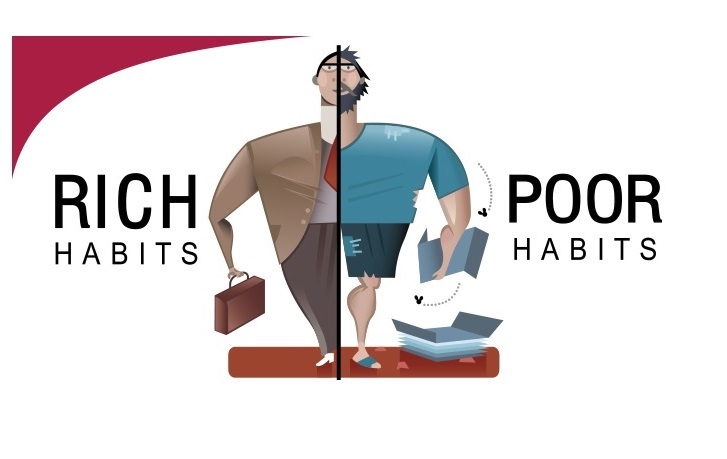
I drew from my Rich Habits research, where I studied the daily behaviors of 233 self-made millionaires. Additionally, I analyzed 128 individuals struggling with poverty. Along with third-party studies on financial literacy, this article explores how to ditch consumerist traps. Ultimately, these changes pave the way to genuine prosperity. The data reveals stark contrasts. Wealthy individuals build fortunes through disciplined habits. In contrast, consumerist tendencies keep others trapped in scarcity.
The Consumerist Indoctrination
Consumerism isn’t accidental. On the contrary, it is an engineered system that exploits human psychology. From targeted ads on social media to “buy now, pay later” schemes, society pushes us to spend. We are taught to spend beyond our means. Furthermore, we equate possessions with status and success.
The Psychology Behind the System
Research from the Federal Reserve highlights a key difference. Self-made individuals save and invest more. Meanwhile, the masses spend impulsively. As a result, this causes widening inequality.
A study in the Journal of Consumer Psychology defines “consumer wealth” loosely. It includes not just financial assets, but the perceived abundance from purchases. However, it warns that this mindset is dangerous. It often leads to overconsumption and reduced long-term savings.
The Cost of the Illusion
Third-party data from Investopedia echoes this sentiment. It notes that consumerism harms individuals through debt accumulation. Additionally, peer pressure spending ultimately hinders wealth building.
Similarly, a PMC-published study on financial literacy found interesting results. Better-educated consumers accumulate more wealth. They do this by resisting impulsive spending.
Rich Habits: The Red Pill for Wealth Creation
To escape this consumerist matrix, you must adopt the habits of the self-made wealthy. My research shows that 88% of millionaires devote at least 30 minutes daily to reading. Specifically, they focus on career-related or self-improvement topics. This fosters knowledge that compounds into opportunities.
This contrasts sharply with consumerist distractions. For instance, 67% of the poor engage in endless scrolling or binge-watching.
Here is a breakdown of key Rich Habits to help you break free.
Live Below Your Means First, 88% of the wealthy live on 80% or less of their income. They channel the rest into savings and investments. Conversely, poor individuals are influenced by consumerism. They often spend 100% or more of their income, which leads to debt.
Set Clear Goals Second, 81% of the rich set daily, monthly, and long-term goals. They treat wealth as a deliberate pursuit. This proactive mindset is held by 79% of the rich versus only 18% of the poor. Therefore, it effectively counters the passive consumption trap. Urban Institute data on wealth gaps confirms this. It shows that goal-oriented saving creates significantly more wealth.
Prioritize Health and Energy In addition, 76% of millionaires exercise aerobically for 30 minutes or more daily. Furthermore, 70% limit junk food to under 300 calories. This isn’t vanity. Rather, it is about sustaining the energy for wealth-building activities. Consumerist habits like fast food correlate with lower productivity. Consequently, they erode potential savings.
Build Relationships Over Transactions The wealthy network strategically. In fact, 79% devote time to building “rich relationships” that open doors. Consumerism, however, isolates us through a material focus. Instead, you should invest in mentorships. Build relationships with others who seek to break free from the matrix.
Embrace Continuous Learning Beyond reading, 63% of the rich listen to audiobooks or podcasts during commutes. A study in Sustainable Finance links financial consumerism to poor decision-making. However, literacy-building habits reverse this. They enable smarter investments. Entrepreneur.com’s summary of my study notes another factor. Self-made millionaires who pursue entrepreneurial dreams build wealth faster. Often, they do this by spotting opportunities hidden from consumer-distracted minds.
The Broader Evidence
Beyond my Rich Habits findings, external research reinforces this path. For example, Visa’s economic insights on the wealth effect show a specific trend. The wealthy only spend 4-15% of newfound wealth. Instead, they save and invest the bulk of it.
RBC Economics highlights a similar point. High earners often only engage in consumption using passive income. They do not use debt-fueled spending.
Mindset matters significantly. Those focused on building wealth view money as a tool for freedom. They do not view it as a tool for increased spending. Conversely, the poor see money merely as a means to acquire things.
Your Path Out of the Consumption Matrix
You can start small today.
Audit your spending for consumerist leaks.
Cancel unused subscriptions immediately.
Delay non-essential purchases for 30 days.
Refrain from impulse purchases. Wait 24 hours before buying.
Replace TV time with reading books like Rich Dad Poor Dad or my Rich Habits.
Track your goals in a journal.
Exercise daily.
Seek mentors.
Remember, 100% of self-made millionaires in my study believed they controlled their financial destiny. Adopt that belief. If you do, consumerism loses its grip over you.
By unplugging from the matrix of endless wants, you reclaim control. You take back your financial life. Wealth isn’t about hoarding. Rather, it is about freedom, impact, and legacy. As my research shows, the daily habits you choose today determine the riches you will reap tomorrow.
Tom Corley is an accountant, financial planner and author of “Rich Kids: How to Raise Our Children to Be Happy and Successful in Life”, “Effort-Less Wealth”, “Change Your Habits Change Your Life”, “Rich Habits Poor Habits”, “Rich Habits: The Routines Millionaires Use Daily to Build Wealth” and “Rich Habits Wealth Academy.”











 Bengali (Bangladesh) ·
  English (United States) ·