
 16 minutes ago
1


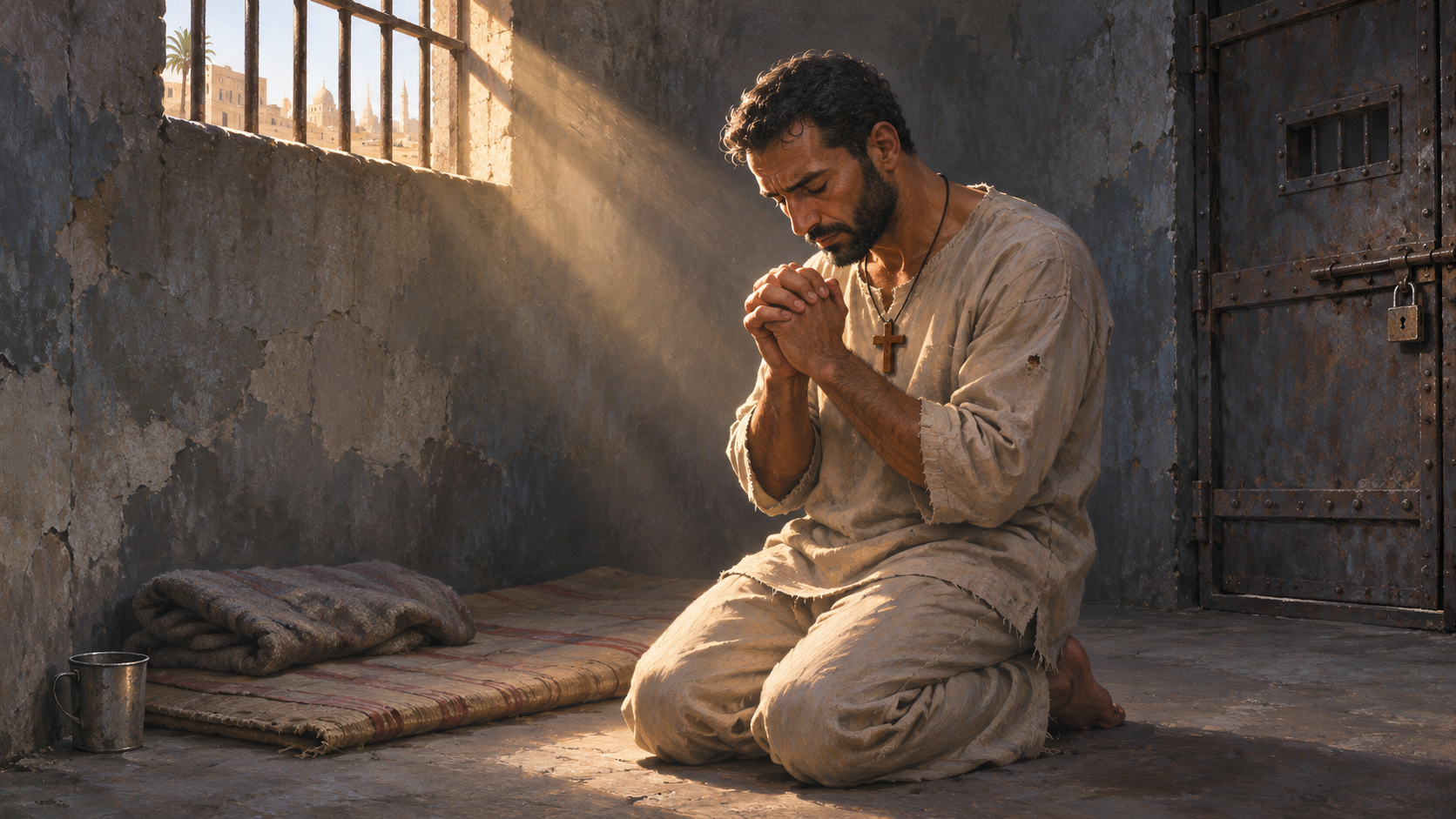 A former Muslim, faces life imprisonment or the death penalty after converting to Christianity. Illustration.
Egyptian prosecutors have asked a terrorism court to impose the maximum penalty on Said Mansour Rezk Abdelrazek (also spelled Saeid Mansour Abdulraziq and known as Said Abu Mustafa), a Christian convert from Islam on trial before Egypt’s First Criminal Terrorism Circuit in Badr, in eastern Cairo.
In a November 3, 2026 statement, the Office of Said Fayez – Lawyers and Legal Consultants said the Public Prosecution presented its closing arguments and requested “the maximum penalty prescribed by law.” Abdelrazek’s fiancée, who provided the statement to The Gateway Pundit, said prosecutors are seeking 25 years in prison or death.
The court adjourned the case to December 8, when the defense will present its final arguments. According to the statement, the defense team will respond to the prosecution’s submissions, examine the evidence, and outline “the legal and substantive grounds of the defence.”
Under Article 12 of Egypt’s Anti-Terrorism Law (Law No. 94 of 2015), anyone who founds or leads a terrorist group faces death or life imprisonment. Article 13 sets the death penalty for financing a terrorist group. A life sentence in Egypt is 25 years in prison.
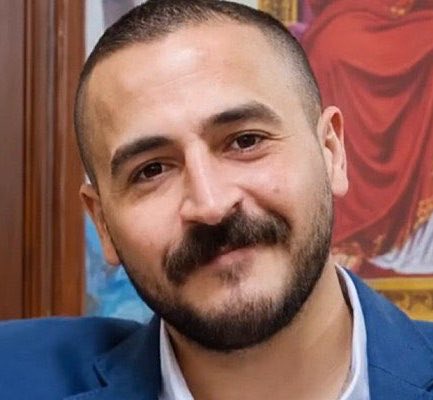 Said Abu Mustafa faces death or life imprisonment because he refuses to renounce Jesus. Photo courtesy of his family.
Coptic Solidarity reported that prosecutors charged Abdelrazek with establishing and leading an unlawful group, joining it, and financing it.
Fayez’s office said Abdelrazek is charged with running an organization that does not exist and that he is being prosecuted because he refused to “renounce Jesus.” His Australian-Egyptian fiancée, Sophia, told the Jerusalem Post that Egyptian authorities have not named the group. She also alleged that at least 180 other Christians are held on similar charges.
In her message to The Gateway Pundit, Sophia wrote that his imprisonment took place against the backdrop of his conversion to Christianity and “his refusal to renounce his faith and return to Islam.”
Coptic Solidarity, a Washington-based group that advocates for Egypt’s Coptic Christians and other religious minorities, lists the remaining charges as contempt for Islam, spreading false information, and inciting public disorder. The case is registered as No. 5664 of 2025 in State Security investigations and No. 3934 of 2026 before the Nasr City Third State Security Felonies Court.
Egypt has received about $1.3 billion a year in U.S. military aid since the late 1980s, most of it through Foreign Military Financing grants that Egypt must spend on American weapons. On October 1, 2026, Secretary of State Marco Rubio waived human rights conditions on $320 million of that aid.
The State Department said the decision reflects “the importance of Egypt to U.S. national security interests.” A letter to congressional committees obtained by Reuters cited Cairo’s “helpful role” since the start of the U.S. war with Iran.
The Biden administration issued a similar waiver in September 2024. Sophia has urged Washington to tie the aid to Abdelrazek’s release and to better treatment of religious minorities.
Abdelrazek converted to Christianity in 2016, as The Gateway Pundit reported in April when his trial opened. He later traveled to Russia, where he applied for asylum and joined the Russian Orthodox Church.
Russian authorities jailed him, stripped him of his refugee protection, and deported him to Egypt in 2024, although he held papers from the U.N. refugee agency (UNHCR) confirming he qualified for international protection. Coptic Solidarity says the deportation defied a binding judicial order issued by a Russian court.
Police arrested Abdelrazek in Cairo’s Matariya neighborhood on July 15, 2025, after he sought to have his identity papers record his Christian faith. Amnesty International reported that after nine months of pretrial detention, he was referred to the terrorism court, where his trial opened on April 21, 2026.
The court adjourned the June 15 hearing to September 6, when it heard prosecution witnesses and allowed the defense to question their testimony. A session on October 21 preceded the November 3 hearing at which prosecutors presented their closing arguments.
Fayez’s office has alleged that Abdelrazek has been tortured and denied medical care at Cairo’s 10th of Ramadan Prison, including being held in a crucifixion position, despite his history of heart problems and a coronary stent. Abdelrazek has said he was coerced into undergoing the painful removal of a Christian tattoo.
Sophia told the Jerusalem Post that his lawyer has visited him only once, in January, and that family members are barred from visiting or sending food and clothing. She pays about 11,000 Egyptian pounds (about $220) a month to smuggle those items into the prison.
The case has drawn attention in several Western capitals. Lord David Alton said on November 2 that he had raised the case in the British Parliament.
A letter from the International Religious Freedom Roundtable to Australian Home Affairs Minister Tony Burke, published by the Cairo Institute for Human Rights Studies, asks Australia to grant Abdelrazek humanitarian or protection status and press Egypt for his release.
The letter states that Australia’s Department of Home Affairs confirmed receipt of his visa application on May 8, 2024, and has taken no substantive action since. Signatories include Christian Solidarity International, Freedom House, and Sam Brownback, former U.S. ambassador-at-large for international religious freedom.
Sophia has also asked the Dutch government to consider trading Abdelrazek for Ahmed Nasser, a man Dutch authorities arrested on suspicion of threatening and intimidating people at protests while working for a foreign state. Egypt has pressed for Nasser’s release.
More than 35,000 people have signed a Coptic Solidarity petition calling for Abdelrazek’s release.
The U.S. Commission on International Religious Freedom (USCIRF) cited the case in its 2026 report on Egypt, noting that Abdelrazek was charged with “contempt for Islam” after sharing his faith.
Coptic Solidarity told the Jerusalem Post that the trial is a “defining test for the future of religious freedom in Egypt” and warned that a severe sentence could set a precedent for prosecuting other converts.
USCIRF’s database of religious prisoners also lists Augustinos Samaan, a 37-year-old Coptic researcher with a PhD in comparative religion whom Egyptian authorities arrested in October 2025 over his online videos about Christianity.
Like Abdelrazek, Samaan faced terrorism-related charges. In Samaan’s case, prosecutors later replaced those charges with “contempt of religion” under Article 98(f) of the Penal Code.
On January 3, 2026, a court sentenced Samaan to five years with hard labor, the maximum term under Article 98(f), after a secret trial held without notice to his family or lawyers. Egypt’s Court of Cassation scheduled a November hearing on his appeal.
In October, Christian Solidarity Worldwide warned of a crackdown on non-Muslims and unregistered churches in Egypt, with many people arrested for “joining an illegal group” or “contempt of religion.”
Sophia has called on world leaders, governments, and international human rights institutions to intervene with Egyptian authorities before the December 8 hearing.
“We cannot wait until a sentence is handed down before the world responds,” she wrote.
The post Egypt Seeks Death Penalty for Christian Convert Who Refused to ‘Renounce Jesus’ as U.S. Sends $1.3 Billion in Military Aid appeared first on The Gateway Pundit.




 Bengali (Bangladesh) ·
 English (United States) ·