

On Thursday (Nov. 12), the Euclid space telescope released its first major batch of data, capturing the light of more than a billion objects over an area of sky as big as 9,500 full moons. The data release lays the foundation for one of the largest-ever 3D maps of the cosmos and many groundbreaking discoveries about the nature of dark energy and dark matter.
The European Space Agency's (ESA) Euclid space telescope has been called the "Dark Universe Detective" because of its capability to investigate the dual mysteries of dark matter, the universe's most mysterious stuff, and dark energy, the force accelerating the expansion of the universe. Collectively, these cosmic elements are sometimes referred to as the dark universe.
The new data release, designated DR1-Foundation, was built from 13 months of observations and is accompanied by a multitude of images, including large sky mosaics. It marks the first major release of mission data since Euclid launched in mid-2023.
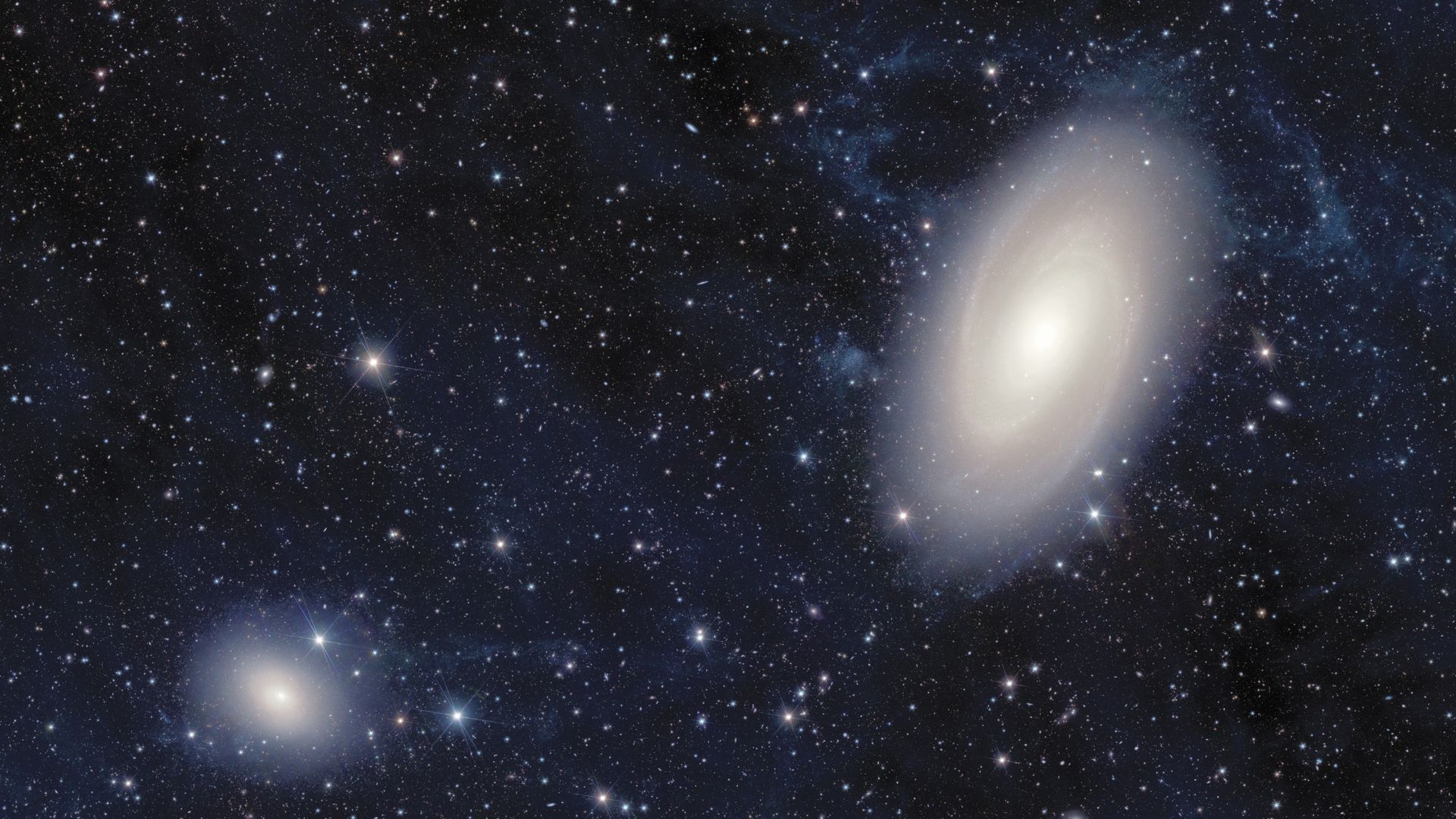
"These are far more than beautiful pictures; today marks a scientific milestone in our study of the cosmos," ESA's Director of Science, Carole Mundell said in a statement. "This major Euclid data release represents the largest space-based survey of its kind, laying the foundation of future discovery in a new regime for astronomy and demonstrating the excellence of European technology, science and international collaboration."
What's in the Euclid release
The ESA put into raw numbers the sheer number of celestial objects viewed by the Dark Universe Detective and contained in DR1-Foundation. That includes light spectra from 160 million sources, over 900 million galaxies, and 60 million candidates for quasars, regions of space dominated by feeding supermassive black holes.
"This is a change in scale from Euclid's previous releases, which included a few days of observations over around 60 degrees squared of sky," ESA's Euclid project scientist Valeria Pettorino said. "We're now releasing more than a year of data covering a significantly larger area. This unlocks groundbreaking science."
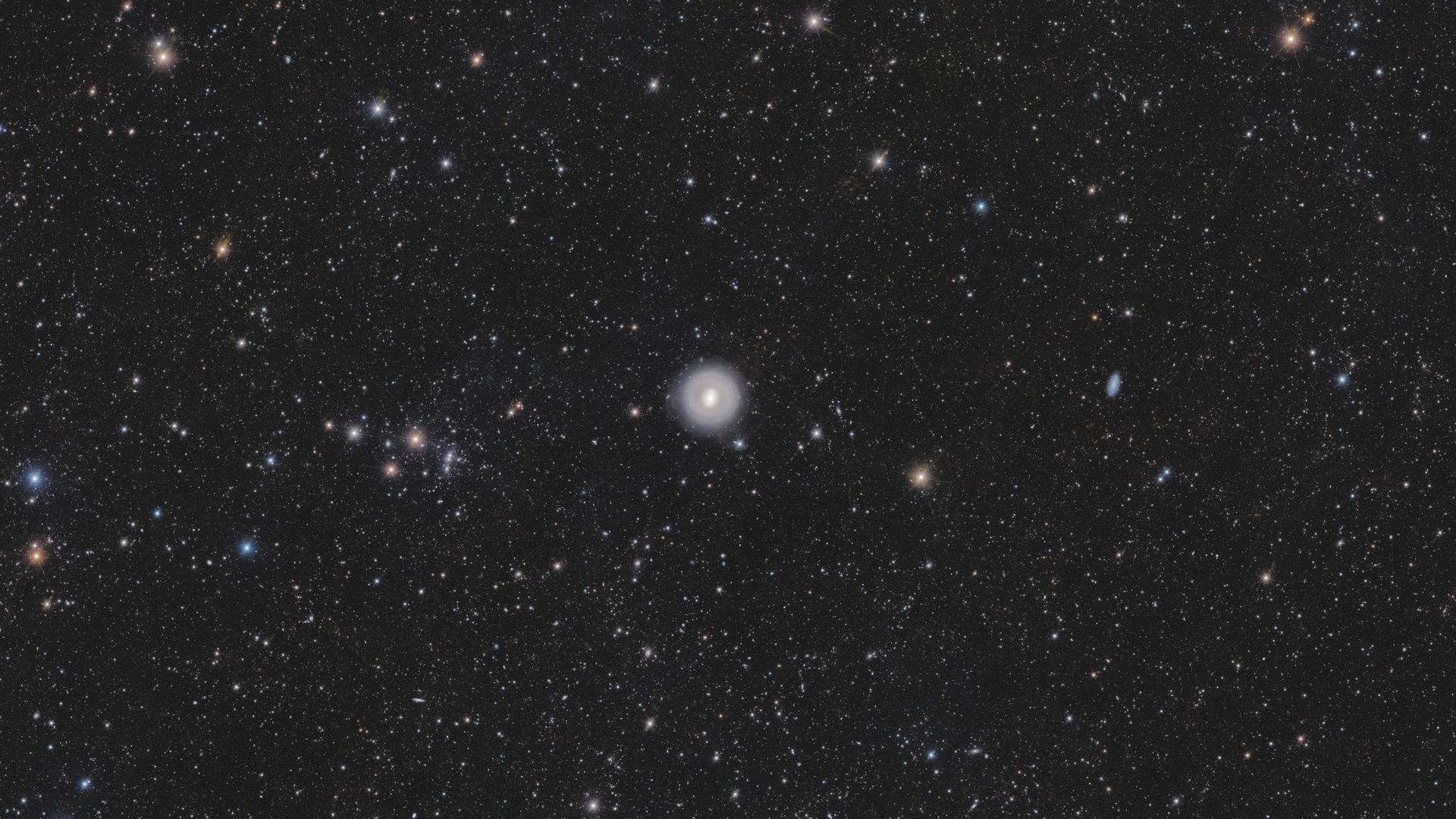
Euclid can see such a vast number of cosmic objects thanks to the fact that its space-based position helps it avoid interference caused by Earth's atmosphere.
This includes clusters of galaxies and even larger superclusters. The study of these objects, some of the largest structures in the cosmos, can reveal how matter came together across the larger network of gas, dust and dark matter called the cosmic web.
"Euclid doesn't just look far back in time — it does so across huge areas of sky," Euclid Consortium member Barbara Sartoris of JL Lagrange Laboratory, Nice, France, explained. "This gives us an unprecedented view of large samples of ancient galaxy clusters that were previously out of reach.
"We will explore these in the coming months to learn how these giants grew, and decipher what they reveal about the dark universe."
Another exciting element of the new Euclid data release is the 15,000 strong gravitational lensing candidates catalogued by the space telescope. Gravitational lensing is an element of the universe first explained in Einstein magnum opus, general relativity, in 1915.
General relativity says that objects with mass cause the very fabric of space to warp, and that gravity arises from this warping. But there is another consequence. When light passes this curvature, its usually straight path is curved. That means when light from a single background source passes an object with great mass, like a galaxy or galaxy cluster, a strong gravitational lens, it can arrive at our telescopes at different times.
As a result of this strong lensing, background sources can be greatly amplified. It is an effect that the James Webb Space Telescope (JWST) has been using to great effect to study galaxies in the early universe.
Gravitational lenses observed by the Euclid telescope. (Image credit: ESA/Euclid/Euclid Consortium/NASA, image processing by N. Lines and T. Li)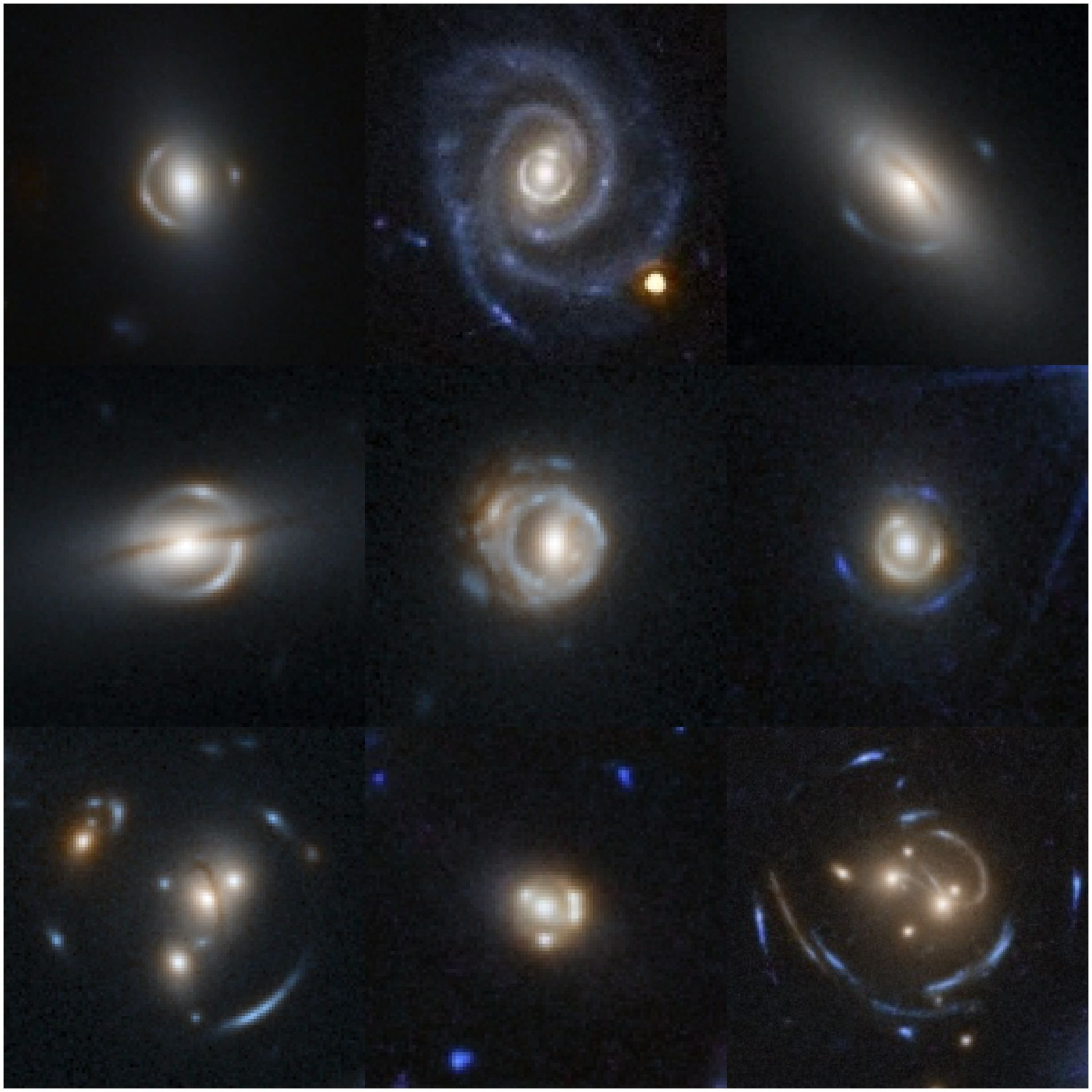
Thus, the prospect of mapping 15,000 strong gravitational lenses is monumental, especially in studying the rate at which the universe is expanding and thus the effect of dark energy.
"Strong lensing provides unique insight into the dark universe, allowing us to 'weigh' individual galaxies, including their invisible dark matter, and explore how the universe is expanding," Natalie Lines of the University of Portsmouth, U.K., and member of the Euclid Consortium, said. "Over 10 years ago, we forecast that Euclid would revolutionize the field of strong lens discovery. That day is finally here."
The best is yet to come
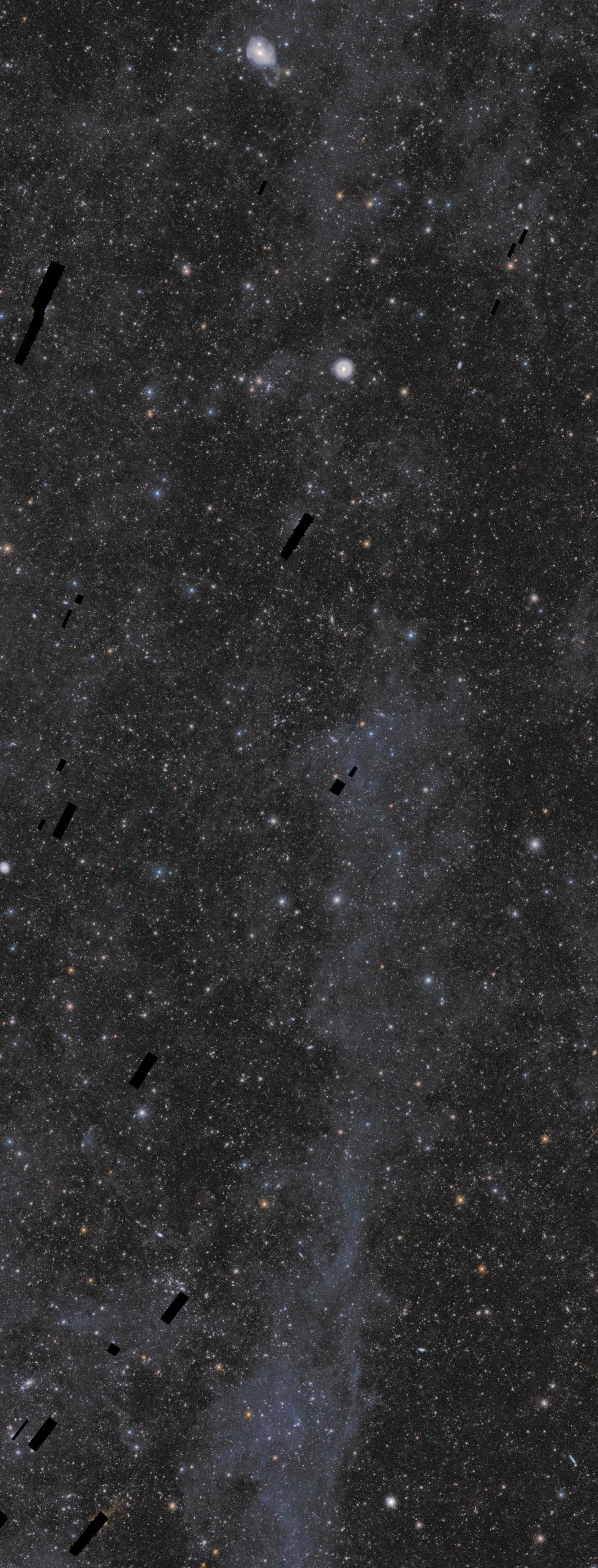
Arguably, the most exciting thing about DR1-Foundation is that Euclid is just getting started. The area of sky covered from spring 2024 to spring 2025 represents just 14% of Euclid's target for its entire six-year survey.
That means whatever scientists discover from this data release could be the tip of the iceberg in terms of how the Dark Universe Detective will change our understanding of the cosmos.
The area of sky covered from spring 2024 to spring 2025, just 14% of the mission’s target for the entire six-year survey. (Image credit: ESA/Euclid/Euclid Consortium/NASA; ESA/Gaia/DPAC; ESA/Planck Collaboration)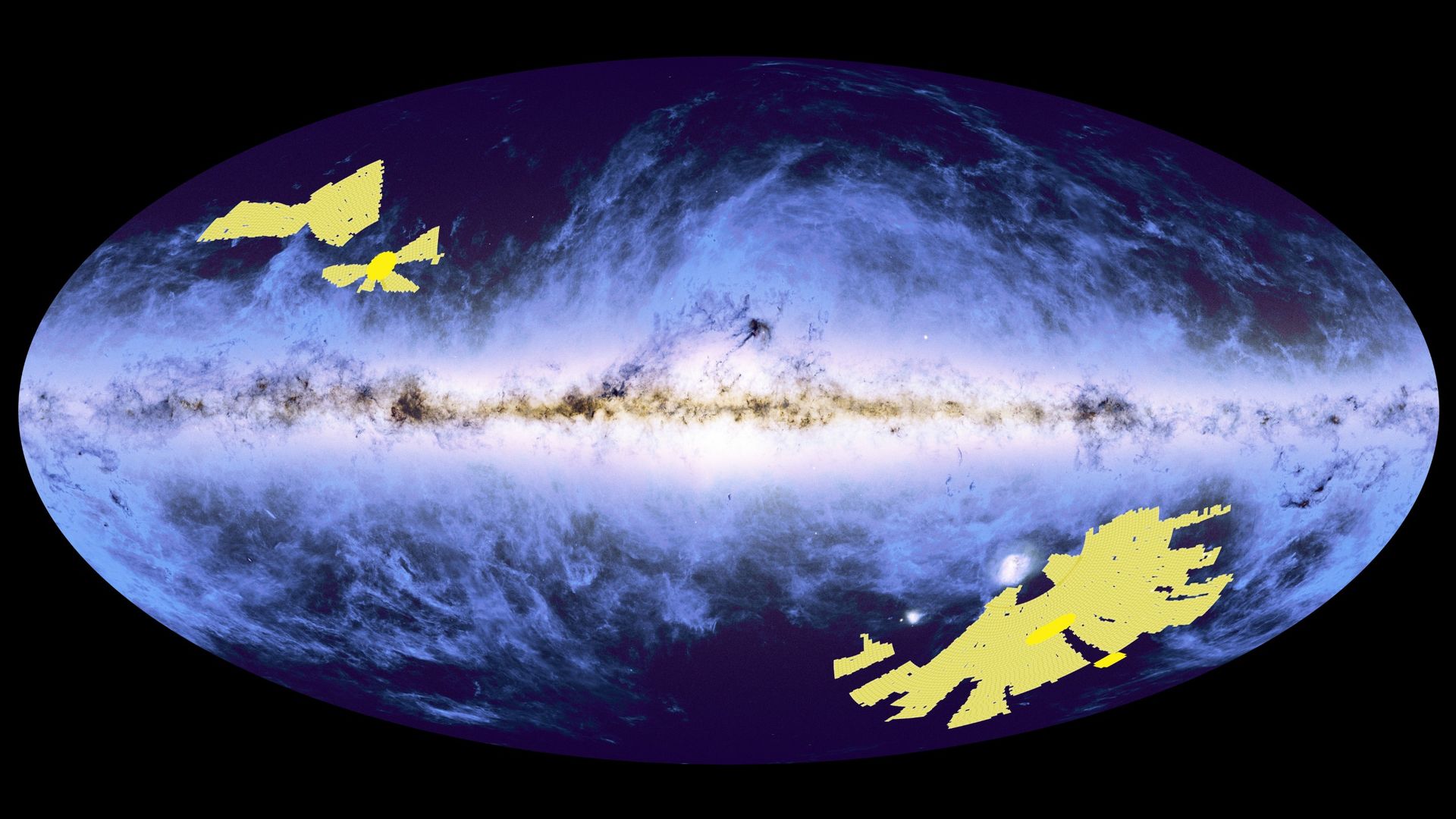
"DR1-Foundation includes raw data, calibrated images, catalogues, and spectra over a huge sky area, with enough statistics touncover even rare objects," Valeria said. "It will be used to map the large-scale structure of the universe in unprecedented detail.
"So much discovery is yet to come."




 Bengali (Bangladesh) ·
 English (United States) ·