

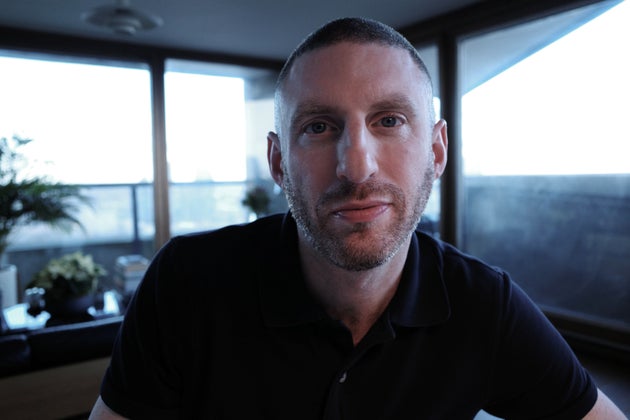
 Dr Max Pemberton features in ‘The Great ADHD Myth?’ – a new documentary from Channel 4.
A documentary questioning whether attention deficit hyperactivity disorder (ADHD) is a genuine condition or a social construct has aired on Channel 4 – and it’s proven predictably divisive.
The show, titled The Great ADHD Myth?, has prompted a wave of responses online from doctors, charities and people with the disorder who are concerned it will contribute to stigma surrounding the condition.
A reactionary survey by the charity ADHD UK in the wake of the documentary revealed that (at the time of writing), of 1,566 people who watched the show, 92% believe it has increased stigma surrounding ADHD, while 93% do not believe the show was fair in its representation of the condition.
ADHD UK’s CEO and co-founder, Henry Shelford, told HuffPost UK: “We are shocked by this programme. The fact it got commissioned at all speaks to the stigma around ADHD – a stigma that is now likely to get worse because of this show.”
The charity had previously penned an open letter to Channel 4 urging it to make a series of changes to the documentary before its release, including a review of the title and for the broadcaster to “make clear on screen where contributors’ views sit relative to mainstream clinical consensus”.
What was Channel 4’s ADHD documentary about?
The documentary followed NHS psychiatrist and Daily Mail columnist, Dr Max Pemberton, as he spoke to medical experts who questioned the conventional narrative around ADHD.
One such expert, Dr Iona Heath, the former president of the Royal College of General Practitioners, said: “It’s certainly not a medical condition as far as I’m concerned.” Another child psychiatrist said: “In 100 years’ time people are going to wonder, ‘How could we be so gullible?’”
The show posed a number of questions including whether ADHD is a disorder or social construct, how it should be treated (including whether diet and lifestyle changes could help), whether medication is the right approach and who benefits from increasing diagnoses.
Dr Pemberton – who remains certain he doesn’t have ADHD – underwent a private assessment (costing £1,200) and was diagnosed with combined ADHD and a prescription for medication.
The documentary also followed a family who wanted to see whether holistic lifestyle changes could eliminate their 10-year-old son’s use of ADHD medication. The pills “take my fun-ness away”, he said, however the programme noted at the end he did go back on them.
ADHD UK’s survey found 80% of those surveyed said it wasn’t “responsible” for a broadcaster to film a 10-year-old stopping his ADHD medication for television.
In response, Channel 4 told HuffPost UK: “The welfare of the boy and his family were of paramount importance both before, during and after the production process. An independent doctor, his GP, and a health and safety company were consulted.
“Advice was also taken from three independent psychiatrists on the medication break. This programme was produced in compliance with the Ofcom Broadcasting Code.”
The Times’ review of the show called its arguments “convincing, or at least the start of a necessary discussion”, although they did note “there was no real counter-argument offered to the idea of ADHD as a ‘myth’”.
Meanwhile the Guardian said Dr Pemberton “answers his questions convincingly”, highlighting the remedies proposed at the end, such as changing diet, screen and activity levels first, adapting schools to children’s needs, and making medication the last resort “seem neither radical nor uncompassionate”.
Both publications gave the doc four stars.
The show sparked backlash from people with ADHD
The NHS says ADHD is a “complex neurodevelopmental disorder, which starts in childhood and often persists into adulthood” and “is associated with significant impairment”. It’s also recognised by the World Health Organisation (WHO) and the National Institute for Health and Care Excellence (NICE).
It is marked by a persistent pattern (at least six months) of inattention and/or hyperactivity-impulsivity that has a direct negative impact in more than one setting – ie. home, school, work – on academic, occupational, or social functioning.
Shelford, who has ADHD, said the latest Channel 4 documentary “is a travesty in its missed opportunity to help slay myths around ADHD; instead, it has added to them”.
He said ADHD “can be extraordinarily tough” and pointed to UCL-led research which showed UK adults with diagnosed ADHD have a shorter life expectancy. There was a reduction in life expectancy for men with diagnosed ADHD of between 4.5 and nine years, and between 6.5 and 11 years for women.
“Our failure to support people with ADHD should be a national scandal – instead we’re getting TV shows undermining the disorder,” he said.
“We have already complained to Ofcom and will be following up with a more detailed complaint.” The charity has also encouraged others to make complaints to the regulator.
“We are worried that this will cost lives by putting people in need off getting an ADHD assessment and from getting support,” added Shelford.
Others were quick to share their thoughts on the controversial documentary on social media after it aired.
Clinical psychologist Dr Emily Compton-Smith wrote on Instagram: “We should absolutely be able to discuss diagnosis, and where things could be improved.”
That said, she was “troubled” by “how one-sided the programme felt,” she continued, adding that “what felt missing ... was the voice of the people actually living it”.
She also aired concerns that “many people will watch it and come away more sceptical of ADHD, while people with ADHD will once again be left feeling like they need to justify themselves”.
Adam Dance, the Liberal Democrat MP for Yeovil, who also has ADHD, shared a cross-party letter which he’d sent to Channel 4, saying he is “deeply concerned by the framing and language used to promote the documentary and by the potential consequences for people with ADHD and their families”.
I've led a cross-party letter from the APPG for ADHD on @Channel4's "The Great ADHD Myth?"
As someone with ADHD & dyslexia, this matters to me. ADHD is a recognised neurodevelopmental disorder — Channel 4 must get the evidence right.
Full letter: https://t.co/NPEiEJqjds
An extremely biased documentary, all the doctors & psychiatrists used clearly all share the same views. Also doing an experiment on one persons experience isn’t a very accurate experiment. Channel 4, do better and try living one day with ADHD, you’ll soon realise it’s not a myth https://t.co/1on043AF2G
— mol ✨ (@reputationmol) August 19, 2026Not this show essentially now telling people that if they make changes to their life they can change their brain and get rid of ADHD. What kind of dangerous and ABLEIST 'journalism' is this? @Channel4pic.twitter.com/3H4MB1LtG3
— Colette Cameron (@_bycolette) August 18, 2026Meanwhile others praised the show as “fantastic” and “inspirational”.
I know many people will find this documentary difficult to stomach, especially if being ADHD is central to one's identity. But there's no evidence ADHD is rooted in biological dysfunction. It's rather a phrase describing some behaviours. It's not a thing👇https://t.co/y4UL4JgbiT
— Prof James Davies 💭 (@JDaviesPhD) August 19, 2026Fantastic programme on @Channel4 "The Great ADHD Myth?"
Thank you @MaxPemberton ! And all the superb expert contributors.
I've been shouting this at my institutions for years but have unable to make headway - perhaps I wasn't brave or strong enough.
What we have done to this…
I actually think #TheGreatADHDMyth was inspirational. How have we allowed Big Pharma, careless GP's, snake oil salesmen with their absurd tests/pacifying drugs to impact tens of thousands of children and adults with a 'neuro developmental' diagnosis/condition/label? I am not an…
— Jo Hemmings 🇺🇦 (@TVpsychologist) August 18, 2026One in five (20%) people who watched the show and responded to ADHD UK’s survey said the programme had caused them ‘severe’ distress, with 38% saying it caused ‘significant’ distress.






 Bengali (Bangladesh) ·
  English (United States) ·