

Although artificial intelligence is drawing criticism for its energy use, it's also being used by firms such as ExxonMobil and BP to unleash new energy production. The research firm Wood Mackenzie even estimates that AI could unlock 1 trillion extra barrels of oil globally by helping companies "wring substantially more oil out of producing reservoirs."
These developments are good news for consumers, but they could have a significant impact on the environment, according to an August paper published in npj Climate Action. The authors find that AI could prolong oil and gas usage, leading to a 0.47–1.8 gigaton increase in annual global carbon dioxide emissions. The lower end of that estimate is comparable to Mexico's annual carbon dioxide emissions, study co-author Holly Alpine told The Wall Street Journal. The higher end is equivalent to about 5 percent of the world's energy emissions from 2024.
The researchers say net emissions reductions cannot occur unless renewables grow four to five times faster than oil and gas. (They do note there are other ways AI could reduce the greenhouse gas footprint of the fossil fuel industry—namely, "methane leak detection or efficiency gains in power generation.")
This is an ambitious task, considering that fossil fuels account for over 80 percent of the world's energy needs and their peak usage is years away. But there are reasons to be optimistic about AI's role in accelerating the use of clean technologies.
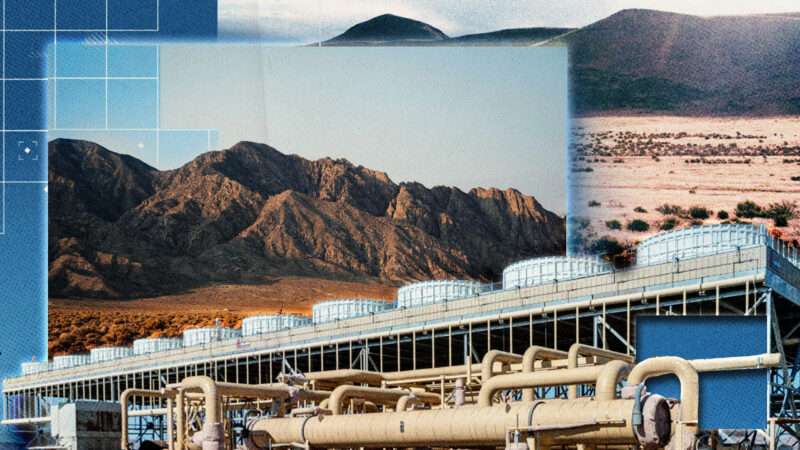
In the same way that oil majors are using AI to find their next well, startups are utilizing the technology to unleash geothermal energy. One such company is Zanskar, which uses a combination of AI, advanced drilling methods, and geoscience to "accurately map the Earth's subsurface and develop geothermal resources that have been overlooked or considered too risky."
At the Lightning Dock project in New Mexico—which Zanskar purchased in 2024—the company's technology has reduced surface infrastructure costs by 75 percent and sped up drilling by 35 percent. Zanskar says Lightning Dock is now "home to the most productive pumped geothermal well in the U.S. and quite possibly the world." Late last year, the company discovered "Big Blind," a naturally occurring geothermal system in Nevada with the potential to power 80,000–100,000 homes with reliable carbon-free energy. In January, it closed a $115 million funding round.
Nuclear power is also benefiting from advances in AI. In August, Atomic Canyon released its Nuclear Industry Virtual Assistant with backing from Nvidia. The tool is designed to help nuclear professionals navigate technical and regulatory landscapes, which could lead to more nuclear power being developed and deployed faster. The industry has also seen a wave of investment from tech companies looking to fuel their power-hungry data centers with clean energy. Big Tech firms such as Google, meanwhile, have poured significant resources into renewable and battery storage projects to support data centers and bring more energy to the grid.
AI is here to stay. We should embrace what it is already starting to give us: a cleaner and more abundant energy future.
The post AI Isn't Just Extracting More Fossil Fuels—It's Unlocking Renewable Energy Too appeared first on Reason Magazine.





 Bengali (Bangladesh) ·
 English (United States) ·