

You probably know that lifestyle factors like smoking can increase our cancer risk, as can things that are out of our control, like our genes.
But a recent paper from the World Health Organisation found that 12% of the world’s total cancer cases in 2024 came from a less-discussed source: infections.
Viruses can turn off or disrupt a cell’s ability to destroy or divide itself, and may even carry cancer-causing genes.
Overall, the new research, published in The Lancet Oncology, linked 2.3 million new cancer cases to infections in 2024 alone. Five diseases contributed to the majority of these.
Here, we spoke to Dr Jiri Kubes, a radiation oncologist at Proton Therapy Centre, about which ones are riskiest and what we can do to make ourselves safer.
Most infections don’t raise your cancer risk
Which infections can raise your cancer risk?
1) HPV
2) Epstein-Barr virus (EBV)
EBV, which causes glandular fever, is also known as mononucleosis or “mono”.
This is “linked to some lymphomas”, said Dr Kubes.
3) Hepatitis B and
4) Hepatitis C
These conditions are associated with higher risks of liver cancer.
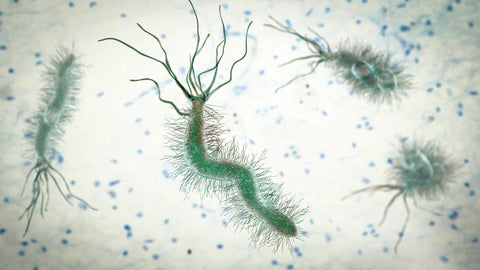
5) Helicobacter pylori
This is a stomach bacterium which “raises the risk of stomach cancer and a type of lymphoma”.
However, the doctor stressed: “Having one of these infections doesn’t mean you’ll develop cancer, as genetics and lifestyle play a big part too. I
“It’s also important to add that infection-related cancers are less common in the UK compared with parts of the world with poorer sanitation and less access to vaccination.”
How can I reduce my risk of disease-related cancers?
Luckily, Dr Kubes stated, “Because these cancers are driven by infections, many of them can be prevented.
causes of cervical and liver cancer. If you haven’t had them, ask your GP whether you’re eligible.”
In the UK, the NHS vaccinates children aged 12-13 against HPV and is also offered to those at higher risk of HPV.
If you missed your childhood HPV vaccine, it’s available for
all girls aged 24 and under up until their 25th birthdayboys born after 1 September 2006 up until their 25th birthday.



 Bengali (Bangladesh) ·
 English (United States) ·