
 3 hours ago
1
3 hours ago
1 
The post 25 Winter Crafts for Preschoolers That Set Up Before Your Coffee’s Cold appeared first on Penny Pinchin' Mom.
Fifteen minutes until nap time, and your preschooler needs something to do that isn’t a screen, but every craft idea online seems to need a store run and a half hour of prep. I used to lose my lunch break gluing together “quick” Pinterest crafts, only to watch the activity last four minutes while cleanup ate the afternoon. The setup itself can’t be the hard part.
Every project here takes under five minutes to pull together, and each one builds a real skill while your kids think they’re just playing. Cotton ball snow placement with tongs sneaks in fine motor practice using tools you already own, while mitten lacing cards teach patience and threading without construction paper. The winter crafts preschool teachers keep coming back to are always the ones that set up fast and use what’s already in the cupboard.
Fine Motor, Cutting, and Folding Practice
1. Cotton Ball Snow Placement With Tongs
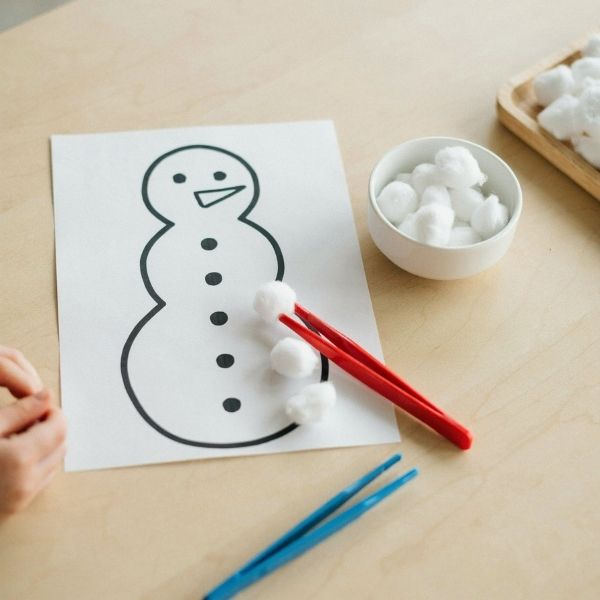
When a preschooler needs something to do in the next ninety seconds, this is the one to reach for. Draw a fat snowman outline on a sheet of cardstock with a marker. Dump cotton balls into a bowl, set out a pair of tongs, and you are done in about 2 minutes.
A 100-count bag of cotton balls costs about $1.25 at Dollar Tree, a cardstock pack is around $1.25 to $3, and a dozen chunky plastic tweezers from Learning Resources on Amazon runs about $10. Kitchen tongs you already own work fine and bring the cost down to almost nothing.
The skill is pincer grasp and hand strength, the same muscles that later hold a pencil. Twelve kids can do this at once with no trouble. Outlines drawn the night before mean morning setup is nothing but filling bowls.
2. Fringe-Cut Snowflake Strips
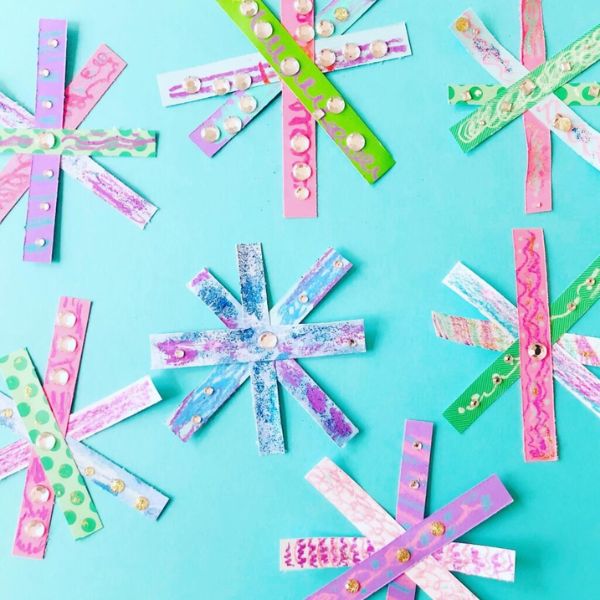
Prep runs two minutes and gets you the strongest scissor practice on this list. Cut white cardstock into strips roughly 2 inches by 8 inches, one or two per child, and draw a light pencil line down the center as a stop line. Kids snip from the outside edge to that line, over and over, until the strip is fully fringed and can be curled into a burst.
White cardstock costs around $1.25 to $3 at Dollar Tree or Walmart. Blunt-tip Fiskars preschool scissors are around $4 a pair, or about $25 for a 12-pack on Amazon. Skill: scissor control and the snip-and-stop discipline that comes before cutting on a line. A group of 12 works with eyes on the table, and portioning strips takes a teacher three minutes flat.
3. Torn-Paper Snowstorm Collage
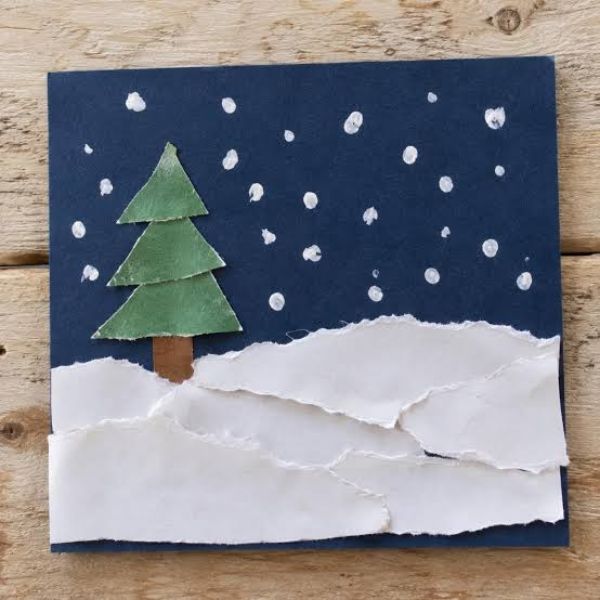
Torn paper does more for little hands than most people expect. Tearing takes real finger strength and two hands working against each other, and preschoolers can do it without any help at all.
Hand out a sheet of dark blue or black cardstock, a stack of white scrap paper or napkins, and a glue stick. Under 3 minutes, start to finish. If you have printer paper on hand, it costs nothing extra; otherwise, it’s about $2.50 for dark cardstock at Dollar Tree plus $1.25 for a pack of Elmer’s glue sticks.
My middle one tore paper for twenty solid minutes when he was four and never once asked what it was supposed to look like. It needs the least supervision of anything here, so a table of 12 is easy. Put a tray under each spot, because torn paper travels.
4. Pom Pom Snowman Stacking by Size
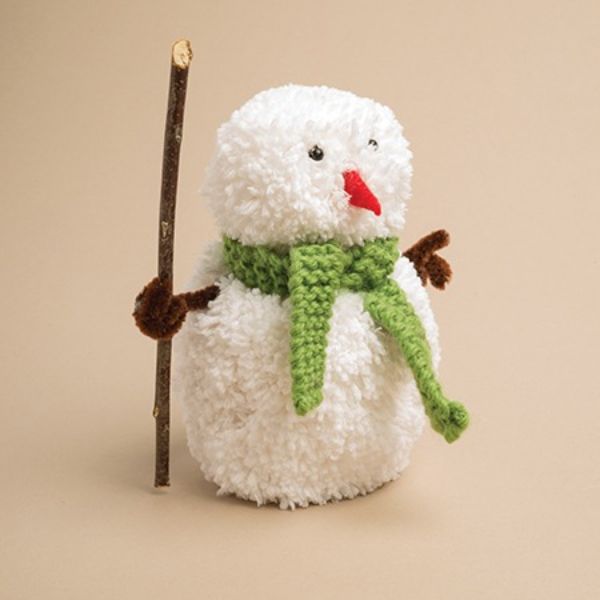
Kids who aren’t ready for scissors can still do serious fine motor work with this one. Set out three sizes of white pom poms in separate bowls, jumbo, medium, and small, and have them stack a snowman on a strip of blue paper with the biggest at the bottom.
Pinching a half-inch pom-pom while sorting by size builds fine motor skills and size discrimination. A multi-size bag of white pom poms goes for about $2 to $4 at Michaels or Walmart, and one bag covers a full class. Dumping pom poms into bowls takes 2 minutes. For 12, put out one set of bowls per pair so nobody is reaching across the table. Leave the snowmen unglued and most kids rebuild them three or four times.
5. Mitten Lacing Cards
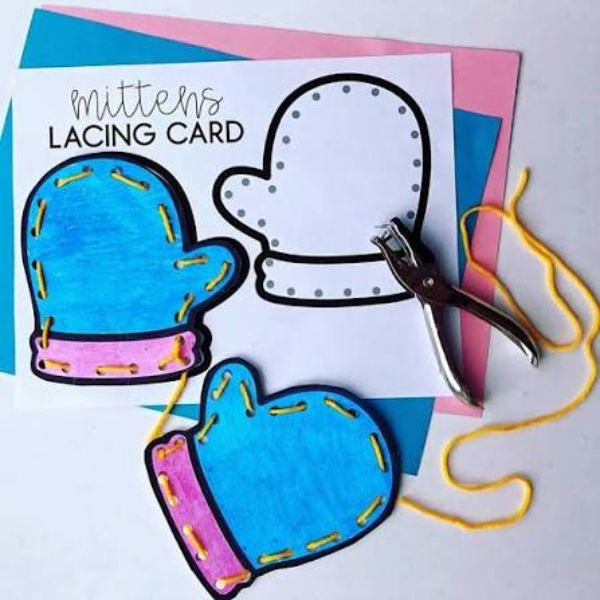
A hole punch and a length of yarn turn a cereal box into a lacing card, and lacing holds preschool focus longer than almost anything else on this list.
Cut a mitten shape from the flattened box, punch holes about an inch apart around the edge, and knot one end of a 24-inch piece of yarn. Wrap a bit of tape around the other end so it threads like a shoelace tip. The first card takes about 4 minutes, and the rest go faster.
A hole punch is around $3 at Walmart, yarn is about $3 a skein at Michaels, and the cardboard is free. Skill: bilateral coordination and in-and-out threading. Build the cards on a weekend if you need 12, since punching that many takes more than five minutes.
6. Accordion-Fold-and-Cut Coffee Filter Snowflakes
Folded coffee filters beat cardstock for preschool snowflakes because thin paper actually gives under small hands. Fold a filter in half, then in half again, hand it over with blunt scissors, and let them snip notches into the folded edges. The unfolding is the whole payoff.
Setup is 1 minute since the filters come round already. A 100-count pack costs close to $1.25 at Dollar Tree, enough for a class of 12 several times over. Skill: folding, early symmetry awareness, and cutting through a stiffer folded edge. Nothing else here costs so little per child. Do the folds yourself for the youngest ones and let them handle only the cutting, since a four-year-old’s crease does not need to be sharp.
7. Folded Mitten Mini-Book
A stapled mini-book like this one often ends up carried around the house for days, which says a lot about how proud preschoolers feel over something they made themselves. Give each child three sheets of copy paper to fold in half, one at a time, smoothing each crease with the flat of the hand. Then stack the folded sheets, staple the spine, and trim the outer edge into a mitten curve yourself, because six layers is too much for preschool scissors.
Most of the 3 minutes is stapling. Copy paper and a stapler are already in most houses, so this one is free, or about $6 for a ream at Walmart if you’re out. Skill: folding to a crease, page sequencing, and handling a book right side up. A group of 12 works as long as stapling and trimming stay an adult job.
Gluing and Sticking Practice
8. Foam Sticker Snowman Building
Preschoolers who fight with glue bottles do beautifully with foam stickers, and this is the item I’d hand a first-time helper in a classroom.
Set out one sheet of blue cardstock per child plus a small pile of foam circles in three sizes, along with foam or paper scraps for hats, buttons, and scarves. Three minutes, since there’s nothing to mix or pour or dry.
Peeling a sticker backing takes two hands doing two different jobs, which is real bilateral coordination work, and stacking three circles largest to smallest gets them thinking about size and order.
Dollar Tree foam sticker sheets are $1.25 each, or a bulk bag of foam shapes from Michaels or an Amazon multi-pack comes in around $6 and covers a class of 12 with plenty left over. That’s under 50 cents a child.
For kids who can’t start the peel, lift one corner of each sticker before you set it out.
9. Contact Paper Mitten Collage
Clear contact paper taped sticky-side up on the table turns tissue paper squares into a no-glue sticking activity, and setup is 4 minutes flat.
Cut a mitten shape out of the center of a piece of cardstock, tape a square of contact paper behind the opening, then tape the whole thing down. Kids press tissue squares into the sticky window until the mitten fills in. Sticking practice, pincer grip, and color choice all in one.
Contact paper sits around $5 for a roll at Walmart, and a pack of tissue paper is $1.25 at Dollar Tree. Pre-tear the squares while the coffee brews.
When my kids were preschoolers, I taped contact paper straight to the sliding glass door on snow days and let them work standing up.
For a dozen children, skip the cardstock frames and tape plain contact paper squares straight to the table.
10. Glue-and-Salt Snowflake Art
Salt turns an ordinary glue line into something raised and crystalline, and preschoolers are genuinely impressed by it.
Pour table salt into a small bowl or an old parmesan shaker, set out bottles of Elmer’s glue and dark blue or black cardstock, and put a rimmed tray under each work spot. Three minutes.
Squeezing a glue bottle hard enough to make a steady line is real hand strength work, and drawing six radiating spokes is early pre-writing practice with straight lines and crossing the midline.
Salt runs close to $1 at Aldi, glue about $2, and a 50-sheet pack of dark cardstock about $5 at Walmart. Foil pans or trays from Dollar Tree are $1.25 apiece.
One tray per child and twelve is fine. Salt goes everywhere without a rim to catch it, so plan for a wipeable surface.
11. Paper Doily Snowflake Layering
Two minutes and about $2 gets you a gluing station with no drying time and no cleanup.
Put out paper doilies in two or three sizes and a glue stick for each child. They spread the stick across the back of a doily, layer it onto blue cardstock, then add a smaller doily on top. Glue sticks require a completely different grip and pressure than bottle glue, so this is worth doing even if you’ve already done a squeeze-bottle craft that week.
A pack of doilies is $1.25 at Dollar Tree, and an Elmer’s four-pack of glue sticks comes in at around $4 at Target.
Twelve at once is no problem. Show them to run the glue stick around the outer edge first, since that’s where doilies curl up and lift off.
12. Puffy Paint Snowflakes
Mix equal parts Elmer’s white glue and shaving cream in a bowl, stir in a squeeze of Crayola washable paint if you want pale blue, then spoon it into a zip-top bag and snip one corner. Four minutes.
Kids squeeze the mixture onto dark cardstock in snowflake lines. The squeezing itself is the point here. Controlling how much comes out of a piped bag takes steady hand strength and a lot of concentration at this age. My oldest once emptied most of a bag onto one sheet of paper, and that sheet took three days to dry.
Shaving cream costs close to $2 at Walmart, glue about $2, and a box of sandwich bags about $3. One batch fills four bags.
Mix one big batch, fill four bags, and rotate three children through each bag. It dries puffy and slightly spongy overnight, so plan a flat spot to leave 12 papers undisturbed.
13. Craft Stick Snowflakes
Jumbo craft sticks glued into a six-point star give preschoolers a gluing job with real structure to it, and setup takes 3 minutes.
Lay out three sticks per child, a bottle of school glue, and a small dish of pom poms or buttons for the tips. They cross the sticks into a star and glue the center, which means lining up materials in space instead of just sticking things down flat. White glue needs a slow count to ten of pressing before it holds, which is the only thing that slows a big table down.
A box of 150 jumbo craft sticks comes in around $5 at Michaels or Walmart and covers a class of 12 twice over. Glitter glue pens, if you want them, are about $5 for a pack at Target.
Some kids won’t stop at one star and keep gluing extra sticks into bigger shapes, and that’s fine, since the extra gluing practice is the whole point.
14. Masking Tape Snowflake
For the child who isn’t ready for glue at all, tape does the same job with none of the waiting.
Tear masking tape or washi tape into short strips, hang them along the edge of the table, and let kids pull each strip off and press it onto dark cardstock until the strips cross into a snowflake shape. Pulling tape off an edge takes two hands working against each other, and the pinching and pressing is straight fine motor work.
Under 2 minutes for one child. Washi tape rolls are $1.25 at Dollar Tree, and a roll of masking tape costs about $3 at Walmart.
Pre-tear about six strips per child for a group of 12, which takes roughly 4 minutes. Older preschoolers can pull their own from a dispenser, and that tearing is a skill worth practicing on its own.
Counting and Number Skills
15. Button Counting Snowman Cards
Draw three stacked circles on white cardstock, write a number from 1 to 10 in the belly, and you have a counting card ready in 3 minutes. Kids press that many buttons onto the snowman’s middle, count out loud, then clear it and trade cards.
A jar of assorted buttons comes in around $5 at Walmart or Michaels and holds several hundred, which covers a full class with plenty left for next winter. Cardstock costs around $4 for a 50-sheet pack at Target.
The skill here is number recognition paired with one-to-one correspondence, the exact thing preschoolers need before they can add.
Make the ten cards once, then portion buttons into paper cups. Buttons are small, so keep this one at a supervised table.
16. Clothespin Number Match on Snowflakes
When you want a counting activity that also strengthens little hands, this is the one I reach for. Cut a six-sided snowflake shape from blue cardstock, write a number in the center, and kids clip that many wooden clothespins around the edges.
A 36-count bag of clothespins costs about $2 at Dollar Tree or around $4 at Walmart, and cardstock adds maybe $1. A set of five snowflakes takes 4 minutes.
Back when my kids were preschool age, I kept a bag of clothespins in the craft bin purely because they turned any piece of paper into an activity.
The skill is number recognition plus counting with a physical stopping point, which makes miscounts obvious to the child.
Thirty-six pins spread across 12 kids means keeping numbers at 3 or under, or buying a second bag.
17. Ice Cube Tray Counting Sort
An extra ice cube tray, the $1.25 kind from Dollar Tree, becomes a counting station faster than almost anything else on this list. Run a strip of masking tape along the top edge, number the wells 1 through 12 with a Sharpie, and set out a bowl of cotton balls or mini pom poms as “snowballs.”
That’s a 3-minute job. Cotton balls cost about $2 for a 200-count bag at Walmart, so the whole thing comes in under $4.
Children drop the matching number of snowballs into each well, which builds one-to-one correspondence and gets them counting past ten.
Twelve at once, no. You need one tray per child, so buy four trays for $5 and run it as a rotation station with three kids at a time.
18. Cupcake Liner Snowball Counting
Line a muffin tin with white cupcake liners and write a number from one to ten on the outside of each one. Instead of dropping cotton balls in by hand, hand your preschooler a small spoon and let them scoop from a central bowl into each liner until they’ve matched the number.
The muffin tin is already in your kitchen, so there’s nothing to buy there. A 50-count pack of white liners comes in at around $1.25 at Dollar Tree and covers four full tins.
Writing the numbers is most of the 4 minutes. Total cost sits around $3 with the cotton balls.
Scooping with a spoon works a different set of hand muscles than pinching does, which makes this a nice follow-up to anything on this list that used tongs or fingers.
One tin serves two children working across from each other, so a group of 12 means six tins or shifts.
19. Roll-and-Build Snowman
Rolling a die decides how many pom pom “buttons” go on the snowman, and preschoolers will play this far past the point where a worksheet would have lost them. Pre-cut three white paper circles per child and stack them on blue cardstock. Each roll adds that many buttons.
Foam dice come two or three to a pack for $1.25 at Dollar Tree, and a bag of black pom poms is another $1.25. Glue sticks are about $4 for a six-pack at Target.
Cutting circles for one child takes 4 minutes, closer to five for a stack of twelve.
This builds subitizing, recognizing a dot pattern without counting each dot, which is a real number-sense milestone at this age.
One die per pair works for twelve.
20. Snowflake Ten Frame
Ten frames sound like kindergarten math, but preschoolers take to them quickly when the boxes are filled with white pom poms instead of numbers. Draw a two-by-five grid on blue cardstock, slip it into a page protector so it wipes clean, and pull a number card for each round.
Page protectors cost about $5 for a 25-pack at Walmart, and the pom poms are $1.25 at Dollar Tree. One frame takes 3 minutes; a class set takes four or five.
It looks too structured for a four-year-old until you watch one start announcing “that’s five, I can see it” without counting at all.
Draw the frames once in the fall, and they last the whole winter.
21. Five Little Snowmen Counting Sticks
Five jumbo craft sticks, each topped with a cotton ball head and numbered 1 through 5 on the back, turn the old counting rhyme into something kids hold in their hands. They line the sticks up in order, then take one away at a time as they count backward.
A box of 50 jumbo sticks costs around $4 at Michaels or Walmart, which covers ten children. Grab two boxes for a class of 12. Add glue and a bag of cotton balls, and you’re around $7 total for the whole group.
Writing numbers and setting out supplies takes 4 minutes. Kids do the gluing themselves.
The skill is number order and counting backward from five, which is harder than counting forward and rarely practiced.
Patterns and Sorting
22. Foam Letter Match on Snowflake Outlines
A bag of foam alphabet letters from the Dollar Tree craft aisle turns into a letter recognition station in about 4 minutes. Draw six or eight simple snowflake shapes on blue cardstock, write one letter inside each, and set the matching foam letters in a bowl beside it.
Materials cost close to $1.25 for the foam letters and around $5 for a 50-sheet cardstock pack at Walmart, which is enough for a whole class. An Amazon multi-pack of foam letters (usually several hundred pieces) works out to pennies per child if you teach a group.
Draw the sheets during nap or prep time, then hand out one page and a small cup of letters to each child.
Preschoolers do better with six letters per page than a full alphabet.
23. Salt Tray Letter Tracing
This is the station I would keep going all winter, and it takes two minutes to set up. Pour a thin layer of table salt into a foil pan or rimmed baking sheet, slide a piece of dark blue construction paper underneath so the traced letters show up, and hand over a finger. No pencil grip required yet.
Salt costs about $1 at Walmart, and foil pans are $1.25 to $1.50 each at Dollar Tree. Twelve pans run under $18, or buy four and rotate.
A salt tray got us through more than one snowed-in morning at my house when I had nothing prepped.
This builds letter formation and pre-writing muscle memory without the frustration of holding a marker. Shaving cream works as a swap, but put a towel down first.
24. Uppercase and Lowercase Mitten Match
Matching a capital B to a lowercase b is genuinely hard at four, and pairing them on mittens gives the brain a reason to care. Cut mitten shapes from cardstock, write an uppercase letter on one and its lowercase partner on another, then let the child find the pairs and lay them out like laundry.
Cutting eight to ten pairs takes about 4 minutes with a stack of cardstock, roughly $5 for a pack at Walmart. Dollar Tree sells foam winter shapes in the seasonal aisle for $1.25 if you would rather skip the cutting.
Twelve works with a caveat. Make two or three sets and run it as a rotation rather than making 12 full sets.
Start with six pairs, not the full alphabet.
25. Winter-Color Pony Bead Pattern Threading
Three minutes of sorting beads into cups buys you a patterning activity that also strengthens the exact muscles used for writing. Set out blue, white, and silver pony beads with pipe cleaners and let the child thread an ABAB or AAB sequence.
A bag of pony beads at Michaels or Walmart costs around $5 to $7 for several hundred beads, enough for a class of 12 with plenty left over. Pipe cleaners are $1.25 for a 30-count pack at Dollar Tree.
Beyond patterning, threading builds bilateral coordination, meaning both hands work together on different jobs.
Bend one end of the pipe cleaner into a hook so beads stay put, then twist the finished piece into a circle for a bracelet or a snowflake.
Pick One and Start Today
That fifteen-minute countdown to nap time doesn’t have to end in a screen handed over out of desperation. You don’t need a Pinterest board full of supplies or a spare hour you don’t have. These crafts work because they respect the time you actually have, not the time you wish you had.
Grab the tongs and cotton balls if you need something ready in seconds, pull out mitten lacing cards if you want quiet focus while dinner simmers, or set up the salt tray for letter tracing when you need learning disguised as play. Any one of these gets you from “what do I do with them right now” to a happy, busy preschooler in less time than it took to read this sentence. You’ve got this.
The post 25 Winter Crafts for Preschoolers That Set Up Before Your Coffee’s Cold appeared first on Penny Pinchin' Mom.





 Bengali (Bangladesh) ·
  English (United States) ·