

A 700-year-old female skull found in a Chinese cemetery is the world's first archaeological example of punitive nose amputation, according to a new study. The middle-aged woman survived the ruthless punishment, which may have been administered for stealing or for adultery.
"We believe this woman was a kind of cast-off after death. She was buried face-down, suggesting a discriminatory attitude," study co-author Qian Wang, a biological anthropologist at Texas A&M University, told Live Science in an email. "Her burial, alone, in a place without her family or community, could be a decision of disapproval."
The woman's skeleton was discovered among 300 others in 2019 during an excavation of the Sanzhiyuan cemetery in China's eastern Henan province, according to Wang and colleagues' study, which was published in the November issue of the Journal of Archaeological Science: Reports. She had been buried face down in a wooden coffin on the southern edge of the cemetery, with only a copper hairpin. Radiocarbon dating revealed she lived between 1298 and 1404, which corresponds to either the Yuan dynasty or the early Ming dynasty.
But because the original excavation was a rapid salvage dig ahead of construction, the unique skull was not recognized as a possible case of nasal amputation until study first author Yawei Zhou, an archaeologist at Zhengzhou University, analyzed the skeletons from the cemetery in 2024.
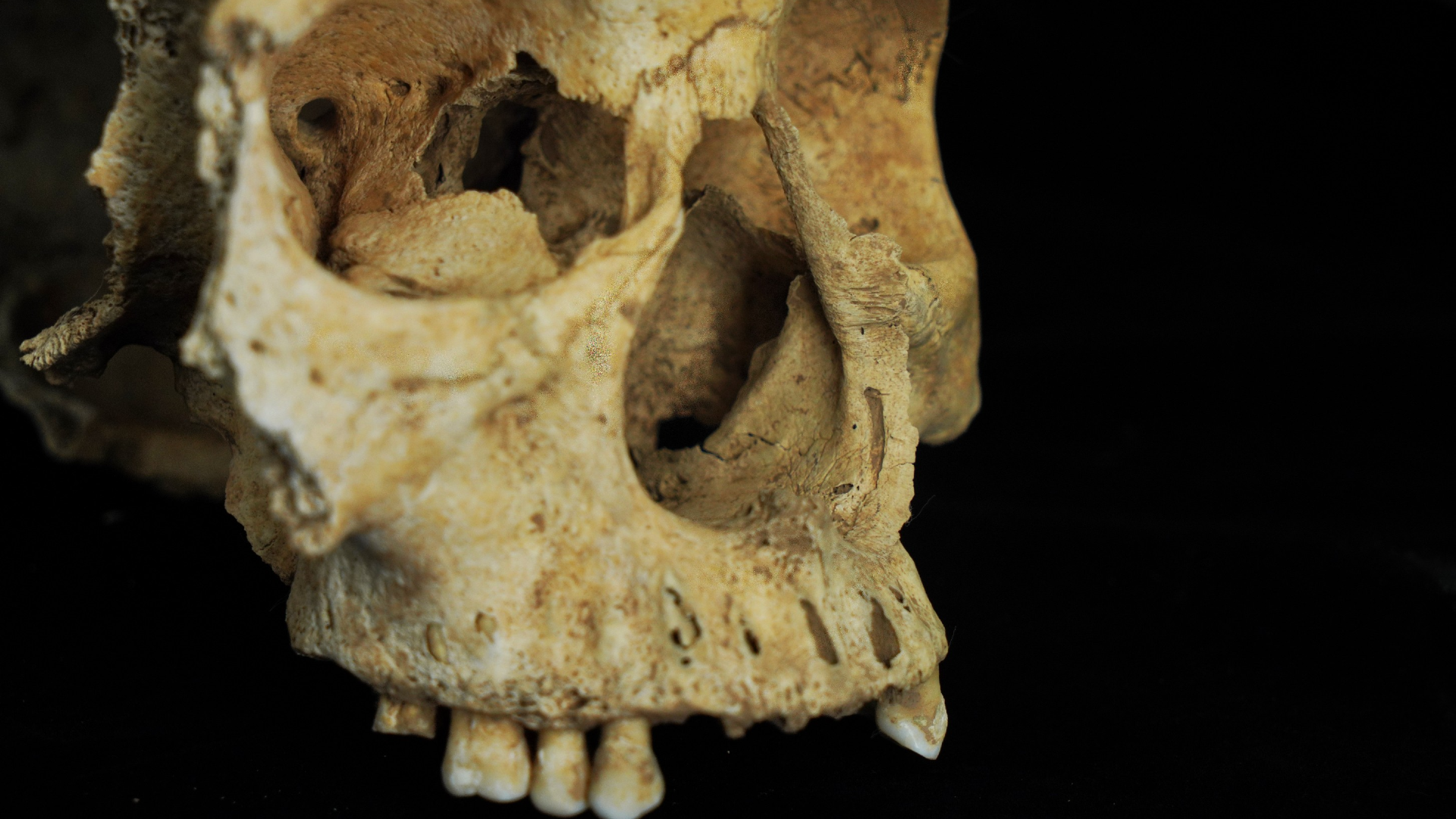
The most obvious indication that the skull was unique was its enlarged piriform aperture, the anatomical term for the nose opening, the researchers wrote in the study. They noticed that the woman's two nasal bones had been partially amputated, leaving only about half of the bridge of her nose. Upon closer examination, they noted that several bones inside the woman's nose had been broken, with signs of healing at the edges. These injuries would have given the middle of the woman's face a "hollow appearance," the researchers wrote.
Although they could not completely rule out the possibility that this woman's facial disfigurement was the result of a disease or a birth defect, the researchers concluded that the most likely explanation, particularly in light of her unusual face-down burial position, was a case of nasal amputation as punishment for a crime.
"In ancient China's agriculture-based economy, theft of livestock such as cattle and donkey was not uncommon, yet there could be other reasons, such as adultery," Wang said. "At the end of the Yuan Dynasty, such a felony was punished by nasal amputation."
Archaeologists know about punitive nasal amputation because it was first recorded in ancient Chinese oracle bone inscriptions. In the Shang dynasty (1600 to 1046 B.C.), the punishment was depicted in Chinese characters as a knife on the left or right side of the nose, the researchers wrote in the study.
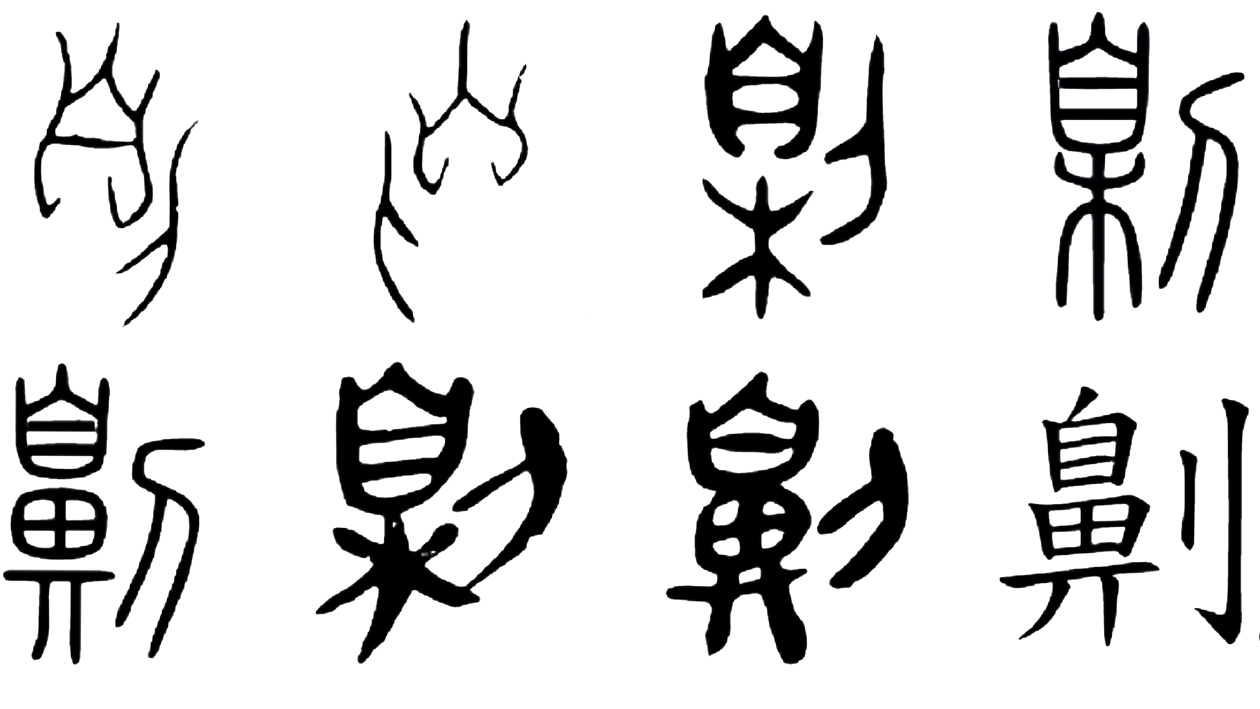
"I was surprised by this discovery," Wang said, "because so far no scientific report or description of any cases of penal nasal amputation" in archaeological skeletons has been published. But since nasal amputation without anesthesia was one of the "Five Punishments" in early dynastic China — along with tattooing, foot amputation, castration, and death — "there could be many cases in history," Wang said. "People of any walk could be driven to livestock stealing for reasons such as poverty or making quick money."
Elizabeth Berger, a bioarchaeologist at the University of California, Riverside who was not involved in the research, told Live Science in an email that the study makes a convincing case for punitive nasal amputation as the cause of the woman's disfigurement.
Given this case study, Berger said, "researchers can look for other cases, and hopefully more evidence can be found of who was subjected to this punishment, how it was carried out, and how it was medically managed afterwards, including the use of prosthetics."
The unusual skull from the Sanzhiyuan cemetery was assessed within the framework of the Global History of Health Project's Asia Module, which Wang leads. "Many more skeletons will be screened in the future for diseases and trauma," Wang said. "Hopefully there will be similar cases to be found in the future in a clearer archaeological context."




 Bengali (Bangladesh) ·
  English (United States) ·